$16.7 billion. That’s what Americans spent on cosmetic procedures in 2023, according to ASPS 2024 statistics — surgical and non-surgical combined. It’s a number that gets cited and then quickly glossed over, because it’s too big to feel personal.
Here’s the number that actually matters: what you’re spending. Most cosmetic patients, when asked to estimate their annual spend, come in 40–60% below their actual total. They remember the big invoice from a procedure. They don’t add up the Botox appointments, the filler touch-ups, the skincare products from the dermatologist’s office, the HydraFacials they started treating like oil changes.
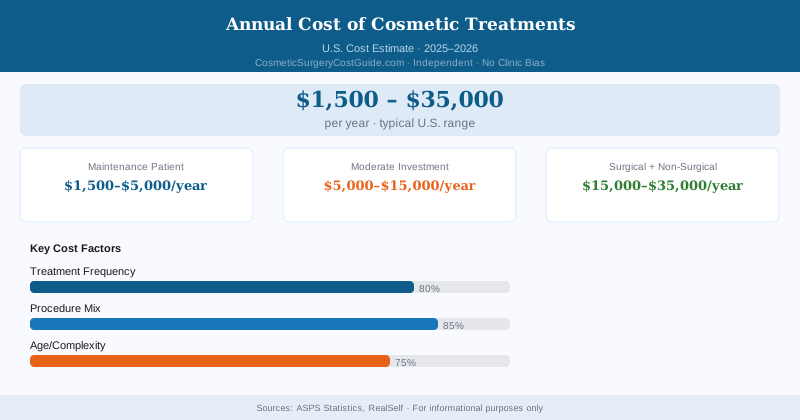
This breakdown shows what patients at three different maintenance levels actually spend per year — and how it adds up over time.
The ASPS data behind this
The ASPS 2024 statistics report:
- 15.7 million surgical cosmetic procedures performed in 2023
- 20+ million non-surgical procedures
- Botox alone: 7.4 million procedures (the most performed cosmetic treatment in the country)
- Hyaluronic acid fillers: 3.4 million procedures
One thing worth noting: these are procedures, not patients. Many patients get multiple treatments per year — Botox 2–3 times annually, fillers once, and occasional laser or skin treatments layered on top. The per-person annual number is what tells the real story.
Level 1: The light maintenance patient (~$1,500–$3,500/year)
This patient gets injectables once or twice a year and occasional skin treatments. No surgical procedures.
| Treatment | Frequency | Annual Cost |
|---|---|---|
| Botox (40–50 units) | 2x/year | $960–$1,800 |
| HydraFacial | 4x/year | $600–$1,200 |
| Light chemical peel | 2x/year | $300–$700 |
| Skincare products (clinical-grade) | Monthly | $500–$1,200 |
| Annual total | $2,360–$4,900 |
This is the entry point most patients describe when they say they “just get Botox.” The skincare product spend is the one that usually gets forgotten. A regimen including prescription retinoin, vitamin C serum, SPF, and prescription-grade products from a dermatology office adds up to $40–$100/month easily — that’s $500–$1,200 a year before you’ve booked a single appointment.
Level 2: The moderate maintenance patient (~$5,000–$10,000/year)
This patient regularly maintains injectables, does periodic skin resurfacing, and may do CoolSculpting or another device treatment annually.
| Treatment | Frequency | Annual Cost |
|---|---|---|
| Botox (50–70 units) | 3x/year | $1,800–$2,520 |
| Hyaluronic acid filler (2 syringes) | 1–2x/year | $1,200–$2,400 |
| Fraxel or similar non-ablative laser | 1x/year | $1,200–$2,200 |
| RF microneedling (Morpheus8) | 1 session | $900–$1,600 |
| Clinical skincare | Monthly | $1,000–$2,000 |
| IPL or BBL photofacial | 1x/year | $400–$700 |
| Annual total | $6,500–$11,420 |
This is the “I take care of my skin” maintenance level. A lot of upper-middle-income patients are here without having fully run the annual math.
Level 3: The high maintenance patient (~$15,000–$35,000+/year)
This patient combines regular injectables, multiple device treatments, and periodic surgical procedures amortized annually.
| Treatment | Frequency | Annual Cost |
|---|---|---|
| Botox (60–80 units, premium provider) | 3–4x/year | $2,400–$4,320 |
| Sculptra (maintenance) | 1–2 vials/year | $800–$2,200 |
| HA filler (full face maintenance) | 2x/year | $3,500–$6,000 |
| CO2 laser resurfacing | Every 2–3 years | $800–$1,500/year amortized |
| RF microneedling series | 3 sessions/year | $2,700–$5,400 |
| Surgical touch-up (brow lift, blepharoplasty, facelift amortized) | Every 7–10 years | $1,500–$4,000/year amortized |
| Clinical skincare + dermatologist | Monthly + quarterly | $2,000–$3,500 |
| Annual total | $13,700–$26,920 |
How the spending tends to escalate
Cosmetic patient spending follows a pretty predictable arc. It doesn’t stay at “just Botox” forever.
Year 1: Tries Botox. Loves it. $600–$900 spent.
Year 2: Adds a second Botox session and a filler syringe for lips or nasolabial folds. $2,500–$3,500 spent.
Year 3–4: Now a regular patient. Adds a laser treatment, adds under-eye filler. Annual spend is $5,000–$7,000.
Year 5–7: Starts looking at surgical options. The injectables are working but they’re not enough anymore. A procedure ($8,000–$15,000) resets the baseline. Injectable maintenance continues, maybe slightly less than before.
This trajectory isn’t inevitable, but it’s common enough that cosmetic practices build their business models around it. The patient who came in for a lip filler at 35 is the same patient scheduling a facelift consultation at 52.
Most patients underestimate their annual cosmetic spend by 40–60% because they track large purchases but not routine ones. To get an accurate picture:
- Add up all injectable appointments in the last 12 months (check credit card statements)
- Add all device treatments (HydraFacial, laser, CoolSculpting, RF)
- Add clinical skincare products purchased at medical offices or through prescription
- Add dermatology visits not covered by insurance
- Add any surgical procedures from the last 3 years divided by 3 for an annual figure
Compare the total to your original estimate. The gap is usually illuminating — and occasionally motivating for cost reduction.
Where the money actually goes
Nationally, across all cosmetic procedure spending:
- Surgical procedures account for approximately 55–60% of total spending despite being a smaller fraction of procedure volume (the per-procedure cost is just higher)
- Botox and neurotoxin injections account for the largest share of non-surgical spending by volume — roughly 15% of total cosmetic spend
- Fillers represent approximately 10–12% of total spend
- Laser, light, and energy-based treatments: approximately 8–10%
- Other non-surgical: remainder
For the individual patient, the math often flips over time. Surgical procedures become a lower fraction of annual spend because they happen once every 7–15 years, while injectables and maintenance treatments just keep recurring.
Is there a “right” amount to spend?
There’s no universal answer, but there’s a useful benchmark: cosmetic treatment spending above 5–7% of after-tax income is where patients in financial planning research start to describe it as stressful. Below that threshold, most describe it as a valued personal spending category — similar to fitness or travel.
A few strategies that actually reduce the number:
- Loyalty programs (Allē, Aspire) for regularly-purchased injectables — reduce effective cost 10–15%
- Waiting the maximum comfortable interval before retreating with Botox, rather than booking at the first sign of movement
- Considering surgical procedures over indefinite injectable accumulation when surgery provides a more lasting solution
Some of the most effective “anti-aging” spending isn’t on cosmetic procedures at all: consistent SPF use, smoking cessation, and sleep quality have documented effects on skin aging that rival expensive cosmetic treatments. This doesn’t mean cosmetic treatments aren’t worthwhile — but the most cost-effective foundation is the cheapest: daily sunscreen consistently applied. The average patient who spends $12,000/year on cosmetic treatments but doesn’t wear daily SPF is spending their budget inefficiently.
Bottom Line
American cosmetic treatment spending ranges from $2,000–$4,900/year for light maintenance to $13,000–$27,000+ for high maintenance with periodic surgery. Most patients underestimate their annual total by 40–60% because routine injectable and skincare purchases aren’t tracked the way surgical invoices are. Pull your last 12 months of credit card statements, add it all up, and compare that number to what you thought you were spending. The gap is usually the most useful information you can have.