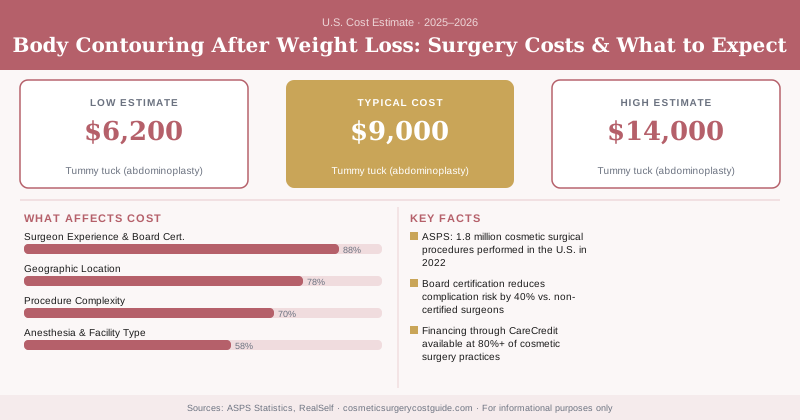
42% of American adults are classified as obese, according to CDC data — and as bariatric surgery rates and GLP-1 medication use climb, more patients than ever are arriving at plastic surgery consultations with significant excess skin after dramatic weight loss. A tummy tuck alone runs $8,500–$14,000. A full lower body lift — addressing the abdomen, flanks, buttocks, and outer thighs in one surgery — can exceed $25,000. And most of it isn’t covered by insurance.
That gap between what you’ve accomplished and how your body looks after losing 80, 100, or 150 pounds is real, and surgery is often the only solution. Diet and exercise don’t tighten excess skin once it’s lost the elasticity to retract. Post-weight-loss body contouring is a category, not a single procedure — and understanding which surgeries address which areas, and what they cost, is where to start.
Post-Weight-Loss Body Contouring: Procedure Costs
| Procedure | Addresses | Average Surgeon Fee | All-In Cost Estimate |
|---|---|---|---|
| Tummy tuck (abdominoplasty) | Abdomen, separated muscles | $6,200 | $9,000–$14,000 |
| Lower body lift (belt lipectomy) | Abdomen, flanks, buttocks, outer thighs | $9,500–$14,000 | $15,000–$25,000 |
| Arm lift (brachioplasty) | Upper arm excess skin | $4,500 | $6,500–$9,000 |
| Thigh lift (medial or lateral) | Inner or outer thigh skin | $5,200 | $7,500–$11,000 |
| Breast lift (mastopexy) | Sagging post-weight-loss breasts | $5,100 | $7,000–$12,000 |
| Mommy makeover / combo | Multiple zones in one OR | Varies | $18,000–$35,000 |
All-in costs include surgeon fee, anesthesia, facility, and standard post-op care. Labs, compression garments, and prescription medications add $300–$700 more.
What changes after massive weight loss
Skin loses elasticity when stretched beyond its ability to retract — particularly after sustained obesity over years. When weight drops rapidly, the skin doesn’t follow. What you’re left with: an apron of abdominal skin (pannus) that hangs below the bikini line, inner thigh skin that chafes with every step, upper arm skin that swings when you move, and breasts that deflate and droop.
None of that responds to exercise. Resistance training builds muscle beneath the skin but can’t reattach dermis that has permanently lost collagen structure. This is why the ASPS reported in 2023 that post-bariatric body contouring procedures increased 19% over the prior three years — and why insurance questions come up in nearly every consultation.
Insurance coverage: the honest answer
True cosmetic body contouring isn’t covered. But there’s an exception worth understanding: panniculectomy — removal of the hanging abdominal pannus (not full tummy tuck muscle repair) — can qualify for medical necessity coverage when the excess skin causes documented skin infections (intertrigo), rashes, or wounds under the fold.
To build an insurance case, you’ll need:
- Physician documentation of recurrent skin infections
- Evidence of failed conservative treatment (antifungals, barrier creams)
- 6–12 months of stable post-weight-loss body weight
Even with full documentation, insurers frequently deny on first submission. An experienced patient coordinator who handles insurance appeals is worth asking about at your consultation.
Most board-certified plastic surgeons won’t operate until you’ve maintained a stable weight for at least 6 months — ideally 12 months after bariatric surgery or GLP-1 medication-induced weight loss. The reason: continued weight loss after a tummy tuck or lower body lift creates new skin laxity that undoes the surgical result. If you’re still losing, wait. Surgery done at the wrong time means revision surgery, which doubles your total cost and recovery time.
Why combining procedures makes financial sense
If you need a tummy tuck and an arm lift, doing them separately means two anesthesia fees, two facility fees, and two separate recovery periods. Combining them in one OR visit — when medically appropriate — typically saves $3,000–$6,000 in facility and anesthesia costs. The caveat: longer operating times increase risk, and most responsible surgeons cap combined procedures at 6–8 hours of OR time.
A staged approach — abdomen and arms separately, spaced 3–6 months apart — is often the right call. Your plastic surgeon should help you sequence based on your priorities, health status, and what’s safely combinable for your specific anatomy.
Recovery timeline
- Tummy tuck alone: 2–3 weeks to return to light work, 6 weeks to full activity
- Lower body lift: 3–4 weeks limited activity, 8–10 weeks full recovery
- Arm lift: 1–2 weeks to return to desk work, 4–6 weeks full activity
- Pain management: 5–7 days of prescription pain medication typical; transition to OTC by week 2
- Compression garments: 4–8 weeks depending on procedure
Post-weight-loss patients frequently have nutritional deficiencies — particularly iron, B12, and vitamin D — after bariatric surgery. These deficiencies impair wound healing and increase surgical risk. Your plastic surgeon should require pre-operative labs to screen for anemia and micronutrient deficiencies before clearing you for surgery. If your surgeon doesn’t ask for labs, ask for them yourself. Operating with unaddressed nutritional deficiencies can lead to poor wound healing, wound dehiscence, and infection.
Finding financing for a multi-procedure plan
At $20,000–$30,000+ for comprehensive body contouring, financing is almost always part of the conversation. CareCredit and Alphaeon Credit are the dominant medical financing options; both offer promotional periods with deferred interest (typically 12–24 months). Personal loans from credit unions frequently beat medical financing rates — worth comparing before committing to in-office financing.
Some practices offer multi-procedure discounts of 10–15% when staging work across multiple visits.
Bottom Line
Post-weight-loss body contouring is major surgery with major costs — plan on $10,000–$25,000 depending on which areas you address and whether you stage procedures or combine them. The investment makes sense when excess skin is causing hygiene issues, physical discomfort, or genuine quality-of-life impact. Get consultations with at least two board-certified plastic surgeons who specifically mention post-bariatric experience, get your labs reviewed, stabilize your weight for at least 6 months, and build a staged surgical plan that’s realistic for your health and your budget.