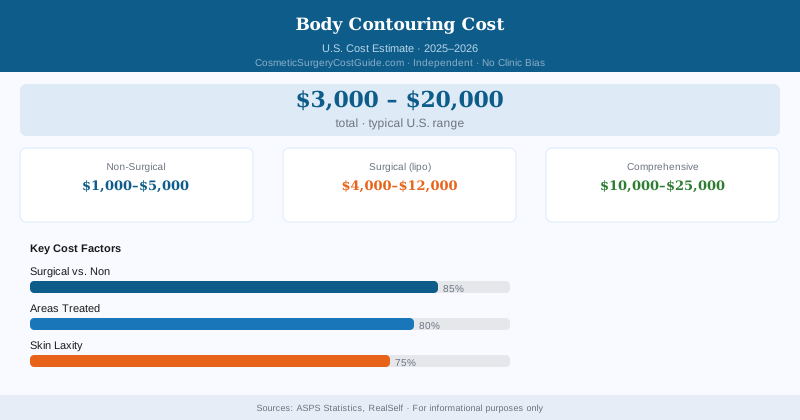
“Body contouring” is one of the most elastic terms in the cosmetic industry. It covers everything from a $700 CoolSculpting session at a med spa to a $25,000 surgical body lift. The marketing uses the same language for procedures that are not remotely in the same category, which makes it nearly impossible to comparison-shop without a framework.
Here’s a step-by-step way to figure out which option actually applies to your situation — and what it’ll cost.
Step 1: Know what options exist and what they cost
Non-Surgical Body Contouring Options
| Treatment | Cost Per Session | Sessions Needed | Fat Reduction |
|---|---|---|---|
| CoolSculpting | $600–$1,500/applicator | 2–3 per area | 20–25% per session |
| Emsculpt (muscle + fat) | $750–$1,000 | 4 sessions | Minimal fat, +muscle |
| Emsculpt NEO | $900–$1,200 | 4 sessions | ~30% fat + muscle |
| SculpSure (laser) | $1,000–$1,500 | 2–3 per area | 24% per session |
| Kybella (chin only) | $1,200–$2,500 total | 2–4 sessions | Moderate |
| Vanquish (RF) | $800–$1,200 | 4–6 sessions | Minimal |
| Truebody/Coolsculpting Elite | $900–$1,800 | 2–3 | Similar to CoolSculpting |
Surgical Body Contouring Options
| Procedure | All-In Cost | Fat Reduction | Skin Tightening |
|---|---|---|---|
| Liposuction (1 area) | $3,500–$6,500 | 60–80% | Minimal |
| Liposuction + laser tightening | $5,000–$9,000 | 60–80% | Moderate |
| Tummy tuck | $8,000–$14,000 | Moderate + skin removal | Yes |
| Lower body lift | $12,000–$20,000 | Moderate + skin removal | Significant |
| BBL | $7,000–$15,000 | Fat transfer | N/A |
| Mommy makeover | $12,000–$25,000 | Varies | Significant |
Step 2: Assess your skin — this determines everything
Body contouring failures almost always come from choosing the wrong tool for the problem. The single most important variable is whether you have skin laxity.
Fat without skin laxity (under 40s, minor deposits): Non-surgical options like CoolSculpting, SculpSure, or Emsculpt NEO are genuinely useful here. Surgical liposuction is also excellent and produces faster, more complete results with a brief recovery.
Fat with good skin elasticity (some laxity but skin bounces back): Liposuction is the gold standard. The skin retracts after fat removal. Non-surgical options produce more limited results at this level.
Fat plus skin laxity (skin doesn’t bounce back): Surgery that removes skin — tummy tuck, arm lift, thigh lift — is required. Non-surgical fat reduction without addressing skin will make loose skin more apparent, not less. This is where non-surgical body contouring most consistently disappoints.
A quick assessment of whether you have meaningful skin laxity: pinch the skin in your area of concern and release it. If it springs back promptly, your elasticity is likely good enough for liposuction or non-surgical fat reduction. If it stays puckered for a moment before returning, skin laxity is present and surgery that addresses both fat AND skin (tummy tuck, thigh lift, etc.) will produce better results than fat reduction alone.
Step 3: If you’re going non-surgical, pick the right device
Not all non-surgical body contouring devices do the same thing, and the market is crowded with options that vary widely in evidence quality.
Among the technologies with the most solid data, Emsculpt NEO stands out. It combines radiofrequency fat reduction (~30% per treatment course) with high-intensity focused electromagnetic energy that creates muscle contractions — building muscle while reducing fat simultaneously. A full course (4 sessions) costs $3,600–$5,000 total. It’s not a replacement for surgery when surgery is what’s needed, but for patients near their goal weight who want improved muscle definition and modest fat reduction without any downtime, it produces measurable results.
Non-surgical body contouring is the right choice when:
- You can’t tolerate anesthesia or surgery due to health conditions
- You genuinely want zero downtime
- You’re in your 20s–early 30s with minimal issues and want modest improvement
- You’re maintaining results after a prior surgical procedure
- You’ve lost some weight and have specific resistant pockets that didn’t respond
Be cautious of practices making dramatic claims for non-surgical body contouring — promises of results “equivalent to liposuction without surgery” are not supported by published evidence. Non-surgical modalities are real tools with real (if modest) effects, but surgery remains the gold standard for patients wanting significant body reshaping. Making an informed decision means understanding the realistic magnitude of results each approach provides.
Step 4: Run the total cost comparison before assuming non-surgical is cheaper
A lot of patients go non-surgical to save money — then spend more than they would have on surgery. Here’s what that actually looks like:
- 3 CoolSculpting sessions for abdomen: ~$4,500
- 3 sessions for flanks: ~$3,600
- Maintenance session 1 year later: ~$2,000
- Total over 2 years: ~$10,100
vs.
- Single liposuction session (abdomen + flanks): $8,000–$11,000 all-in
- Results: more dramatic and permanent (fat cells don’t return after liposuction)
The ASPS notes that liposuction remains one of the top 5 most performed cosmetic surgeries in the US precisely because it produces results non-surgical devices can’t match in a single session. This comparison doesn’t make non-surgical wrong — but it should reframe the “non-surgical is cheaper” assumption that often drives initial decisions.
Step 5: Get a consultation with a board-certified plastic surgeon
Even if you’re leaning non-surgical, at least one consultation with a board-certified plastic surgeon is worth it. They can assess all three key factors — fat volume, skin laxity, and your ability to tolerate surgery — and honestly recommend which approach makes sense. Many surgeons offer both surgical and non-surgical options, so they don’t have a financial incentive to push surgery when non-surgical is more appropriate.
Bottom Line
The right body contouring choice depends on how much fat needs to be addressed, what your skin laxity looks like, and whether you can tolerate surgery and recovery. Run the total cost math on non-surgical options before assuming they’re the budget choice. And get at least one qualified medical opinion before committing to either path.