Tummy tuck vs. body lift: they sound like variations of the same thing, but they’re quite different — and for patients who’ve lost significant weight, choosing the wrong one means getting a fraction of the improvement they’re actually after.
A tummy tuck addresses the front only. It removes abdominal skin, tightens the muscle layer, and produces a flatter stomach. For the right candidate, it’s transformative. But if you’ve lost 80 or 100 pounds — through bariatric surgery, significant lifestyle change, or years of sustained effort — the excess skin usually isn’t just on the front. It wraps around. The outer thighs, hips, buttocks, flanks — all of it droops. A tummy tuck doesn’t address any of that.
A body lift (also called a belt lipectomy or circumferential body lift) goes all the way around. It removes excess skin and fat from the abdomen, hips, buttocks, and outer thighs in a single procedure. The scar runs circumferentially at the bikini/waist level. The results — for the right patient — are dramatic in a way that a tummy tuck alone can’t achieve.
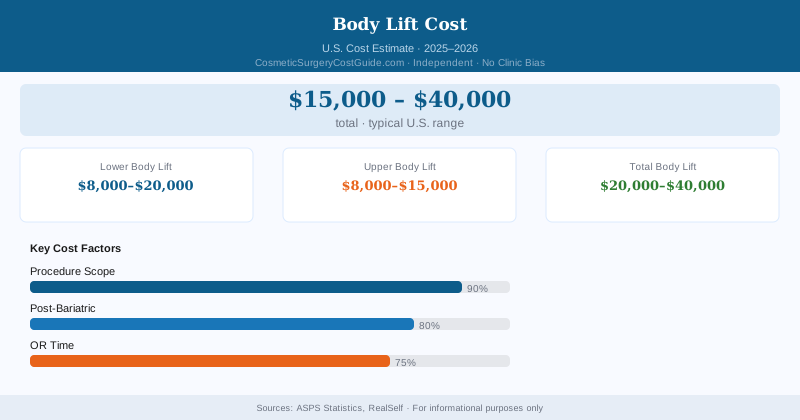
This is also one of the few cosmetic procedures where insurance may partially cover costs. ASPS reports body lift surgeon fees averaging $7,924 for lower body lifts. All-in costs range from $12,000–$30,000 depending on the extent of work.
Body Lift Cost by Type
| Procedure | Surgeon Fee | All-In Cost | OR Time |
|---|---|---|---|
| Lower body lift (belt lipectomy) | $6,500–$12,000 | $10,000–$18,000 | 3–5 hours |
| Upper body lift | $5,000–$9,000 | $8,000–$14,000 | 2–4 hours |
| 360/full body lift | $12,000–$22,000 | $18,000–$30,000 | 5–8 hours |
| Staged lower + upper (separate sessions) | $16,000–$28,000 | $22,000–$38,000 | Two sessions |
What each procedure actually addresses
Lower body lift (most common):
- Tummy tuck component (removes abdominal pannus)
- Outer thigh lift
- Buttock lift
- Hip/flank skin removal
- Results in a scar running all the way around the body at the bikini/waist level
Upper body lift:
- Back rolls and bra-strap area
- Lateral chest skin
- Sometimes includes arm lift extension
- Results in horizontal scars across the back
Full 360 body lift: Combines both in a single procedure or close-staged sessions. It’s the most comprehensive transformation available for post-weight-loss body contouring — and the most significant recovery.
A tummy tuck addresses the front only — removing abdominal skin and repairing muscles. A lower body lift extends that same principle all the way around the body, also lifting the outer thighs and buttocks. The scar from a lower body lift is circumferential (goes all the way around), while a tummy tuck scar is confined to the front. For patients with significant excess skin around the entire circumference, the lower body lift produces a dramatically better result — though at higher cost and with a more demanding recovery.
Insurance considerations
This is one of the few areas of body contouring where insurance sometimes contributes. When hanging skin causes chronic skin infections or intertrigo (rash under skin folds), difficulty walking, or documented functional impairment, a “panniculectomy” — removal of the abdominal skin flap — may be covered as reconstructive rather than cosmetic.
The cosmetic portion typically won’t be covered, but the functional portion might be. Getting partial coverage requires:
- Documentation from your physician of skin infections or functional problems
- Photos showing the extent of hanging skin
- Pre-authorization from your insurer before surgery
- Proof of weight stability for 12+ months
Even partial insurance coverage can save $3,000–$7,000 on the out-of-pocket cost. It’s worth pursuing if you have any of the qualifying conditions — the documentation process is time-consuming but the savings are real.
Recovery: don’t underestimate this
Body lift surgery has one of the most demanding recoveries in elective cosmetic surgery. You need to plan for this — not just the procedure cost, but the recovery infrastructure:
Recovery timeline:
- Hospital or overnight facility stay: 1–2 nights typical
- Drains placed: 2–4 drains that remain 2–3 weeks
- No bending, twisting, or lifting: 4–6 weeks
- Full return to normal activity: 8–12 weeks
- Final results visible: 12–18 months (significant swelling persists for months)
Recovery costs to budget separately:
- Overnight facility fee: $1,500–$3,500 (often required for body lifts)
- Home care help for the first 2 weeks: essential — you’ll need it
- Compression garments: $150–$400 (not always included in the surgical fee)
- Lymphatic drainage sessions (8–12): $800–$1,800
- Post-op medications: $200–$400
Body lift surgery is not appropriate for patients who smoke, have uncontrolled diabetes, or have significant cardiovascular conditions. The extensive incisions require exceptional healing capacity. Surgeons also require weight stability for 6–12 months prior — someone still actively losing weight should not have a body lift yet. BMI above 32–35 significantly increases complication risk; most surgeons have a BMI threshold for this procedure.
Financing a body lift
Body lifts are expensive enough that most patients use some form of financing. CareCredit, Alphaeon Credit, and surgeon payment plans are all options. For a $20,000 procedure on a 36-month plan with 0% promotional APR, monthly payments run approximately $555. Some practices offer in-house payment plans for established patients.
Bottom Line
A lower body lift with a board-certified surgical team at an accredited facility runs $12,000–$18,000 in most US markets. Full body lifts run $18,000–$30,000. These are among the most expensive elective procedures available — but for patients who’ve worked to lose significant weight and are dealing with the functional and psychological burden of loose skin, the quality-of-life impact is hard to overstate. Most appropriately selected patients report it among the most worthwhile decisions they’ve made. The key words are “appropriately selected” — stable weight, good health, realistic expectations for the recovery.