Myth to dispel right away: masseter Botox isn’t just for people who want a slimmer jawline. For the tens of millions of Americans living with chronic jaw clenching and bruxism, it’s a therapeutic treatment — one with growing clinical evidence and a cost structure that actually competes favorably with the alternatives you’re probably already paying for.
A custom dental night guard runs $300–$800 and needs replacing every few years. The downstream dental damage from untreated bruxism — cracked teeth, worn enamel, failed restorations — can run into thousands of dollars over a decade. The ASAPS reports that neuromodulator treatments for therapeutic indications (migraine, hyperhidrosis, jaw clenching) have grown faster than purely cosmetic uses over the past four years. Against that backdrop, $500–$1,500 for a Botox treatment that relaxes the masseter muscle for four to six months starts looking less like a cosmetic luxury and more like straightforward preventive care.
What Botox for TMJ actually costs
| Treatment Scenario | Units (Both Sides) | Typical Cost | Duration |
|---|---|---|---|
| Therapeutic TMJ (bruxism/clenching) | 50–100 units | $500–$1,500 | 3–6 months |
| Cosmetic masseter slimming only | 40–60 units | $500–$1,200 | 4–6 months |
| Maintenance session (after initial softening) | 30–50 units | $350–$900 | 4–6 months |
| Headache / migraine adjunct (temples + masseter) | 60–100+ units | $700–$1,800 | 3–4 months |
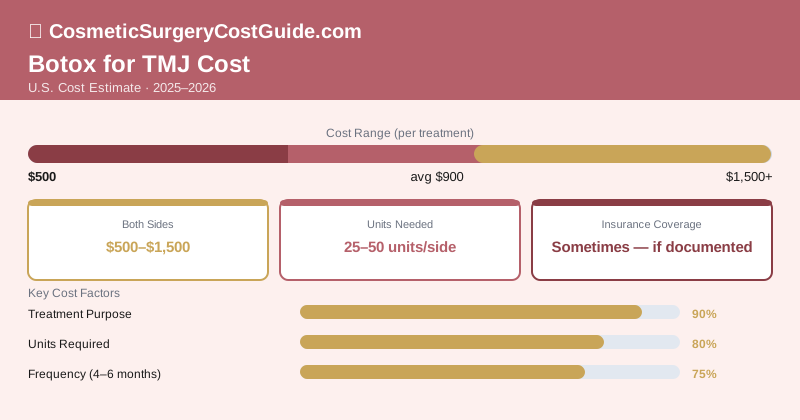
The masseter is a powerful, dense muscle. Fully treating both sides for therapeutic purposes typically requires 25–50 units per side — 50–100 units total. At market rates of $12–$18 per unit, that’s $600–$1,800. Many practices bundle it as a flat fee rather than billing per unit. If you’re quoted significantly below this range, ask how many units are planned — an under-dosed masseter treatment won’t deliver meaningful relief, and some providers low-ball the price by low-balling the dose.
Therapeutic vs. cosmetic: a critical distinction
Masseter Botox serves two overlapping but distinct purposes, and the label matters more than most patients realize.
Therapeutic TMJ treatment targets documented temporomandibular joint disorder — headaches, jaw pain, tooth damage, and facial tension from chronic clenching or bruxism. The FDA has approved Botox for migraine prevention (which shares nerve pathways with jaw clenching), and physicians routinely use it off-label for bruxism with solid clinical backing. A 2023 systematic review in the Journal of Oral & Maxillofacial Surgery found significant reduction in pain scores and clenching frequency compared to placebo across multiple trials.
Cosmetic masseter slimming uses the same technique and dosing to reduce the visual width of the lower face. Overdeveloped masseters create a squarer jaw; repeated Botox treatments cause gradual muscle atrophy, softening the jaw contour. In South Korea it’s among the most-requested aesthetic procedures — in the US, demand has grown sharply, particularly among Asian American patients whose facial anatomy makes masseter hypertrophy more visually prominent.
Both uses are legitimate. The distinction matters for your wallet: therapeutic uses occasionally qualify for insurance coverage; cosmetic uses don’t.
Coverage is possible but requires documentation. To maximize your chances:
- Get a TMJ diagnosis from a dentist or oral surgeon — this establishes medical necessity
- Document failed conservative treatments — night guards, physical therapy, anti-inflammatories
- Have a physician (not a med spa NP) submit the claim — coverage is more likely when a neurologist or orofacial pain specialist is the treating provider
- Appeal denials — TMJ Botox is covered under some BlueCross, Aetna, and Cigna plans when properly coded and documented
Out-of-pocket costs can drop dramatically — sometimes to just a copay — when insurance covers it. Even when denied initially, 30–40% of appeals succeed with adequate documentation.
How it compares to a dental night guard
A custom night guard from your dentist costs $300–$800. It protects teeth while you sleep but does nothing for daytime clenching, morning headaches, or the chronic jaw tension that follows you through the work day. Many patients find them uncomfortable enough that compliance quietly drops.
Botox addresses the source — the overactive muscle itself — rather than defending against its effects. The two aren’t mutually exclusive. Many patients keep using a night guard while also getting masseter Botox every 4–6 months, especially if stress-driven daytime clenching continues.
One clarification worth making: Botox treats the masseter muscle, not the TMJ joint. If your disorder involves actual joint damage — disc displacement, arthritis, bone changes — Botox may help the muscular component but won’t fix structural pathology. A full evaluation by an oral surgeon or orofacial pain specialist before starting treatment is worth the appointment.
Masseter Botox affects a muscle you use every time you eat. Most patients experience no meaningful functional impact, but heavily dosed initial treatments — especially in patients with very thick masseters — can temporarily reduce bite strength. This typically resolves within 2–4 weeks as the muscle adapts. Let your provider know if you eat a diet heavy in tough or hard foods, or if you play a wind instrument. The dose can be calibrated to minimize functional impact while still delivering therapeutic benefit.
What to expect at your appointment
The appointment takes 15–20 minutes. Your provider palpates both masseters while you clench, then places 5–8 injections per side. Results start in 3–5 days and are fully visible at two weeks. With repeated treatments every 4–6 months, the muscle gradually atrophies — many long-term patients maintain results on 20–30 units per side after 12–18 months of regular treatment.
See also: Botox cost overview for per-unit and per-area pricing across all treatment areas.
Bottom Line
Botox for TMJ runs $500–$1,500 per treatment, repeated every 3–6 months. The cost is real, but so is the therapeutic value — clinical evidence supports meaningful reduction in jaw pain, clenching frequency, and associated headaches. If you have a documented TMJ diagnosis, pursue the insurance route before paying out of pocket. And if you’re interested in both the therapeutic and cosmetic (slimming) benefit, discuss both goals with your provider upfront — a single well-dosed treatment can address both without any additional cost.