Picture this: A woman in her late 30s walks into a plastic surgery consultation. Two pregnancies behind her, she’s lost breast volume and her breasts sit noticeably lower than they used to. She’s been wearing padded bras for years trying to compensate. She came in thinking she needed implants. Her surgeon looks at her photos and says, “You actually need both — an implant for volume and a lift to reposition everything.” That’s augmentation mastopexy, and it’s one of the most requested combinations in breast surgery.
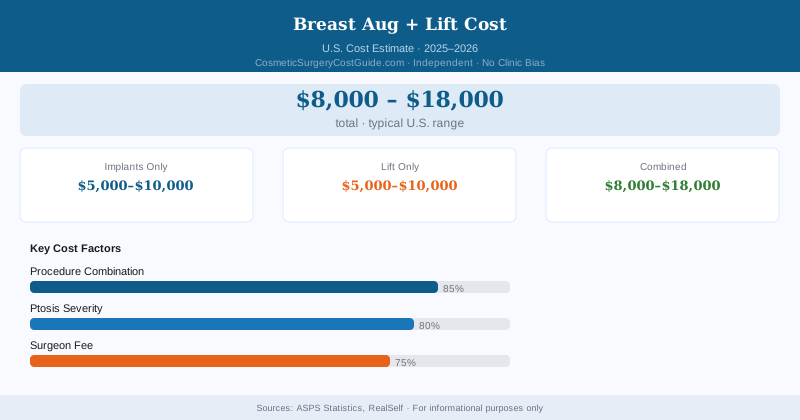
The ASPS reports that combined augmentation-mastopexy procedures run $10,000–$18,000 all-in at quality practices — which is less than doing each procedure separately at different times. That savings comes from paying for anesthesia and OR time just once.
Cost Comparison: Combined vs. Staged
| Approach | Total All-In Cost |
|---|---|
| Breast augmentation alone | $6,500–$11,000 |
| Breast lift alone | $7,000–$12,000 |
| Combined aug + lift (same session) | $10,000–$18,000 |
| Savings from combining | $3,000–$6,000 |
The savings come from paying for anesthesia and facility only once, and from efficiency in OR time. Doing them in a single session makes financial sense for patients who need both procedures.
When You Need Both
The key question is whether you need volume added (augmentation) or just lifting (mastopexy), or both. Signs you may need augmentation:
- Breast size is adequate when wearing a bra but deflated/flat without
- Volume lost in upper pole after pregnancy or weight loss
- You want to be larger overall
Signs you may need just a lift:
- Volume is adequate but position has dropped
- Nipples point downward or below the breast crease
- Fullness has shifted to the lower pole
Signs you likely need both:
- Both volume loss AND sagging
- Nipples low AND upper pole hollow
- Breasts look “empty” — flattened and drooping
Your surgeon should conduct a thorough assessment before recommending either single or combined approach.
Techniques for Combined Procedures
Several approaches exist for combining augmentation with mastopexy:
One-stage combination: Both procedures in a single session. Cost-effective and one recovery, but technically demanding. The tension of the lift sutures combined with the implant volume can increase complication risk, particularly wound healing at the T-junction (anchor scar intersection).
Two-stage (staged approach): Augmentation first, lift performed 3–6 months later after tissues heal. Higher total cost but lowers complication risk in certain patients. Recommended for patients needing significant lifts, those with compromised tissue quality, or smokers.
Most board-certified plastic surgeons who perform this combination regularly can safely do it in one stage for appropriate candidates. The surgeon’s recommendation about staging should be based on your specific anatomy and health history, not convenience.
In anchor-pattern lifts combined with augmentation, the scar intersection point (where the vertical and horizontal scars meet) is under tension from both the lift and the implant pushing outward. This T-junction is the area most at risk for wound separation or healing complications. Surgeons who are experienced with this combination use specific techniques to manage tension at this point. If your surgeon is recommending an anchor lift with a large implant in a single stage, ask specifically about their approach to T-junction management and their complication rate.
Implant Size and Type Considerations
Implant size selection in augmentation mastopexy is more conservative than in standalone augmentation. Because the lift has already removed excess skin and tightened the envelope, there’s less room for large implants without compromising circulation to the nipple or creating excessive tension on the lift sutures.
Most surgeons recommend moderate-sized implants (200–350cc) for combined procedures in patients who had smaller breasts to start. Going too large in a single session increases complication risk significantly.
If a patient really wants substantially larger results, the staged approach (augmentation first, then lift) may allow for larger implant placement than a single-stage combination would safely permit.
What to Expect After Surgery
Recovery is similar to either procedure alone:
- Surgical bra worn continuously for 4–6 weeks
- No lifting or strenuous exercise for 4–6 weeks
- Significant swelling for 6–8 weeks
- Final shape at 4–6 months
- Scars fade over 12–18 months
The combination produces one of the most significant aesthetic transformations in cosmetic surgery. Most patients report extremely high satisfaction — which makes sense, since you’re addressing two concerns in a single recovery.
Augmentation mastopexy has a higher revision rate than either procedure alone — published rates range from 15–30% depending on technique and patient factors. This isn’t a reason to avoid the procedure, but it’s important context for realistic expectations. Revisions commonly involve scar adjustment, nipple repositioning, or implant exchange — all typically lower-cost than the primary procedure. Ask your surgeon about their specific revision rate before booking.
Bottom Line
Combined breast augmentation with lift: budget $11,000–$16,000 all-in at a reputable practice in most US markets. Choose a surgeon who performs this combination regularly — it’s technically demanding enough that experience matters more here than in either standalone procedure. Get at least two consultations and ask each surgeon specifically how they handle the technical challenges of simultaneous augmentation and lifting.