Breast augmentation is cosmetic and almost never covered by insurance. Breast reduction is often medically necessary — and when it is, most major insurers pay for it. The difference comes down to documentation.
That’s the key insight most women miss when they assume breast reduction is out of reach financially. If you have chronic neck and back pain, shoulder grooving from bra straps, skin infections under the breast fold, or an inability to exercise comfortably — you may have a strong insurance case. The difference between a $10,000 bill and a $1,500 bill is often the paper trail.
Here’s how the coverage decision actually works — and what you’ll pay either way.
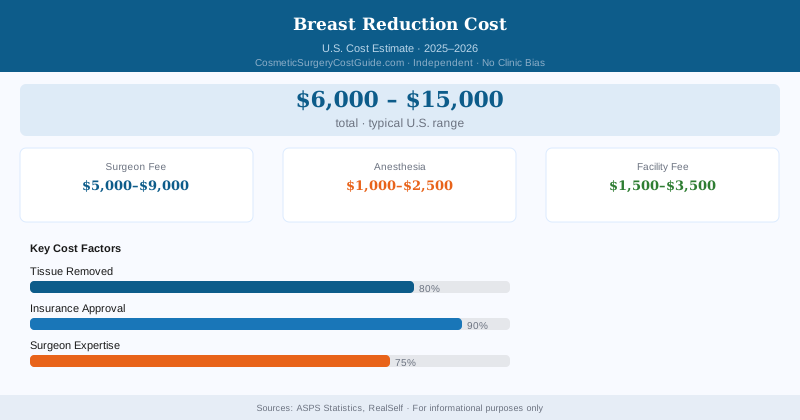
What breast reduction costs, with and without insurance
| Payment Path | Typical Out-of-Pocket Cost |
|---|---|
| Self-pay (no insurance) — surgeon fee | $4,500–$7,000 |
| Self-pay — anesthesia | $1,000–$2,000 |
| Self-pay — facility fee | $1,000–$2,500 |
| Self-pay total | $5,500–$10,000 |
| With insurance (after deductible + copay) | $500–$3,000 |
| Pre-op labs and mammogram | $300–$700 |
| Post-op garment and medications | $150–$300 |
The American Society of Plastic Surgeons 2023 statistics put breast reduction among the top five surgical procedures by volume in the US, with over 43,000 procedures performed. The average surgeon’s fee reported by ASPS is approximately $5,913 — but that figure excludes anesthesia and facility costs. All-in self-pay runs $7,000–$12,000 at most practices.
Medical necessity criteria — what insurers actually look for
Insurance coverage hinges on whether your case meets medical necessity criteria. Every insurer has specific requirements, but the standard elements are:
Documented physical symptoms: Chronic neck, back, or shoulder pain documented in your medical records — not just self-reported. Shoulder grooving from bra straps noted by a physician. Skin rashes, maceration, or infections in the breast fold. Nerve impingement symptoms. Inability to perform physical activity documented by your doctor.
Schnur Sliding Scale: Most private insurers use this formula to determine minimum required gram removal. It’s based on body surface area — so the threshold isn’t the same for everyone. A smaller woman may need to demonstrate 350g of removal per side, while a larger woman might need 600g. Your surgeon should calculate your expected resection weight and confirm it meets your insurer’s threshold before submitting the pre-authorization.
Conservative treatment documentation: Most insurers require 6–12 months of documented conservative treatment before approving surgery. This means physical therapy, chiropractic care, prescription pain management, or other non-surgical interventions — all documented in medical records over time. Starting now matters if you’re thinking about surgery in the next year.
Pre-authorization: Your surgeon submits photos, medical records, and a letter of medical necessity to your insurer before scheduling surgery. The review process typically takes 2–6 weeks. Approval isn’t guaranteed — about 20–30% of initial requests are denied, but many of those are successfully appealed with additional documentation.
Every time you see your primary care doctor and mention back pain, neck pain, or shoulder discomfort related to breast size, make sure it gets documented. Ask your PCP to specifically note the size-related cause in their records. After 6–12 months of these documented visits, ask for a referral to a plastic surgeon for evaluation of medically indicated breast reduction.
Insurers look for a pattern of documented symptoms over time — not a single mention at a plastic surgery consultation. The paper trail you build now directly affects your coverage outcome later.
Surgical techniques — which technique you get matters
Wise pattern (anchor or inverted-T): The most common technique for large reductions. Incisions circle the areola, extend vertically down to the breast crease, and run horizontally along the crease — like an anchor shape. This provides the most tissue removal and reshaping capability. Scars are more extensive but fade significantly over 12–18 months.
Vertical (lollipop) scar technique: Creates only a circular scar around the areola and a vertical line down to the crease — no horizontal component. Appropriate for moderate reductions with less excess skin. Results in less scarring overall.
Short-scar techniques: Variations that minimize scar length; appropriate for specific anatomical situations. Your surgeon will recommend the appropriate approach based on how much reduction you need and your anatomy.
Nipple sensation: Most patients retain nipple sensation after breast reduction, especially with the vertical technique. In very large reductions requiring free nipple grafting, sensation may not be preserved. This is an important pre-op discussion.
Recovery — what the timeline looks like
Breast reduction is a 2–4 hour procedure under general anesthesia, almost always outpatient.
- Surgical bra or compression: Worn 4–6 weeks, typically provided with the procedure
- Work return: 1–2 weeks for desk jobs; 4–6 weeks for physically demanding work
- No strenuous activity: 4–6 weeks minimum
- Driving: Restricted while on prescription pain medication (typically 5–10 days)
- Final result: Swelling resolves fully over 3–6 months; scars continue fading for 12–18 months
- Scar care: Silicone sheets or scar gel ($30–$80/month for 3–6 months); sun protection of scars for the first year is essential
RealSelf Worth It rating
Breast reduction consistently earns a 97% Worth It rating on RealSelf — the highest of nearly any procedure on the platform. Patients report not just cosmetic improvement but meaningful quality-of-life gains: reduced chronic pain, ability to exercise, better posture, and clothes that fit properly. Many patients describe it as the most impactful medical decision of their life, not just a cosmetic one.
Breast reduction affects the ability to breastfeed, particularly with techniques that reposition the nipple-areola complex. If you’re planning future pregnancies and hope to breastfeed, discuss this specifically with your surgeon before choosing a technique. Some techniques better preserve milk ducts and nerve pathways than others. Some women successfully breastfeed after reduction; others don’t. This is not an afterthought — have this conversation before you’re on the operating table.
What if insurance denies the pre-authorization?
Don’t stop there. Insurance denials for breast reduction are commonly overturned on appeal. Steps that help:
- Request the specific denial reason in writing — insurers must provide this
- Have your surgeon submit additional documentation (more photos, clinical measurements, expanded symptom history)
- File a formal appeal through your insurer’s appeals process — your surgeon’s office should help with this
- Request a peer-to-peer review: Your surgeon speaks directly with the insurer’s reviewing physician, which often reverses denials
- Contact your state insurance commissioner if the appeal is denied — some states have specific protections for medically necessary plastic surgery
Even if insurance ultimately won’t cover it, the self-pay cost of $5,500–$10,000 with a board-certified surgeon is within reach for many patients with financing — and the long-term reduction in back pain treatment costs, physical therapy, and chiropractic visits often offsets a meaningful portion of the surgical expense.
Frequently Asked Questions
Start documenting symptoms now in your medical records — chronic back, neck, and shoulder pain, shoulder grooving from bra straps, skin infections under the breast fold, and difficulty exercising. Every documented primary care visit mentioning these symptoms builds your case. Most insurers also require 6–12 months of conservative treatment (physical therapy, prescription pain management) documented before approving surgery. Your surgeon submits a pre-authorization request with photos and records — the more documentation behind it, the better.
Most private insurers use the Schnur Sliding Scale, which sets a minimum gram removal per body surface area rather than a flat number. For a woman of average height and weight, this often works out to roughly 400–500 grams per breast — but it varies significantly based on body size. Your surgeon should calculate your expected resection weight and confirm it meets your insurer's specific threshold before submitting for pre-authorization. Requirements differ by insurer; some use 400g, some 500g, some use the Schnur formula exclusively.
It depends on the technique. The Wise pattern (anchor or inverted-T) produces scars around the areola, vertically down to the breast crease, and along the crease. The vertical (lollipop) technique creates only the circular areola scar and vertical line — no horizontal crease scar. Both fade significantly over 12–18 months and are positioned where they're not visible in most clothing and swimwear. RealSelf's 97% Worth It rating for breast reduction suggests the vast majority of patients feel the scar tradeoff is completely worthwhile given the physical relief.