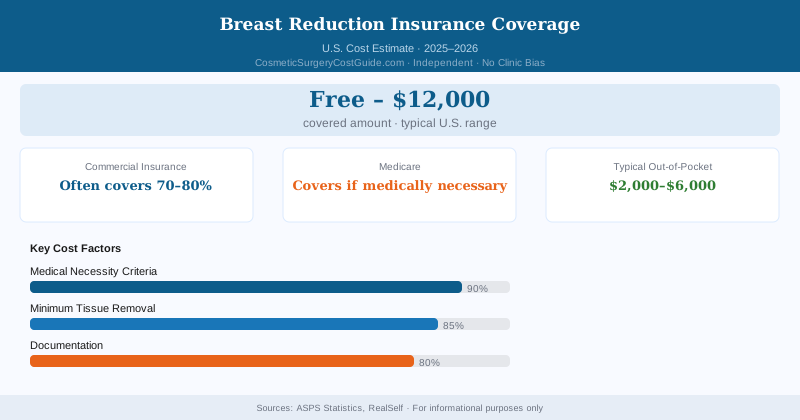
Two women. Same symptoms — chronic back and neck pain, shoulder grooving from bra straps, rashes under the breast fold. Same insurer. One gets breast reduction covered. One gets denied and pays $10,000 out of pocket.
What separated them wasn’t their symptoms. It was documentation.
The woman who got coverage had two years of primary care notes referencing breast-related pain, a completed physical therapy course with records, and a surgeon who submitted a detailed pre-authorization package. The woman who was denied had the same physical symptoms but almost nothing in her medical record — a single mention at a plastic surgery consultation. Her first appeal was denied too. Her second appeal — after she spent three months getting proper documentation — was approved.
This is how insurance coverage for breast reduction actually works. Here’s the map.
Insurance Coverage Criteria
While criteria vary by insurer, most follow this general framework:
1. Minimum tissue removal requirement: Most insurers require documentation that a minimum amount of breast tissue will be removed per side. Common thresholds:
- 500 grams per side (most common)
- 400 grams per side (some insurers)
- Based on body surface area formula (Schnur scale — used by many commercial insurers)
Your surgeon must estimate this before surgery. If your anatomy suggests less tissue removal, coverage may be denied.
2. Documented physical symptoms (all must be in your medical record):
- Chronic back, neck, or shoulder pain attributed to breast weight
- Shoulder grooving from bra straps
- Skin rashes, ulceration, or intertrigo under the breast
- Nerve symptoms (numbness, tingling in arms from compression)
- Difficulty exercising or participating in activities
3. Conservative treatment failure (documented for 3–6 months):
- Physical therapy for neck/back pain
- Well-fitted bras (professional fitting, documented)
- Anti-inflammatory medications
- Weight management if applicable
4. Pre-authorization: Your surgeon submits pre-auth with clinical documentation before surgery can be scheduled under insurance.
| Insurer | Minimum Grams Requirement | Notes |
|---|---|---|
| Aetna | 500g per side or Schnur scale | Documented symptoms required |
| BlueCross BlueShield | 500g per side (most plans) | Varies by regional plan |
| Cigna | 400–500g depending on plan | Physical symptoms required |
| UnitedHealthcare | Schnur scale-based | BMI and body surface area calculation |
| Medicare | 500g+ and functional impairment | Strict documentation required |
| Medicaid | Varies by state | Contact your state program directly |
The Schnur Scale: What It Is and How It Affects Coverage
The Schnur Sliding Scale is a formula some insurers use to determine the minimum tissue removal required for coverage based on body surface area. It adjusts the gram threshold based on the patient’s height and weight, requiring more tissue removal from larger patients to maintain proportionality.
Your surgeon can calculate your Schnur threshold during consultation. If your expected removal falls below the threshold, discuss with your surgeon whether there are documentation strategies to support your case.
Building Your Documentation File
This is the most important practical section. Start this process at least 3–6 months before pursuing surgery:
Medical record entries (get these documented at every relevant visit):
- Bra size and cup size documented
- Weight of breasts estimated (surgeon will document formally)
- Shoulder groove photographs taken and placed in chart
- Back/neck pain severity scored (0–10 scale) on each visit
- Effect on activities of daily living documented
- Notation that symptoms are attributed to breast size
Diagnostic documentation:
- X-ray or MRI of cervical spine if there are neurological symptoms
- Physical therapy evaluation and treatment records (showing you tried conservative care)
- Photographs (clinical, taken by physician or nurse)
Physician letters:
- Primary care physician letter supporting medical necessity
- Physical therapist letter if you’ve completed PT
- Spine specialist or pain management letter if involved in your care
Surgeon documentation:
- Detailed pre-authorization letter
- Photographs
- Weight estimation
- Specific ICD-10 diagnosis codes supporting medical necessity
The Pre-Authorization Process
Surgeon’s office submits pre-auth with the documentation package to your insurer
Review period: 7–30 days; urgent requests may be reviewed faster
Outcome: Approval, denial, or request for additional information
If approved: Schedule surgery; confirm in-network status of all providers (surgeon, anesthesiologist, facility)
If denied: Appeal immediately
Appealing a Denial
First-level denials are common and frequently reversed on appeal. Don’t treat a denial letter as the final word.
First-level appeal: Submit within the time limit stated on the denial letter (typically 60–180 days). Provide:
- Additional physician documentation
- Peer-reviewed medical literature on the functional effects of macromastia
- Detailed patient statement describing the impact on daily life
- Any additional imaging or diagnostic reports
Second-level appeal / external review: If the first appeal is denied, you can request an external review by an independent medical reviewer — not employed by your insurer. External reviewers overturn insurer decisions in approximately 40% of cases.
State insurance commissioner complaint: If external review is denied, filing a complaint with your state’s insurance commissioner creates regulatory pressure. State insurance commissioners take patient complaints seriously.
The denial letter will specify exactly why coverage was denied. Read it carefully and address every denial reason specifically in your appeal. A generic appeal letter is much less effective than one that responds point-by-point to the denial rationale. If your surgeon has an authorization specialist on staff, involve them — they submit appeals routinely and know what additional documentation resonates with specific insurers.
What You Still Pay Out of Pocket (Even With Coverage)
Insurance covers the procedure, not all costs:
- Your annual deductible (if not yet met): often $1,000–$5,000
- Coinsurance (your % of costs after deductible): typically 20–30%
- Out-of-network costs if any providers aren’t in-network
- Cosmetic improvements (if your surgery includes aesthetic component beyond functional)
For a $12,000 breast reduction surgery on a plan with $3,000 deductible and 20% coinsurance up to $6,000 out-of-pocket maximum:
- You pay: $3,000 (deductible) + 20% of remaining $9,000 = $1,800 = $4,800 total
- Insurance pays: $7,200
The savings vs. paying out of pocket ($8,000–$13,000) are substantial.
Bottom Line
Breast reduction insurance coverage is genuinely obtainable with proper documentation and persistence. Document symptoms meticulously in your medical record starting now, complete a documented course of conservative treatment, and work with a surgeon experienced in the pre-authorization process. First denials should be appealed with additional documentation — a significant percentage of initially denied cases are ultimately approved. The potential savings of $4,000–$9,000 make this documentation effort highly worthwhile.