Are you treating the right problem? Drooping upper eyelids and a low brow both make eyes look tired and heavy — but they need different procedures. Here’s how to tell which is which.
The brow and the eyelid work together. When a brow descends 5mm below its youthful position, it pushes down on the upper eyelid, creating skin folds that look exactly like eyelid hooding. Operate on the eyelids alone and you’ve addressed the symptom — but if brow descent is the cause, eyelid surgery alone produces a less complete result, and you may need revision sooner.
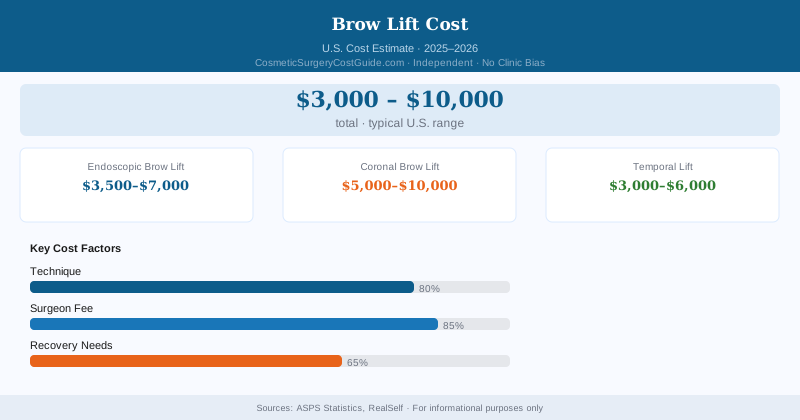
ASPS 2023 statistics document over 41,000 brow lift procedures performed in the US that year, with the endoscopic technique representing the clear majority. The average ASPS surgeon fee was approximately $3,900 — all-in costs with anesthesia and facility run $5,500–$11,000. Here’s what drives that range.
Brow Lift Cost by Technique
| Technique | Surgeon Fee | All-In Cost | Incision Location |
|---|---|---|---|
| Endoscopic brow lift | $4,000–$7,000 | $5,500–$9,500 | 3–5 small scalp incisions |
| Temporal (lateral) brow lift | $3,000–$5,500 | $4,000–$7,500 | Hidden in hairline, temples |
| Direct brow lift | $2,500–$4,500 | $3,000–$6,000 | Just above brow |
| Coronal brow lift | $4,500–$7,500 | $6,500–$11,000 | Ear-to-ear across scalp |
| Brow lift + blepharoplasty (combined) | $5,500–$10,000 | $7,500–$13,000 | Multiple |
| Botox brow lift (non-surgical) | $200–$500/session | $800–$2,000/year | None |
The Four Surgical Techniques
Endoscopic brow lift: The current gold standard. Three to five tiny incisions (1–2cm each) are placed behind the hairline. A small camera (endoscope) guides the surgeon in releasing and elevating the brow through minimal incisions. There’s no long scar, and the scalp heals with almost invisible marks. It’s appropriate for most patients with moderate brow descent and good scalp mobility. Duration: 1–2 hours. Cost: $5,500–$9,500 all-in.
Temporal (lateral) brow lift: Addresses only the outer third of the brow — the area that most commonly descends first and most visibly. A small incision within the temporal hairline lifts the lateral brow. It’s a less extensive procedure than a full endoscopic lift, appropriate for patients whose descent is primarily lateral. Often combined with blepharoplasty. Cost: $4,000–$7,500 all-in.
Direct brow lift: The incision runs directly above the brow itself or through a deep forehead crease. It’s the most direct approach and produces reliable results — particularly for patients with deep forehead lines (the scar can be placed in a crease) or for men who prefer directness over scar concealment. The scar is visible with close examination but blends into existing lines in appropriate candidates. Less commonly performed in women where the scar’s placement is more concerning cosmetically. Cost: $3,000–$6,000 all-in.
Coronal brow lift: An older technique involving an ear-to-ear incision across the top of the scalp. Highly effective but creates the longest scar and carries the highest risk of scalp numbness and hair loss along the incision. It’s largely been replaced by endoscopic technique except in specific anatomical situations. Cost: $6,500–$11,000 all-in.
The most common combination in upper facial surgery: brow lift + upper eyelid blepharoplasty. They address complementary problems — the brow lift elevates the descended brow, and the blepharoplasty removes excess upper eyelid skin that remains after the brow is repositioned.
Combining them in one session saves anesthesia and facility fees — typically $1,500–$2,500 in total cost savings versus scheduling separately. The combined procedure takes 2–3 hours. The result is more complete than either procedure alone when both problems are present.
Your surgeon should clearly outline how much improvement comes from the brow lift component vs. the blepharoplasty component during consultation.
Brow Ptosis vs. Eyelid Ptosis: Getting the Diagnosis Right
This distinction determines your treatment:
- Brow ptosis: The brow has descended below the orbital rim. The eyebrow itself sits too low. Fix: brow lift.
- Dermatochalasis: Excess upper eyelid skin creating hooding. The brow is in normal position but there’s excess skin on the lid itself. Fix: upper blepharoplasty.
- True eyelid ptosis: The eyelid margin itself droops, often from levator muscle weakness. Fix: ptosis repair (a different procedure from blepharoplasty).
Many patients have a combination. The evaluation should involve you looking straight ahead while the surgeon assesses: brow position relative to the orbital rim, upper lid skin excess, and eyelid margin position. Photographs taken at the consultation are essential for surgical planning.
The Botox Math: When Surgery Wins
Botox can lift the brow a modest 1–3mm by relaxing the orbicularis and corrugator muscles that depress it. For mild descent, this works. The math over time:
- Botox: $300/session × 3 sessions/year = $900/year × 10 years = $9,000
- Endoscopic brow lift: $6,000–$9,500 one-time, lasting 7–10 years
For meaningful brow descent (more than mild), Botox provides insufficient correction regardless of cost. For mild descent in your 30s, Botox is often the right starting point before pursuing surgery.
Insurance Coverage
Cosmetic brow lifts are not covered by insurance. The exception: upper eyelid blepharoplasty can be covered when excess upper eyelid skin demonstrably impairs the visual field (confirmed by visual field testing). Since brow descent can contribute to this functional impairment, a brow lift may sometimes be partially covered — but this requires specific documentation and insurer approval. Don’t assume coverage without explicit pre-authorization.
Hair loss along the incision line (alopecia) is a known risk of brow lift surgery, particularly with coronal and hairline incisions. In most patients, this is temporary. Permanent alopecia along the scar line occurs in a small percentage of cases and is more common in patients with fair, fine hair. Discuss this risk specifically with your surgeon and ask to see their incision planning relative to your hairline.
Recovery and Results
Endoscopic brow lift recovery:
- Days 1–5: Swelling and bruising around eyes and forehead, head wrap or bandage
- Week 1–2: Bruising resolves, mild swelling remains
- Week 2–3: Return to normal activity, light work
- Weeks 3–6: Continued subsidence of swelling
- 3–6 months: Final result visible
Temporary scalp numbness and tightness are common after endoscopic and coronal approaches. These typically resolve within weeks to months. Most patients describe the sensation as their forehead feeling “tight” — this relaxes as healing progresses.
Frequently Asked Questions
This is the most important question to ask at your consultation — and a good surgeon will address it proactively. Lift your brows with your fingers to their natural youthful position. If this makes your upper eyelids look dramatically better, you likely have brow ptosis (descended brows) contributing to the hooded appearance. If the upper eyelid skin still looks excess and heavy even when your brows are lifted, you probably need blepharoplasty (eyelid surgery) as well or instead. Many patients need both. A board-certified plastic surgeon or oculoplastic surgeon should evaluate brow position as standard practice before any upper facial procedure.
Endoscopic brow lift results typically last 5–10 years, though individual anatomy and aging patterns vary. Gravity and continued skin laxity will eventually cause some descent. The longevity is significantly longer than Botox brow lift (3–4 months per treatment) and is more cost-effective over 5+ years. A temporal brow lift targeting the outer brow may last slightly longer in that zone because the lateral brow descends more slowly. Some patients choose to combine surgical results with periodic Botox to maintain position over time.
For mild brow descent — typically 1–2mm below ideal position — Botox can provide a modest but real lift by relaxing the depressor muscles that pull the brow down. The result is 1–3mm of lift at most, lasts 3–4 months, and costs $200–$500 per treatment. Over 5 years, that's $3,000–$7,500 in Botox alone — comparable to a one-time surgical brow lift cost. For moderate to significant brow descent, Botox doesn't provide enough correction. Surgery is more cost-effective over time and more effective for meaningful ptosis.