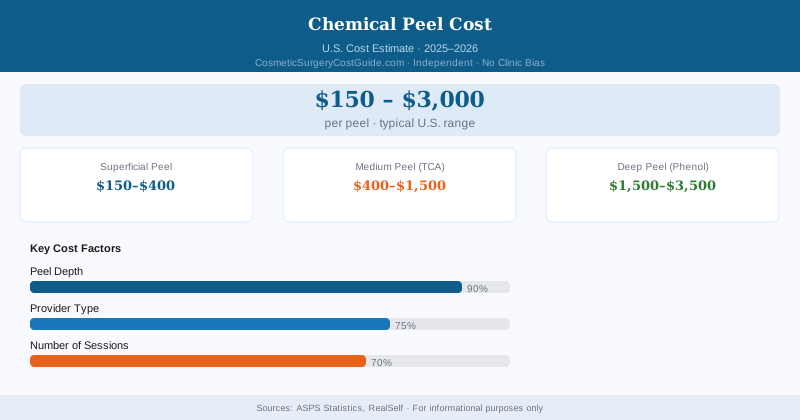
$150 for a chemical peel sounds like a deal. But a light glycolic peel and a 35% TCA peel are completely different procedures. One refreshes your skin. The other resurfaces it. Here’s the full cost and depth breakdown — so you know exactly what you’re paying for.
The confusion is understandable. “Chemical peel” covers everything from a $150 lunchtime treatment with zero downtime to a $3,000 phenol peel that takes a month to heal. The same name, radically different procedures. The American Academy of Dermatology lists chemical peels among the most cost-effective treatments for sun damage, fine lines, and hyperpigmentation — but only when the right depth is matched to the right concern.
Let’s break it down by depth.
Chemical peel cost by type and depth
| Peel Type | Common Agents | Cost | Downtime | Best For |
|---|---|---|---|---|
| Superficial | Glycolic 20–50%, salicylic, lactic | $150–$300 | None to 1–2 days | Texture, mild discoloration, maintenance |
| Medium (TCA) | TCA 15–35%, VI Peel, Jessner+TCA | $300–$800 | 5–7 days | Sun damage, fine lines, PIH, mild scarring |
| Deep | Phenol, TCA 40%+ | $1,500–$3,000 | 2–3 weeks | Severe photoaging, deep wrinkles, lifetime use |
| VI Peel (branded) | TCA + retinoic acid + salicylic | $300–$500 | 5–7 days | Sun damage, tone, accessible medium option |
| Series of 6 light peels | Glycolic/salicylic | $900–$1,500 total | Minimal per session | Ongoing maintenance, acne management |
Superficial peels — the maintenance tier
Superficial peels use lower-concentration acids to remove the outermost skin layer (stratum corneum to upper epidermis). Glycolic acid at 20–50%, salicylic acid at 15–30%, and lactic acid are the workhorses. These are genuinely useful — they improve texture, address mild discoloration, help with acne, and give skin a refreshed look. But a single session won’t dramatically change anything.
The series is what delivers results. Four to six peels spaced 2–4 weeks apart — the standard recommendation from the AAD for superficial peel protocols — produces meaningful cumulative improvement. Total cost: $600–$1,500 for the full series. A single $150 peel is fine for maintenance but won’t move the needle on actual concerns.
These are the safest peels across all Fitzpatrick skin types and can be performed by trained aestheticians in most states. If you can’t take time off for deeper treatment, this is your lane.
Medium-depth peels — where the real results begin
TCA (trichloroacetic acid) at 15–35% is what most people mean when they say they want a “real peel.” It penetrates to the upper dermis, causes visible peeling for 5–7 days, and produces meaningful improvement in:
- Sun damage and brown spots
- Mild to moderate fine lines
- Post-inflammatory hyperpigmentation (with careful protocol selection)
- Mild acne scarring
- Uneven skin tone and texture
One medium TCA peel can deliver results comparable to an entire series of superficial peels — at similar or lower total cost, with the downtime concentrated into one week rather than spread over months. That’s a genuine value proposition for patients who can take the time off.
The VI Peel is the most popular branded medium-depth option. It combines TCA, retinoic acid, salicylic acid, phenol, and vitamin C in a standardized formula widely available at medical spas. At $300–$500 per session, it offers accessible medium-depth results with predictable 5–7 day peeling. Many providers offer package pricing — ask before booking single sessions.
Applying Jessner’s solution (salicylic acid, lactic acid, resorcinol) before TCA creates more even penetration and reduces the risk of uneven peeling and post-peel hyperpigmentation. For Fitzpatrick III–IV skin tones — where straight TCA carries more risk — a Jessner + low-TCA combination often produces better results with a safer profile. Ask your provider whether they use this approach if you have a medium skin tone.
Deep peels — maximum resurfacing, once or twice per lifetime
Phenol peels and high-concentration TCA peels (40%+) reach the mid-dermis. This is the level that can dramatically address severe photoaging — deep wrinkles, extensive sun damage, significant irregular pigmentation — in ways lighter peels can’t touch.
The tradeoffs are real:
- 2–3 weeks of social downtime (raw, then heavily peeling skin)
- Permanent skin lightening of treated areas is possible
- Only appropriate for lighter skin tones (Fitzpatrick I–III); contraindicated for darker skin
- Phenol has cardiac implications — the procedure requires monitoring during treatment because phenol can cause arrhythmia if absorbed systemically too quickly
- These are physician procedures done in clinical settings, not spa treatments
At $1,500–$3,000, deep peels cost more than medium peels but less than fractional laser resurfacing with comparable depth. For the right patient with severe sun damage and light skin, a single deep peel can achieve in one treatment what might otherwise take multiple laser sessions.
Most patients do this once in their lifetime, if at all. The results are long-lasting — 5–10 years of maintained improvement for many patients.
Skin type and peel safety — the most important factor
The AAD’s guidance on chemical peel safety makes this explicit: peel depth must match skin tone, not just skin concern.
- Fitzpatrick I–III (light skin): All peel depths available with an experienced provider
- Fitzpatrick IV (medium skin): Light to medium peels with careful protocol selection; Jessner + low TCA is safer than straight medium TCA; deep peels only with extreme caution and physician expertise
- Fitzpatrick V–VI (dark skin): Superficial peels only — glycolic, salicylic, mandelic acid; medium and deep peels are contraindicated by most experts due to PIH and hypopigmentation risk
Post-inflammatory hyperpigmentation (PIH) is the main risk for darker skin tones. Treated areas can darken, and that darkening can persist longer and be harder to treat than the original concern. If you have medium-to-dark skin, don’t just look for a provider who offers peels — find one with specific documented experience treating your Fitzpatrick type.
At-home “professional strength” or “medium-depth” peel kits containing high-concentration TCA or phenol cause serious harm in inexperienced hands — permanent scarring, hypopigmentation, and infections. The AAD explicitly recommends against DIY medium and deep peels. Reasonable at-home options: glycolic at 10–15% or salicylic at 2%, available OTC. Anything labeled “TCA,” “medium peel,” or above salicylic 2% should be applied only by a trained provider. The cost savings aren’t worth the risk.
How peels compare to laser resurfacing
Both treat sun damage, fine lines, and texture. Here’s the financial comparison for similar results:
- Medium TCA peel ($400–$800): Comparable to some non-ablative laser sessions at lower cost, with better pigment-specific correction in many cases
- Deep phenol peel ($1,500–$3,000): Approaches the results of ablative fractional CO2 laser at similar or lower cost — less precise anatomically but dramatically effective for diffuse photoaging
- Non-ablative laser ($1,000–$2,500 per session): Less social downtime than medium/deep peels; may need 3–5 sessions for comparable results
- Fractional CO2 laser ($2,000–$4,000): More anatomically precise; better for localized textural concerns and acne scarring; peels handle diffuse pigmentation concerns better
Neither is universally superior. Your specific concerns, skin type, and available downtime determine which approach makes the most sense. A consultation with a board-certified dermatologist or plastic surgeon — not just a med spa aesthetician — gives you the most complete picture.
ASPS nonsurgical procedure context
The ASPS 2023 report shows nonsurgical skin rejuvenation procedures — including chemical peels — performed at millions of sites annually across the US, with chemical peels consistently in the top nonsurgical categories alongside laser treatments and injectables. The growth reflects genuine efficacy at accessible price points compared to surgical alternatives. For the right concern, a well-chosen peel delivers some of the best value in cosmetic medicine.
Frequently Asked Questions
It depends on depth. A single medium or deep peel can produce visible improvement after just one treatment. Superficial peels (glycolic, salicylic) are a maintenance play — you'll typically need a series of 4–6 spaced 2–4 weeks apart before seeing meaningful results. One glycolic peel alone won't do much. If you want significant improvement from light peels, budget for the full series ($600–$1,500 total) rather than a single session.
This depends on your state's regulations and the depth of the peel. The American Academy of Dermatology recommends that medium-depth TCA peels (25–35%) be performed by or under the direct supervision of a physician. Lower-concentration TCA peels (10–20%) may legally be performed by aestheticians in some states with training. Deep peels (phenol) are physician-only procedures requiring clinical monitoring. Before booking any TCA peel at a med spa, ask specifically about the concentration being used and the supervising physician's role.
The primary risk is post-inflammatory hyperpigmentation (PIH) — darkening of treated skin that can be worse than the original concern and is difficult to reverse. Medium and deep peels on Fitzpatrick IV–VI skin types carry significant PIH risk. The AAD recommends sticking to superficial peels (glycolic, salicylic, mandelic) for darker skin, with a provider experienced in treating your skin tone. Modified protocols using combination agents at lower concentrations can extend safe options, but these require a physician with documented experience treating melanin-rich skin.