Picture this: someone comes in for a rhinoplasty consultation, convinced their nose is the problem. The surgeon holds up a mirror, places a finger at the chin, and says — your nose is fine. Your chin is recessed. It’s a scene that plays out in plastic surgery practices more than you’d expect, because a weak chin makes the nose look bigger than it actually is. Restoring chin projection can shift the entire visual balance of the face without touching the nose at all.
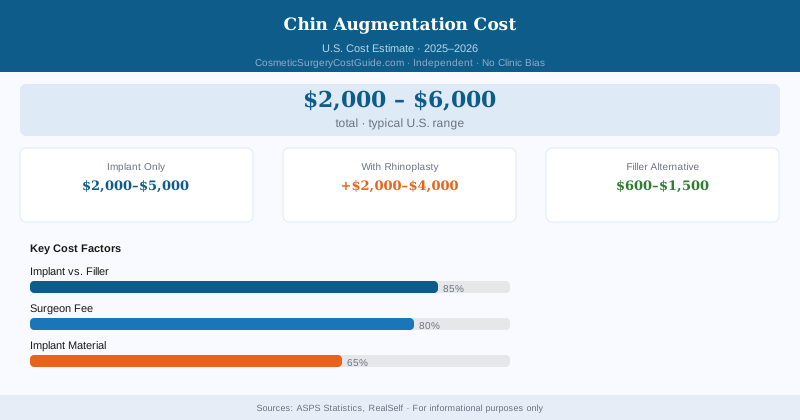
That’s why chin augmentation is one of the most commonly combined procedures with rhinoplasty — and why some patients who planned a nose job walk out with just a chin implant instead. ASPS 2024 data puts the average surgeon fee for chin augmentation at $2,654. All-in with anesthesia and facility, you’re typically looking at $3,500–$6,500.
Implant vs. Filler: The Core Comparison
| Option | Cost | Duration | Downtime |
|---|---|---|---|
| Chin filler (hyaluronic acid) | $600–$1,200 | 12–18 months | None |
| Chin filler (Radiesse) | $700–$1,400 | 18–24 months | None |
| Silicone chin implant (surgeon’s fee) | $2,000–$4,500 | Permanent | 5–10 days |
| Chin implant all-in | $3,500–$6,500 | Permanent | 5–10 days |
| Sliding genioplasty (bone surgery) | $5,000–$10,000 | Permanent | 2–3 weeks |
Chin Filler: The Low-Commitment Option
Filler is a smart way to test whether more chin projection actually improves your profile before you commit to surgery. A good injector can add definition, elongate the chin slightly, or correct minor asymmetry using hyaluronic acid fillers like Juvederm Voluma or Restylane Lyft.
The catch is that it’s temporary. You’ll be retreating every 12–18 months with Juvederm or every 18–24 months with Radiesse (which also stimulates some collagen production). Spread that over five years and you’re spending $3,000–$7,000 on filler — often more than the surgical option would have cost.
Many surgeons recommend a trial of chin filler before committing to a permanent implant. Filler lets you see the effect of more projection, experience what a changed chin looks like day-to-day, and confirm that a permanent change is what you want. If you love the result, the filler cost is money well spent toward your decision. If hyaluronic acid filler was used, it can be dissolved with hyaluronidase if you change your mind.
Chin Implants: What You’re Getting
Silicone chin implants go in through a small incision — either a tiny cut under the chin (external) or inside the mouth along the gum line (intraoral). The implant rests directly on the chin bone and is sometimes secured with a titanium screw.
You’ll have real choices about style and size. Extended anatomical implants wrap around the jawline for more lateral definition; basic central implants push the chin forward without adding much jaw width. Which style is right depends entirely on your bone structure and goals — this is worth discussing in detail at your consultation.
Recovery is manageable. Swelling and some numbness resolve over 3–6 weeks, but most patients are presentable in 7–10 days. Plan on soft foods for the first 1–2 weeks.
Sliding Genioplasty: The Most Precise Option
A sliding genioplasty is a bone surgery — the chin bone is cut, repositioned exactly where the surgeon wants it, and secured with titanium plates. It can move the chin forward, backward, up, or down, and it corrects asymmetry with a degree of precision no implant can match.
It’s also the most expensive option with the longest recovery. That cost and complexity is justified for patients with asymmetry or complex jaw structure issues that a standard implant simply can’t fix.
Combined Procedures and Discounts
Combining chin augmentation with another procedure is usually a smart financial move. Since you’re already paying for facility and anesthesia, adding chin work costs far less than scheduling it separately:
- Rhinoplasty: Adding a chin implant during a nose job typically adds $1,500–$2,500 to the surgeon’s fee with minimal additional facility or anesthesia cost. The facial balance improvement can be striking.
- Facelift: A chin implant can complement jowl correction by sharpening jaw definition.
- Neck liposuction: Often done at the same time to improve the chin-neck angle. Adds $1,500–$2,500.
What Drives the Cost
Implant cost: Silicone chin implants run $150–$600 depending on the manufacturer and style. This is typically bundled into the surgeon’s quoted fee.
Anesthesia type: Chin implants can be done under local anesthesia with oral sedation (less expensive) or IV sedation (more common for patient comfort). The difference in anesthesia cost can be $500–$900.
Geographic location: Major metro areas in California and the Northeast tend to run 25–40% above national averages.
Chin implant placement has a learning curve. Asymmetric positioning, implant shifting, or bone resorption under the implant can occur with less experienced surgeons. Always choose a board-certified plastic surgeon or facial plastic surgeon who regularly performs this procedure and can show you before-and-after photos demonstrating natural-looking results.
Reversibility and Revision
One real advantage silicone implants have over genioplasty: they can be removed or swapped relatively easily if you don’t like the result or if complications develop. Implant exchange for a different size runs $2,000–$4,500 all-in — that’s far simpler than revising a bone surgery.
Bottom Line
For a silicone chin implant with a board-certified surgeon: budget $3,500–$6,000 all-in in most US markets. Filler at $600–$1,200 is a reasonable way to test the look before committing to anything permanent. And if you’re already planning rhinoplasty or a facelift, bring up chin augmentation — adding it at the same time takes real advantage of the facility and anesthesia costs you’re already paying.