You’re sitting across from a surgeon who’s done this a thousand times. You have 45 minutes. And if you’re like most patients, you’ll spend the first 30 listening to their pitch before remembering you had questions.
Flip that dynamic. A cosmetic surgery consultation is a job interview, not a sales appointment. You’re evaluating whether this surgeon — not just the procedure — is right for you. You can ask whatever you want, take notes, and walk out without explanation. Most patients don’t realize that leverage is completely theirs.
Before You Walk In
Preparation changes what you get out of the appointment.
Pull together reference photos — images of results you like from RealSelf or ASPS galleries, and equally important, images of results you want to avoid. Being specific helps the surgeon understand your aesthetic. “Natural” means something different to every patient; a photo communicates instantly.
Write down your concerns in priority order. If you have three things you want addressed, rank them. Consultations move fast and you don’t want to leave without covering what actually matters to you.
Check credentials before you go. Search the surgeon’s name at ABMS.org to confirm American Board of Plastic Surgery (ABPS) certification. Two minutes. Changes how you hear everything else in the room.
The 15 Questions That Matter
Volume and specificity:
How many of this specific procedure do you perform per year? Not “cosmetic surgery” in general — the specific procedure. Volume correlates with outcome.
What percentage of your practice is this procedure? A surgeon who does 10 facelifts a year is a different conversation than one who does 150.
Can I see before-and-after photos of your own patients? Not stock images — their patients, ideally with similar anatomy to yours.
Safety and facility:
Where will the procedure be performed? Is the facility accredited by AAAHC or The Joint Commission?
Who will administer anesthesia — an MD anesthesiologist or a CRNA? Will they be present for the entire procedure?
What’s the plan if I have a complication during surgery? This question tells you whether they’ve thought through emergency protocols or are winging it.
Results and revisions:
What result can I realistically expect? Listen for specificity — and be skeptical of guarantees.
What result can’t this procedure achieve? The best surgeons will tell you this unprompted. It’s actually a good sign when they do.
What’s your revision policy if I’m not satisfied with the outcome?
What’s your revision rate for this procedure?
Your specific situation:
Am I a good candidate for this procedure based on my anatomy, health history, and goals?
Are there alternatives — surgical or non-surgical — that might achieve a similar result?
What’s the realistic recovery timeline for someone in my situation?
The financials:
What’s included in the quoted price? Anesthesia, facility fees, post-op appointments, compression garments — ask what’s bundled versus billed separately.
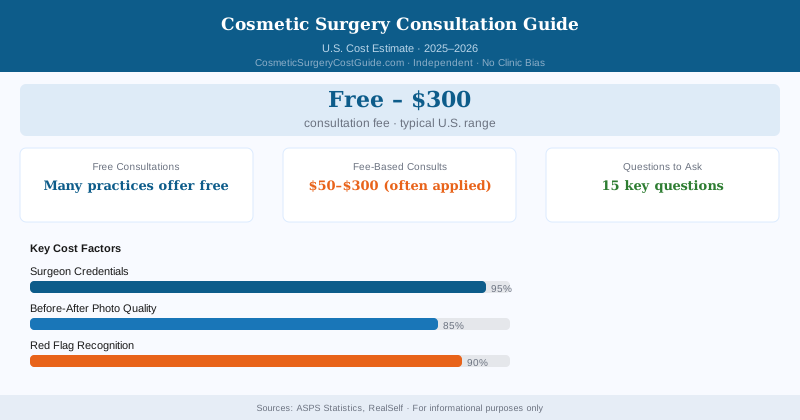
Is the consultation fee applied toward the procedure cost if I book?
How to Evaluate Before-and-After Photos
The gallery is the clearest signal of a surgeon’s skill and aesthetic. But photos can be curated in ways that flatter results.
Look for consistency in lighting, angle, and background between before and after photos. Inconsistency — different lighting, different head tilt, different expression — makes comparison unreliable and sometimes masks underwhelming results. Look at patients with similar anatomy to yours. Prioritize results that are a year or more post-procedure, not just immediate post-op when swelling can make everything look more dramatic. Ask to see patients with results that look too subtle — that tells you how the surgeon handles natural-looking work, not just the dramatic transformations they’re proudest of.
According to the American Society of Plastic Surgeons, over 1.8 million cosmetic surgical procedures were performed in the US in a recent year. The surgeons with the most refined results tend to be the ones whose galleries show the widest variety of patients, not just their top 10.
Reliable before-and-after galleries share these traits:
- Consistent lighting, background, and camera distance in both photos
- Head position and angle identical in facial surgery photos
- Photos taken at standardized time points (not just immediate post-op)
- Results across a range of patient ages and anatomies
- Natural variation — not every result looks picture-perfect
A surgeon showing only their best 10 outcomes from 200 procedures is showing you selection bias. Ask how many cases they perform per year and how many are in the gallery.
Red Flags That Should End the Conversation
Some of these are more visible in retrospect. Here’s what to watch for in real time.
Leave if the surgeon:
- Doesn’t tell you which board they’re certified by — or won’t answer directly
- Guarantees specific results (“I’ll give you the exact nose you want”)
- Pressures you to decide or book before leaving the consultation
- Dismisses your concerns or tells you what you should want instead of listening
- Can’t show you before-and-after photos of actual patients they’ve operated on
- Plans to perform the procedure in a non-accredited office or facility
- Quotes a price significantly below market rate without a clear explanation
- Has a plan where the surgeon also administers anesthesia (surgeon and anesthesia provider should be separate people)
After the Consultation
You don’t owe the surgeon a decision before you leave, and reputable surgeons don’t expect one. Take your notes home. Sleep on it. Consider scheduling a second consultation with a different surgeon — comparing experiences clarifies more than either consultation alone.
If a consultation fee was charged and it felt rushed, dismissive, or like you were being upsold, that fee just saved you from booking a procedure with someone who wasn’t right for you. Think of it that way.
The right surgeon will welcome your questions, answer them directly, and leave you feeling informed — not sold to. That’s the standard. Anything less, keep looking.
| Consultation Format | Typical Cost | Usually Applied to Procedure? |
|---|---|---|
| Free consultation | $0 | N/A |
| Standard consultation | $50–$150 | Usually yes |
| Premium/specialist consultation | $150–$300 | Often yes |
| Virtual/video consultation | $0–$100 | Varies by practice |