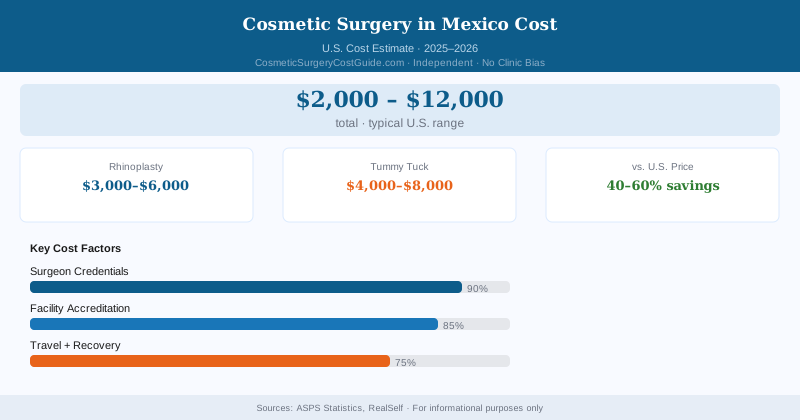
Mexico vs. the US for cosmetic surgery: the savings are real, and so are the risks. This isn’t a story where one side is clearly right — it’s a calculation that depends almost entirely on which surgeon and which facility you end up with.
An estimated 1.2 million Americans travel to Mexico for medical care each year, with cosmetic procedures representing one of the fastest-growing segments. The cost difference can be staggering: a tummy tuck that runs $12,000 in Dallas might cost $5,000 in Tijuana with a CMCP-certified surgeon at a JCI-accredited facility. That $7,000 gap is real money.
But Mexico’s cosmetic surgery landscape is genuinely bifurcated. There are world-class plastic surgeons at internationally accredited hospitals — and there are low-cost, low-quality operations built specifically to capture budget-seeking American tourists. Knowing how to tell them apart is the entire ballgame.
Mexico Cosmetic Surgery Cost Guide
| Procedure | US Average | Mexico Range | Potential Savings |
|---|---|---|---|
| Rhinoplasty | $8,000–$12,000 | $3,000–$6,500 | $2,500–$8,500 |
| Breast augmentation | $7,000–$11,000 | $3,000–$5,500 | $2,000–$7,500 |
| Breast lift | $8,000–$12,000 | $3,500–$6,000 | $2,500–$8,000 |
| Tummy tuck | $9,000–$14,000 | $4,000–$8,000 | $3,000–$9,000 |
| Mommy makeover | $14,000–$22,000 | $6,500–$12,000 | $4,500–$13,000 |
| Facelift | $12,000–$20,000 | $5,000–$10,000 | $4,000–$13,000 |
| Liposuction (3 areas) | $8,000–$12,000 | $3,500–$7,000 | $2,500–$8,000 |
| BBL | $9,000–$14,000 | $4,000–$8,000 | $3,000–$9,000 |
Mexico’s Top Medical Tourism Cities
Tijuana: The most popular destination for California patients. It’s 20 minutes from San Diego, and because of the consistent flow of American patients, some of Mexico’s most experienced plastic surgeons are based here. Hospitals like Hospital Excel and Hospital Angeles Tijuana have established reputations with international patients.
Monterrey: An industrial city with a large, well-trained medical community that particularly attracts Texas and East US patients. Excellent hospitals, slightly less cosmetic-tourism infrastructure than Tijuana but strong overall quality.
Cancun and Riviera Maya: A growing medical tourism hub that combines surgery with a resort recovery environment. Facilities have improved significantly in the last decade — patients like the recovery setting.
Mexico City (CDMX): The country’s largest medical infrastructure. Excellent academic medical centers and individual surgeons, though less cosmetic-tourism-specific setup than Tijuana or Monterrey.
Puerto Vallarta and Guadalajara: Established plastic surgery practices in mid-size markets; less volume than the top cities but solid individual surgeons.
How to Vet a Mexican Plastic Surgeon
Don’t skip this step. The credential difference between a qualified surgeon and an unqualified one in Mexico is enormous — and not always obvious from a website.
The key credential to verify:
CMCP membership (Consejo Mexicano de Cirugía Plástica, Estética y Reconstructiva): Mexico’s national plastic surgery board certification. It’s the Mexican equivalent of ABPS certification in the US, and you can verify it on their website. CMCP-certified surgeons have completed required residency, formal training, and passed examination processes.
ISAPS (International Society of Aesthetic Plastic Surgery): International membership indicating aesthetic surgery focus and a commitment to international standards.
JCI-accredited facility: Joint Commission International accredits international hospitals to US standards. A surgeon operating at a JCI-accredited facility adds a meaningful layer of safety assurance — these facilities undergo independent audits of their processes and safety protocols.
- Get the surgeon’s full name and their claimed CMCP member number
- Go to the CMCP website (cmcper.org.mx) and verify their listing
- Google the surgeon’s name plus “resultados” (results) to find before-and-after photos
- Search their name in Facebook groups dedicated to Mexico medical tourism — look for verified patient experiences
- Request a video consultation with the surgeon before committing
- Ask for: their annual volume of the specific procedure you want, their complication rate, and their protocol if you develop complications after returning to the US
- If the facility claims JCI accreditation, verify it at jointcommissioninternational.org
All-Inclusive Packages: What’s Included
A lot of Mexico medical tourism providers bundle surgery with recovery logistics into all-inclusive packages. A typical Tijuana mommy makeover package might cover:
- Surgery (surgeon fee + anesthesia + facility)
- 3–5 nights post-op accommodation
- Airport transfers
- Daily nursing check-ins
- Basic medications and compression garments
Package prices: $7,000–$14,000 depending on procedure complexity.
These packages simplify logistics and often represent genuine value. But “convenient bundle” doesn’t automatically mean each component is high quality — verify the facility and the nursing care separately from the price, not just the total number.
Travel and Recovery Logistics
How long to stay: Plan for a minimum of 7–10 days in Mexico for most procedures — 14 days is better for major body contouring work. Flying home too early meaningfully increases your complication risk and DVT (blood clot) risk from the flight.
Flying home: Most surgeons want you waiting 10–14 days after major surgery before boarding a plane. Wear compression stockings and get up to walk during the flight — it matters.
What to bring: Medications will be provided, but bring your US insurance card in case you need US care after returning, all your preoperative test results, and your travel insurance documentation.
Travel insurance: Buy a policy that explicitly covers medical complications and evacuation before you leave the country. Standard travel insurance often excludes elective procedure complications — read the policy carefully before purchasing.
Not all of Mexico is equally accessible to American patients. While Tijuana and Monterrey have robust infrastructure for medical tourists, smaller cities may have limited emergency capability if a serious complication develops. Stick to established medical tourism cities and established medical tourism facilities — not individual surgeons operating from small clinics in non-major cities. The convenience savings from a smaller-city option are not worth the reduced emergency infrastructure.
After You Return Home: Managing Follow-Up
This is the most consistently underplanned part of Mexico cosmetic surgery — and it’s the part that creates the most problems when it goes wrong. Before you travel:
- Identify a board-certified plastic surgeon in your home city who will see you for post-Mexico follow-up care. Get that commitment confirmed by phone before you leave — don’t assume you’ll find someone easily after the fact.
- Know which warning signs mean emergency room, and which mean next-day surgeon appointment.
- Have your Mexican surgeon’s WhatsApp or direct email for questions after you’re home.
The most common post-Mexico issues that require US care: wound separation, infection, seroma formation, unexplained swelling. Having a local physician lined up means these get handled in a clinical setting rather than an ER waiting room.
Bottom Line
Mexico cosmetic surgery at a JCI-accredited facility with a CMCP-certified surgeon is genuinely good value for many patients. The savings — 40–60% versus US pricing — are real. According to ISAPS international data, Mexico’s leading surgeons perform procedures at volumes that compare favorably to US practices. The risks are manageable with the right preparation. Do thorough due diligence, plan for two weeks in-country, lock in US follow-up care before you go, and buy travel insurance that actually covers medical complications.