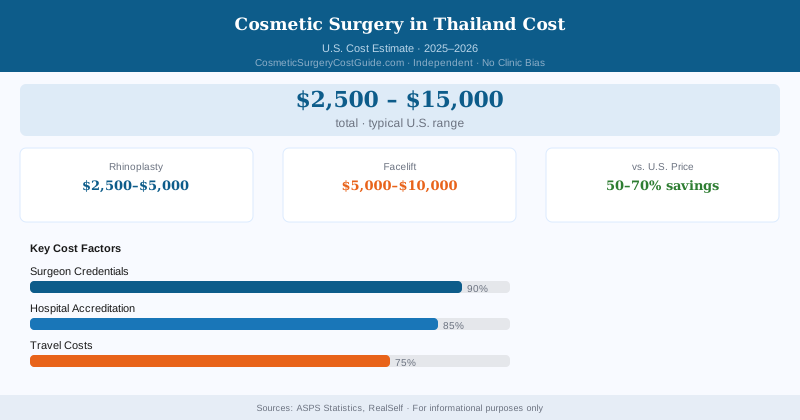
Bangkok’s major hospitals have been treating international patients since the 1990s. Today the infrastructure is genuinely mature — English-speaking medical coordinators, JCI-accredited facilities, and surgeons who trained at programs in the US, UK, and Australia. That’s not marketing copy; it’s why roughly 2.5 million medical tourists visit Thailand annually, according to the Thailand Ministry of Public Health.
The round trip from the US is long — 18 to 22 hours depending on your departure city. But for procedures saving $10,000 to $20,000, most patients find that friction disappears pretty fast once they do the math.
Thailand Cosmetic Surgery Cost Guide
| Procedure | US All-In | Thailand All-In | Savings |
|---|---|---|---|
| Rhinoplasty | $8,000–$12,000 | $3,000–$7,000 | $3,000–$9,000 |
| Breast augmentation | $7,000–$11,000 | $3,000–$6,000 | $3,000–$8,000 |
| Facelift | $12,000–$20,000 | $5,000–$10,000 | $5,000–$13,000 |
| Eyelid surgery (both) | $5,500–$9,500 | $1,800–$4,500 | $2,500–$7,000 |
| Tummy tuck | $9,000–$14,000 | $4,000–$8,500 | $3,000–$10,000 |
| Liposuction (3 areas) | $8,000–$12,000 | $3,500–$7,000 | $3,000–$8,500 |
| Hair transplant (FUE) | $7,000–$15,000 | $3,000–$7,000 | $3,000–$11,000 |
| Gender-affirming surgery | $20,000–$60,000 | $8,000–$20,000 | $10,000–$40,000 |
Thailand’s Medical Infrastructure: What You’re Actually Getting
Thailand’s reputation rests on a handful of genuinely world-class institutions — not the whole country equally, so you need to know the difference.
Bumrungrad International Hospital (Bangkok): JCI-accredited since 2002; treats 1.1 million patients annually from 190+ countries. The plastic surgery department has surgeons who completed fellowship training at Western programs. This is legitimately top-tier.
Bangkok Hospital Medical Center (BDMS group): Multiple facilities across Thailand, several with JCI accreditation. A solid choice.
Samitivej Hospital: JCI-accredited, strong international track record, multiple specialties including cosmetic surgery.
Phyathai and Paolo hospitals: Well-established mid-range options — not all JCI-accredited, but they’ve been treating international patients for decades.
Thailand’s Medical Council licenses surgeons domestically, and plenty of Thai plastic surgeons hold additional board certifications from US, Australian, or European programs. Don’t assume they don’t — ask.
Thailand’s Specialty: Gender-Affirming Surgery
Thailand has one of the highest concentrations of gender-affirming surgery specialists in the world. For transgender patients seeking procedures like vaginoplasty, you’re looking at 50–70% lower costs than the US combined with surgeons who have decades of dedicated experience — practitioners like Dr. Preecha Tiewtranon and Dr. Suporn Watanyusakul have genuinely international reputations in this area. That’s not hype; their patient communities are global and vocal.
For gender-affirming procedures specifically, Thailand’s depth of specialist experience is hard to find anywhere else.
Thailand has particular expertise in Asian double eyelid surgery (creating or refining the supratarsal fold) that makes it a natural destination for East Asian and Southeast Asian patients — including many Asian-Americans who want surgeons with cultural and anatomical familiarity with Asian eyelid anatomy.
Bangkok clinics that specifically focus on cosmetic eyelid work have extensive experience with the nuances that general plastic surgeons in the US may handle less frequently. For Asian blepharoplasty specifically, Thailand’s specialists represent compelling value both in cost and depth of experience.
Planning a Thailand Cosmetic Surgery Trip: Step by Step
Here’s how a well-organized Thailand surgery trip actually comes together.
Step 1 — Book your consultation (virtually first). Most major Bangkok hospitals offer virtual pre-op consultations. Do this before buying plane tickets. Send your photos, get a treatment plan and quote, confirm the surgeon’s credentials.
Step 2 — Budget for flights. Round trip from the US West Coast runs $800–$1,600. From the East Coast, plan $1,200–$2,000. The 11–12 hour time difference means jet lag is real — build in a recovery day before any surgical appointments.
Step 3 — Plan your stay. Major procedures require 2–3 weeks in Thailand before you’re cleared to fly home. Bangkok is easy to navigate as an ambulatory patient in later recovery stages — Chiang Mai and beach areas are accessible too. Recovery accommodations range from basic hotels ($30–$60/night) to dedicated medical recovery facilities with nursing support ($100–$300/night).
Step 4 — Sort your visa. Americans get a 30-day visa-on-arrival. It’s extendable for another 30 days at immigration offices. That’s plenty for virtually any recovery timeline.
Step 5 — Use the hospital’s international patient department. Every major Bangkok hospital has one. They handle English-language coordination, pre-departure paperwork, and on-site support. Don’t skip this — it genuinely makes the process smoother.
Verifying Quality: What to Actually Check
Don’t take a hospital’s own marketing at face value. Here’s what to verify independently:
Surgeon’s training: Ask specifically where they completed their training and whether they hold any international board certifications beyond their Thai credentials. A surgeon who trained at a US or UK fellowship program is meaningfully different from one who didn’t.
JCI accreditation: Verify directly at jointcommissioninternational.org — not from a hospital’s own website. Hospitals have been known to claim accreditation they don’t currently hold.
Third-party reviews: Reddit’s medical tourism forums, dedicated Facebook groups for international patients, and procedure-specific communities are your best sources. Look for recent posts, not just highlight reels.
Before-and-after photos: Ask for cases involving patients with anatomy similar to yours. For eyelid and rhinoplasty work especially, aesthetic goals vary significantly by ethnicity — you want a surgeon whose portfolio includes that.
Thailand’s reputation has also attracted lower-quality operators who capitalize on the country’s positive medical tourism image. Not all Bangkok plastic surgery clinics are equivalent — the quality differential between a JCI-accredited major hospital and an unlicensed clinic in a tourist district is enormous. Stick to hospitals with verifiable JCI accreditation and surgeons with verifiable credentials. Avoid booking through social media DMs, heavily discounted “deals,” or medical tourism brokers who cannot provide specific accreditation documentation.
After Returning to the US
This is where Thailand surgery gets logistically harder than Mexico surgery. If something goes wrong three days after you fly home, a 2-hour drive to a US follow-up surgeon is very different from a 20-hour return flight. The distance matters.
Before you leave Bangkok, sort out three things:
- Identify a US board-certified plastic surgeon willing to provide follow-up care after international surgery. Find this person before your trip, not after.
- Get your Thai surgeon’s direct communication contact and the hospital’s international patient department number. You’ll want them if questions come up.
- Know exactly which symptoms mean “go to the US emergency room now” versus “this can wait for a scheduled follow-up.”
The hospitals are good about providing this guidance — but you should have it clearly written down before your flight home.
Bottom Line
For rhinoplasty, facelift, tummy tuck, or hair transplant at a JCI-accredited Bangkok hospital with a credentialed surgeon, Thailand represents among the best value in global medical tourism — 50–70% savings over US prices is real. For Asian eyelid surgery or gender-affirming procedures, the specialist depth rivals anything in the US. The $1,000–$2,000 flight and 18+ hour travel time is the real cost. For procedures saving $10,000 or more, most people find that’s a trade they’re happy to make.