Two women, same surgeon, same operating room. One pays $12,000 out of pocket. The other pays her $3,500 deductible and her insurance picks up the rest. Same procedure. The difference isn’t luck or connections — it’s documentation, diagnosis codes, and knowing which side of a very specific line you’re standing on.
If you’re planning any procedure that touches the grey area between cosmetic and functional, understanding this distinction could save you thousands of dollars. Or cost you thousands if you don’t.
The Legal Definitions
The American Society of Plastic Surgeons draws the line this way: cosmetic surgery is performed to reshape normal structures of the body to improve appearance and self-confidence. Reconstructive surgery is performed on abnormal structures of the body caused by congenital defects, developmental abnormalities, trauma, infection, tumors, or disease.
Insurance companies use the phrase “medical necessity” — meaning a procedure is required to restore normal function or address a documented health condition, not purely to improve the appearance of a body that functions normally.
Cosmetic = elective improvement of normal structures. Reconstructive = restoration of function or form after disease, injury, or defect.
Procedures That Are Always Cosmetic
These procedures are elective by definition. No amount of documentation changes the coverage picture:
- Breast augmentation (adding volume to a normal breast)
- Facelift (addressing normal aging)
- Liposuction for body contouring
- Rhinoplasty purely for aesthetic reshaping
- Brow lift for appearance
- Body lift after weight loss (see note below)
Insurance companies treat these as lifestyle choices. Some patients push back on this framing — emotionally, that’s completely understandable — but insurers are consistent here.
Procedures That Can Go Either Way
This is where it gets genuinely interesting, and where smart documentation changes outcomes. According to ASPS data, about 5.8 million reconstructive procedures were performed in the US in a recent year — many of them with functional components that unlocked partial or full coverage.
Rhinoplasty: Purely aesthetic reshaping? Cosmetic. Documented deviated septum causing chronic nasal obstruction — confirmed by an ENT with nasal airflow testing — and the functional component (septoplasty) is often covered. Surgeons frequently perform a combined procedure: insurance covers the septoplasty, patient pays for the aesthetic rhinoplasty component. You get the breathing fix and the nose you wanted, split across two different payment sources.
Blepharoplasty (eyelid surgery): Upper eyelid surgery is cosmetic when it’s for appearance. But when redundant upper eyelid skin causes measurable visual field obstruction — documented by an ophthalmologist with visual field testing — upper blepharoplasty becomes a functional procedure. Many insurance policies cover it with that documentation, and the threshold isn’t as high as people assume. If you’re over 50 with heavy upper lids, get a visual field test before deciding you’re self-pay.
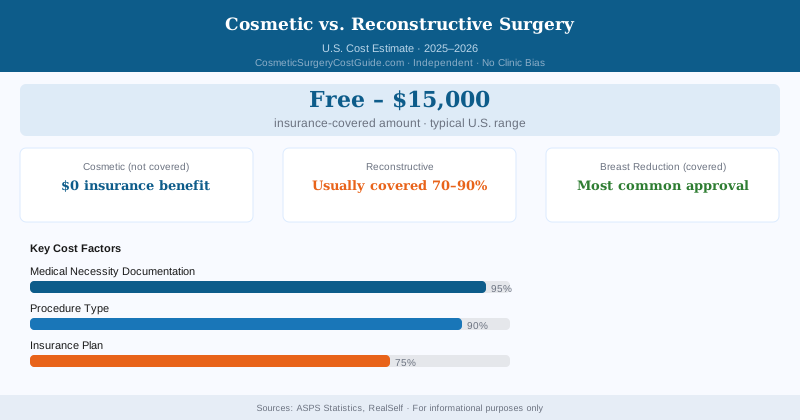
Breast reduction: One of the most consistently covered reconstructive procedures. Macromastia — excessively large breasts causing chronic back pain, shoulder grooving from bra straps, skin rashes under the breast fold, or nerve pain — is a documented medical condition. Insurance coverage typically requires at least six months of documented conservative treatment, a minimum tissue removal amount (often 500g per side or more, based on BMI), and physician letters supporting medical necessity.
Breast reduction is one of the most commonly approved reconstructive procedures. If you have chronic back pain, rashes, skin infections, or nerve pain from macromastia, build your documentation file before pursuing surgery:
- Six months of documented treatment for back/neck pain (PT, pain management, chiropractic)
- Photographs of skin rashes or irritation under the breast fold
- Referring physician letter documenting symptoms and supporting medical necessity
- Dermatology records if you’ve been treated for recurrent skin infections
- Note your bra strap shoulder grooving — have a physician document it
Many patients are surprised to find out their insurer will cover breast reduction. The documentation process takes time, but for patients who qualify, it dramatically cuts out-of-pocket costs.
Post-Mastectomy Reconstruction: Federal Law
This one isn’t negotiable. The Women’s Health and Cancer Rights Act of 1998 requires all health insurance plans that cover mastectomy to also cover breast reconstruction following mastectomy for breast cancer. This includes reconstruction of the treated breast, surgery on the other breast to achieve symmetry, prostheses, and treatment of physical complications from mastectomy including lymphedema.
If your insurer tries to deny post-mastectomy reconstruction, they’re in violation of federal law. Contact your state insurance commissioner.
Cost Comparison: Self-Pay vs. Insurance-Covered
| Procedure | Self-Pay Estimate | With Insurance (patient portion) | Coverage Basis |
|---|---|---|---|
| Rhinoplasty (aesthetic only) | $7,000–$15,000 | Not covered | Cosmetic |
| Septoplasty + rhinoplasty (functional) | $9,000–$18,000 | $3,000–$6,000 | Functional portion covered |
| Blepharoplasty (cosmetic) | $3,000–$6,000 | Not covered | Cosmetic |
| Blepharoplasty (visual field obstruction) | $3,000–$6,000 | $500–$3,000 | Functional, with documentation |
| Breast reduction (macromastia) | $7,000–$12,000 | $1,500–$5,000 | Medical necessity, if approved |
| Breast reconstruction post-mastectomy | $15,000–$50,000+ | Deductible/copay only | Federal law (WHCRA) |
| Breast augmentation | $6,000–$12,000 | Not covered | Cosmetic |
Getting Insurance to Cover a Dual-Purpose Procedure
If your procedure has both cosmetic and functional elements, the documentation process starts before you book surgery — not after.
Get referrals and testing from the appropriate specialists: an ENT for nasal obstruction, an ophthalmologist for visual field testing, a primary care physician or spine specialist for back pain related to macromastia. Let those medical records accumulate over time. Have your surgeon submit a prior authorization request with supporting documentation attached.
Denials happen. Appeals succeed. The appeals process is worth pursuing, especially for breast reduction, where approval rates on first appeal are meaningful.
The line between cosmetic and reconstructive isn’t always clean — but knowing where to push makes a real difference in what you ultimately pay.