If you’re reading this, you’re probably either a parent who’s watched their kid come home upset about their ears, or an adult who’s dealt with self-consciousness about protruding ears for years and is finally looking into doing something about it. Either way, you’re in the right place.
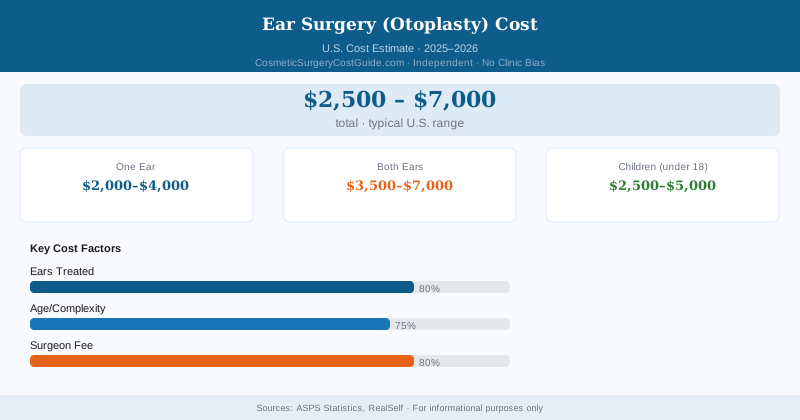
Otoplasty — ear pinning and reshaping — is one of the highest satisfaction-rated cosmetic procedures performed each year, partly because the psychological impact is so real and the change so visible. According to the ASPS, the average surgeon fee runs $3,736, with all-in costs typically landing between $4,500 and $8,000.
What Otoplasty Typically Costs
| Cost Component | Typical Range |
|---|---|
| Surgeon’s fee | $2,800–$5,500 |
| Anesthesia | $700–$1,500 |
| Facility fee | $600–$1,200 |
| Post-op headband/wrap | Often included |
| Follow-up visits | Usually included |
| Total all-in | $4,500–$8,000 |
Otoplasty for both ears is more cost-efficient than treating them separately — most surgeons charge only marginally more for bilateral work because the operating time difference is modest. If only one ear is the primary concern, your surgeon will advise whether treating both makes sense for symmetry or whether one side alone is sufficient.
What Otoplasty Can Fix
If you’re not sure your concern falls into the “fixable” category, here’s the range of what otoplasty addresses:
- Protruding ears: The most common concern — ears that stick out more than 2cm from the head
- Macrotia: Ears that are disproportionately large relative to the head
- Cupped or lop ears: Where the ear rim folds down or inward
- Cryptotia: Where the upper ear is buried under the scalp skin
- Prominent earlobe: Exceptionally large lobes
- Shell ear: Where the natural folds and contours of the ear are underdeveloped
The technique depends on the specific anatomy. Cartilage-scoring and suture techniques are standard for most ear prominauris corrections — the goal is to reposition and reshape the cartilage into a more natural position relative to the head.
For Parents: Pediatric vs. Adult Otoplasty
If you’re researching this for your child, here’s what’s different about pediatric otoplasty versus adult.
For children (ages 5–16): The procedure is typically performed under general anesthesia — ear cartilage injections are uncomfortable, and you need a child who stays still throughout the procedure. General anesthesia adds $300–$600 compared to the local sedation often used for adults, but it’s the right call. Kids usually need about 1–2 weeks off from school and playground activity.
For adults: Many surgeons do adult otoplasty under local anesthesia with oral sedation. Lower anesthesia cost, simpler recovery. Most adults are back at a desk job within 5–7 days.
Most plastic surgeons recommend waiting until age 5–6 when ear cartilage has reached approximately 85–90% of its adult size. Operating before this age risks interfering with cartilage development. Some surgeons prefer to wait until age 7–8 for a more definitive result. The ASPS notes that children who have otoplasty before the start of school often experience significant psychosocial benefits.
Will Insurance Cover It?
For adults: almost certainly not. It’s cosmetic, and insurers treat it that way.
For children: some insurers will cover correction of significant congenital ear deformities — microtia, cryptotia, constricted ear — when they cause functional issues or represent major developmental abnormalities. Standard ear pinning for prominauris is generally not covered even in children.
Microtia reconstruction — building an ear for a child born without one — is a separate, far more complex procedure that often involves rib cartilage grafting. That’s frequently covered as reconstructive surgery, and costs run $15,000–$40,000. If that’s your situation, ask your plastic surgeon specifically about the coverage pathway for microtia reconstruction.
What Affects the Price
Surgeon specialization: Surgeons who focus on pediatric plastic surgery or facial plastic surgery charge more — and for ear surgery on children, that focus matters. Younger cartilage is more delicate, and technique experience shows in the results.
Technique complexity: Simple ear pinning with sutures (Mustardé technique) is faster and less expensive than procedures requiring cartilage scoring, reshaping, or grafting. Your surgeon’s recommendation will depend on your anatomy.
Geographic location: Los Angeles, New York, and Miami run 25–40% above national average. Midwest and Southeast markets tend to land closer to the average.
Anesthesia setting: Ambulatory surgery center fees are typically 25–35% below hospital OR fees. For most elective otoplasty procedures, an accredited outpatient facility is just as appropriate — and it saves money. Ask whether your surgeon operates at both.
Avoid surgeons who advertise ear pinning as a quick office procedure without proper surgical facility accreditation. Otoplasty requires sterile technique, proper cartilage handling, and the ability to manage rare complications. Infection or cartilage damage can be difficult to correct. Choose a board-certified plastic surgeon or facial plastic surgeon with experience in ear procedures specifically.
Recovery Costs to Plan For
Recovery from otoplasty is financially pretty light:
- Post-op compression headband (worn for 2–6 weeks): Usually included in the surgical fee
- Pain medication for the first 3–5 days: $30–$80
- Children: plan for about 1 week out of school and away from playground activities
- Adults: 5–7 days off for desk work, longer for physically demanding jobs
Bottom Line
All-in otoplasty with a board-certified surgeon runs $4,500–$7,500 for most patients in typical US markets. It’s one of the highest satisfaction-rated cosmetic procedures available — partly because the result is permanent, partly because the change in self-confidence for kids and teens in particular is hard to overstate. If your child is dealing with teasing, don’t wait until it becomes a bigger issue. A consultation is free and gives you real information to work with.