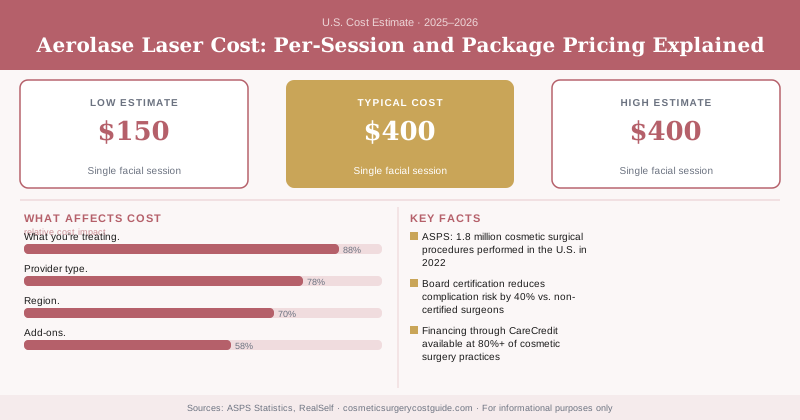
Most patients assume a laser that treats acne, rosacea, melasma, and unwanted hair must cost a fortune per session. Aerolase actually runs $150–$400 a treatment — one of the more affordable in-office lasers you’ll find.
Aerolase Neo is a 1064 nm Nd:YAG laser known for a particular trick: a 650-microsecond pulse that delivers energy fast enough to skip the topical numbing and aggressive cooling most lasers require. That matters for cost, because faster, gentler sessions mean medspas can run them at higher volume and price them lower. It’s also marketed as safe across all six Fitzpatrick skin types, which has made it popular for patients with deeper skin tones who’ve been turned away from other devices.
Aerolase pricing breakdown
| Treatment | Cost |
|---|---|
| Single facial session | $150–$400 |
| Acne treatment package (4–6 sessions) | $600–$1,600 |
| Rosacea/redness package (3–5 sessions) | $700–$1,500 |
| Melasma/pigment series | $800–$1,800 |
| Laser hair removal (small area, per session) | $75–$250 |
Why it’s priced as a series
Like most lasers built around comfort rather than intensity, Aerolase works through repetition. A single session can calm active acne or redness temporarily, but clearing a pattern of breakouts or persistent rosacea takes a course — usually four to six sessions spaced two to four weeks apart.
So while the per-session price looks gentle on your wallet, the real number for a meaningful result lands in the four-figure range. The American Academy of Dermatology has long noted that acne affects up to 50 million Americans annually, and laser therapy is increasingly used alongside topicals — which means demand keeps these packages competitively priced.
A single Aerolase session is cheap — $150–$400 — but plan on a package of 4–6 for acne or rosacea, landing around $600–$1,600 total. The low per-session price is its biggest advantage over more expensive devices, especially if you have a deeper skin tone and limited options elsewhere.
What changes the price
What you’re treating. Acne and redness sessions sit at the lower end. Pigment and melasma series cost more because they often require more sessions and careful settings.
Provider type. Dermatology offices price higher than medspas. Some medspas bundle Aerolase into facial memberships, which can drop your effective rate.
Region. Big coastal metros add 30–40% over the national midpoint.
Add-ons. Many clinics stack Aerolase with microneedling or a light chemical peel in the same visit for texture and tone, which raises the per-visit total but can shorten the overall series.
How it stacks up
For active acne and redness, Aerolase is one of the cheaper laser routes. Compared with a device-driven texture treatment like Morpheus8, it’s far less expensive per session but also less aggressive — it’s not a remodeling treatment. If your main goal is tone and inflammation rather than tightening, that lower price is a genuine advantage.
“No downtime” doesn’t mean “no skill required.” Settings for melasma in particular can backfire and worsen pigment if they’re wrong. Make sure whoever runs your treatment has specific experience with your concern and your skin tone, not just general laser hours.
Common questions
Does insurance cover acne treatment with Aerolase? Almost never — it’s billed as cosmetic. A few dermatology practices accept financing for longer packages.
Is it really painless? Most patients describe a warm snapping sensation, not pain, and numbing cream usually isn’t needed. That comfort is the device’s main selling point.
How long until I see results? Redness can improve within a session or two; acne and pigment usually need the full series before the change holds.
Bottom line
Aerolase costs $150–$400 per session and $600–$1,800 for a typical treatment series. It’s one of the more budget-friendly in-office lasers, especially for acne, rosacea, and patients with deeper skin tones who have fewer safe options. Price the package, not the single visit — but here the package is gentler on your budget than most.
Frequently Asked Questions
A single Aerolase Neo treatment typically costs $150–$400 per session, depending on the treatment area size and your provider's location and experience level. Bundled packages for acne or rosacea usually range from $600–$1,600 for a complete treatment course of multiple sessions.
Most insurance plans classify Aerolase treatments as cosmetic and do not cover them, leaving you responsible for the full out-of-pocket cost. However, if your dermatologist treats acne or rosacea as a medical condition rather than cosmetic concern, some insurers may cover a portion—contact your plan directly to confirm coverage eligibility.
Most patients require 4–8 sessions spaced 2–4 weeks apart for optimal results with acne or rosacea, though this varies by skin condition severity and individual response. Because Aerolase's 650-microsecond pulse requires minimal cooling or numbing, treatment sessions are typically quick (15–30 minutes) with no downtime, making it easier to fit multiple appointments into your schedule.