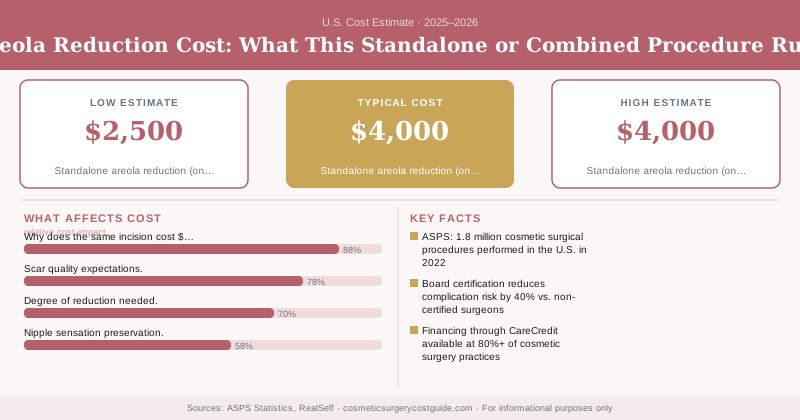
Why does the same incision cost $4,000 alone but only $800 as an add-on? That’s the single most common question surrounding areola reduction pricing, and the answer comes down entirely to whether you’re paying for a standalone operative session or folding it into surgery you’re already having.
Areola reduction costs
| Scenario | Typical Cost |
|---|---|
| Standalone areola reduction (one side) | $2,500–$4,000 |
| Standalone areola reduction (both sides) | $3,500–$5,500 |
| Combined with breast augmentation | +$500–$1,200 |
| Combined with breast lift or reduction | +$500–$1,500 |
Why standalone pricing is so much higher
When areola reduction is the only procedure being performed, you’re paying full anesthesia fees, full operating room or facility fees, and a full surgeon’s fee for a single procedure — the same overhead structure as any standalone surgery, regardless of how relatively quick the actual technique is. A standalone areola reduction typically takes under an hour, but the fixed costs of anesthesia and facility time don’t scale down proportionally with a shorter procedure.
When it’s combined with breast augmentation or a lift, the periareolar incision used for areola resizing is often the same incision the surgeon is already using to place an implant or reshape breast tissue — meaning the areola-specific portion adds only marginal additional operative time to a procedure whose anesthesia and facility costs are already being paid for. That’s why the add-on cost is so much lower than the standalone price.
The technique itself
Areola reduction involves removing a strip of skin around the edge of the areola and closing the resulting incision with a purse-string or direct closure, physically reducing the areola’s diameter. It’s frequently requested by patients whose areolas have stretched due to breast growth during puberty, weight fluctuation, pregnancy, or breastfeeding, as well as by patients undergoing gender-affirming top surgery who want a smaller, more proportional areola relative to their new chest contour.
If you’re already planning breast augmentation, a lift, or gender-affirming top surgery, mentioning areola size as a concern at your initial consultation — rather than scheduling it as a separate future procedure — is the most effective way to minimize total cost. Surgeons routinely build areola resizing into the surgical plan for these procedures at a fraction of the standalone price.
What determines your specific price within each range
Scar quality expectations. A skilled surgeon minimizing tension on the closure to reduce scar visibility and spread over time may charge more than a surgeon using a more basic technique, but the long-term cosmetic outcome differs meaningfully.
Degree of reduction needed. A modest 20% reduction in areola diameter is a simpler procedure than correcting a significantly stretched or asymmetric areola, which may require more complex tissue rearrangement.
Nipple sensation preservation. Techniques that carefully preserve the nerve supply and blood flow to the nipple during resizing require more surgical precision and typically cost somewhat more than techniques that don’t prioritize this as heavily.
When insurance actually applies
Areola reduction performed purely for cosmetic preference is not covered by insurance. However, when it’s a standard component of a medically necessary breast reduction — performed to address documented back, neck, or shoulder pain from excessive breast weight — the areola resizing that naturally occurs as part of the reduction technique is typically included under the same insurance-approved procedure, since resizing the areola to match the smaller breast mound is a routine part of reduction surgery, not a separate cosmetic add-on.
Overly aggressive areola reduction can compromise nipple blood supply, particularly in patients who’ve had previous breast surgery or significant scarring in the area. Disclose your full surgical history to your surgeon, and choose someone experienced specifically in areola resizing technique — not simply general breast surgery — if this is your primary concern.
Bottom line
Areola reduction costs $2,500–$5,500 as a standalone procedure but often adds only $500–$1,500 when combined with breast augmentation, a lift, or top surgery you’re already planning. If areola size is a concern alongside another breast procedure you’re considering, raise it at your very first consultation — timing is the single biggest factor in what you’ll actually pay.
Frequently Asked Questions
Areola reduction performed on its own typically costs $2,500–$5,500, including surgeon fee, anesthesia, and facility costs. Costs vary based on whether both areolas are treated, the surgical technique used, and geographic region.
Yes, significantly. Combining areola reduction with breast augmentation, lift, or reduction surgery typically adds only $500–$1,500 to the primary procedure's cost, since the areola incision is often part of the same surgical approach and anesthesia and facility fees are shared rather than duplicated.
Insurance typically classifies areola reduction as cosmetic and does not cover it when performed as a standalone procedure. However, when performed as part of a medically necessary breast reduction for documented back or shoulder pain, the areola resizing component may be included under the same insurance approval, since it's a standard part of the reduction technique.