The American Society of Plastic Surgeons publishes a national average surgeon’s fee for blepharoplasty every year — and it’s one of the most misread numbers in the entire cosmetic surgery pricing conversation. Patients see “$3,600 average” and assume that’s their total bill. It isn’t.
Understanding what’s actually inside that ASPS figure — and what’s missing from it — is the difference between budgeting accurately and getting blindsided by your final invoice.
What ASPS actually reports vs. your real total cost
| Cost Component | Included in ASPS Average? | Typical Cost |
|---|---|---|
| Surgeon’s professional fee | Yes | ~$3,600 |
| Anesthesia fee | No | $500–$1,500 |
| Facility/OR fee | No | $700–$2,000 |
| Pre-op testing/labs | No | $200–$500 |
| Post-op garments/supplies | No | $50–$150 |
| Realistic total cost | — | $5,000–$8,000 |
Why the ASPS number exists — and why it’s narrower than you’d expect
ASPS surveys its member surgeons annually and publishes average professional fees across dozens of cosmetic procedures. It’s a genuinely useful benchmark for comparing surgeon fees nationally, but the methodology only captures the surgeon’s own charge — not the full package of costs a patient actually pays on surgery day. That’s a deliberate scope limitation in how ASPS collects the data, not an error, but it trips up a lot of patients who quote the number to their surgeon expecting it to be their final bill.
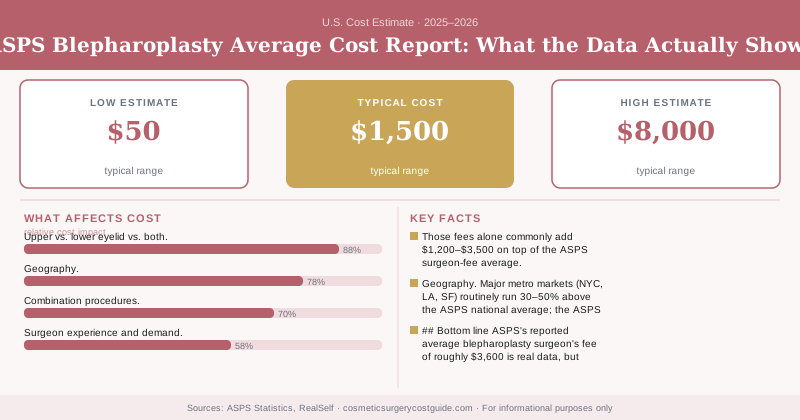
Anesthesia and facility fees vary considerably by region and by whether the procedure is done in an accredited surgical center, hospital outpatient department, or an office-based surgical suite. Those fees alone commonly add $1,200–$3,500 on top of the ASPS surgeon-fee average.
Treat the ASPS average as a starting point for comparing surgeon fees between practices — not as your expected total bill. When you get a quote, ask explicitly: “Does this include anesthesia and facility fees, or is this the surgeon’s fee only?” A complete, itemized quote should list all four cost categories separately so you can see exactly what you’re paying for and compare it against the national surgeon-fee benchmark.
What drives price above or below the average
Upper vs. lower eyelid vs. both. Upper blepharoplasty alone tends to cost less than combined upper-and-lower surgery, which requires more OR time.
Geography. Major metro markets (NYC, LA, SF) routinely run 30–50% above the ASPS national average; the ASPS figure is a blended national number, not a regional one.
Combination procedures. Many patients pair blepharoplasty with a facelift or brow lift, which changes total cost math significantly and isn’t reflected in the single-procedure ASPS average.
Surgeon experience and demand. Highly sought-after surgeons in competitive markets frequently charge well above the reported average regardless of procedure complexity.
Why blepharoplasty stays consistently popular
ASPS data shows blepharoplasty has remained one of the top five cosmetic surgical procedures nationally for years, with more than 200,000 procedures performed annually in recent reporting periods. Its enduring popularity comes down to a favorable cost-to-recovery ratio: results are highly visible (addressing hooded, tired-looking eyes), recovery is comparatively short (10–14 days for most patients), and the procedure can sometimes qualify for partial insurance coverage when drooping upper eyelids interfere with vision.
When insurance might help
Unlike almost every other procedure on this site, blepharoplasty has a legitimate path to partial insurance coverage: if upper eyelid skin sags enough to obstruct your visual field, and a visual field test documents this, insurance may cover the functional portion of the surgery. Purely cosmetic lower-lid or non-obstructive upper-lid surgery remains entirely out of pocket.
Don’t select a surgeon based on who quotes closest to the ASPS average. A quote significantly below the reported national average can signal a less experienced surgeon, an under-resourced facility, or fees that will balloon once anesthesia and facility costs get added later. Compare complete, itemized quotes — not headline numbers — across at least two or three board-certified surgeons.
Bottom line
ASPS’s reported average blepharoplasty surgeon’s fee of roughly $3,600 is real data, but it’s only one slice of your total bill. Once you add anesthesia, facility fees, and pre-op testing, most patients land at $5,000–$8,000 for the complete procedure. Use the ASPS number to benchmark surgeon fees specifically — then get a full itemized quote before you commit to a number in your head.
Frequently Asked Questions
The American Society of Plastic Surgeons reports an average surgeon's fee of approximately $3,600 for eyelid surgery (blepharoplasty) in its most recent procedural statistics, though this figure excludes anesthesia, facility, and other associated fees. Including those additional costs, most patients pay a total of $5,000–$8,000 for the complete procedure.
The ASPS average reflects only the surgeon's professional fee and doesn't include anesthesia fees ($500–$1,500), facility/operating room fees ($700–$2,000), or pre-operative testing, which together typically add $1,500–$3,500 to the total bill. Patients budgeting off the ASPS number alone are often surprised by their final invoice.
Yes — blepharoplasty consistently ranks among the top five most-performed cosmetic surgical procedures in the U.S. according to ASPS annual statistics, with over 200,000 procedures performed in recent reporting years. Its popularity is driven partly by relatively quick recovery and its ability to address a common aging concern.