A short bicep muscle belly with a long tendon insertion means the muscle simply can’t grow to the same visual peak as someone with the opposite proportions — no matter how much weight gets lifted. For competitive bodybuilders and physique athletes who’ve hit that genetic ceiling, bicep implants are a real, if lesser-known, surgical option.
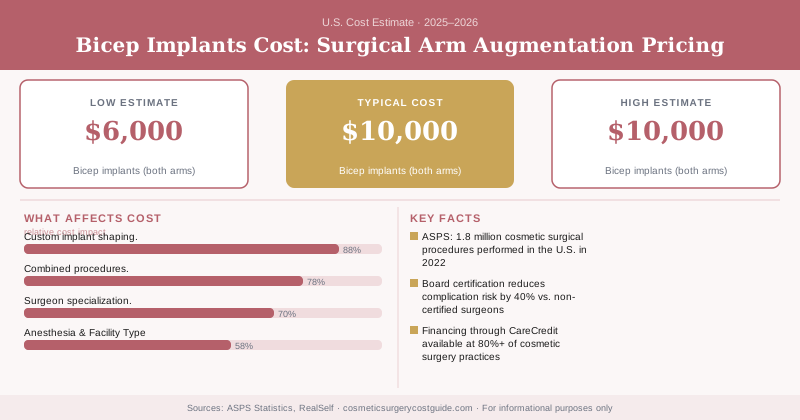
What bicep implants cost
| Scenario | Typical Cost |
|---|---|
| Bicep implants (both arms) | $6,000–$10,000 |
| Combined bicep + tricep implants | $9,000–$14,000 |
| Revision surgery | $5,000–$8,500 |
Why some physique athletes hit a genetic ceiling
Bicep muscle appearance — specifically the height and roundness of the “peak” that competitive bodybuilders prize — is influenced significantly by the length of the muscle belly relative to its tendon insertions, a largely fixed genetic trait. Athletes with a shorter muscle belly and longer tendon insertions can build meaningful strength but will never achieve the same visual peak as someone with more favorable proportions, regardless of training volume, nutrition, or even anabolic assistance. This is a well-recognized limitation within competitive bodybuilding circles, and it’s the primary reason a small but steady population of physique athletes pursue surgical augmentation.
How the procedure works
Bicep implants are solid silicone devices custom-shaped to sit beneath the bicep muscle fascia, placed through a small incision typically positioned in the inner arm crease or armpit to minimize visible scarring. Because the upper arm contains significant nerve and vascular structures running close to the muscle, precise surgical technique and a clear understanding of arm anatomy are critical — this is not a procedure to have performed by a surgeon without specific experience in exactly this operation.
Some patients, particularly competitive bodybuilders seeking comprehensive arm development, combine bicep implants with tricep implants in the same surgical session for a fuller overall arm silhouette. This combined approach costs $9,000–$14,000 but shares anesthesia and facility fees across both procedures, making it more cost-effective than scheduling each as a separate operation on different days.
What determines your specific price
Custom implant shaping. Implants sculpted to match your specific existing muscle contour, rather than standard stock shapes, typically cost more but blend more naturally with your existing musculature.
Combined procedures. As discussed, pairing bicep and tricep implants in one session changes the total cost structure meaningfully compared to separate surgeries.
Surgeon specialization. This is a genuinely uncommon procedure performed by a small number of surgeons with specific experience — expect to pay a premium for that experience, and treat it as a worthwhile investment given the nerve and vascular considerations involved.
Recovery, realistically
Most patients need 2–3 weeks away from any upper body activity, with a full return to weight training typically taking 8–10 weeks to ensure the implants have fully settled and surrounding tissue has healed completely. Some temporary numbness or tingling in the forearm or hand can occur if nerves were manipulated during surgery, which typically resolves within weeks but should be discussed as a possible risk beforehand.
Bicep implant surgery carries a meaningful risk of nerve injury given the proximity of major nerves to the surgical field in the upper arm — this is a procedure where surgeon-specific experience matters more than almost any other implant-based body contouring surgery. Verify your surgeon has performed this exact procedure repeatedly, not simply general body implant experience, and discuss the specific nerve-protection technique they use.
Bottom line
Bicep implants cost $6,000–$10,000, or $9,000–$14,000 when combined with tricep implants for comprehensive arm development. This procedure serves a specific, mostly athletic population who’ve hit a genetic ceiling that training alone can’t overcome — and given the nerve and vascular considerations in the upper arm, surgeon-specific experience with this exact operation should be your top priority over price.
Frequently Asked Questions
Bicep implant surgery typically costs $6,000–$10,000, covering the silicone implants themselves, surgeon fee, anesthesia, and facility costs. Some patients combine bicep implants with tricep implants in the same operative session, which adds to total cost but shares anesthesia and facility fees.
The underlying surgical concept is similar — a solid silicone implant placed beneath the muscle fascia to increase apparent muscle size and definition — but bicep implants require careful attention to the surrounding nerve and vascular structures in the upper arm, making surgeon experience with this specific procedure particularly important.
Bodybuilders and physique athletes with naturally underdeveloped biceps due to muscle insertion length or fiber type composition that don't respond proportionally to training are the primary patient group, alongside some patients with muscle asymmetry from injury, congenital conditions, or nerve damage affecting one arm's development relative to the other.