What does it actually mean when a provider calls themselves a “board-certified cosmetic surgeon”? Often, less than you’d assume — and the gap between that phrase and true American Board of Plastic Surgery certification can cost patients dearly, both financially and physically.
Board certification carries a real price premium. Here’s exactly how much, why it exists, and when it’s worth every extra dollar.
The real price gap
| Provider Type | Typical Premium vs. Baseline |
|---|---|
| ABPS board-certified plastic surgeon | Baseline (highest average fees) |
| Board-certified in a different specialty | 10-20% less |
| “Cosmetic surgeon” (non-ABPS certification) | 20-35% less |
| Non-board-certified provider | 30-50% less |
| Revision cost if complications occur | Often exceeds original savings |
Why the certification gap is so easy to miss
The term “board-certified” is not legally protected the way many patients assume. A provider can hold certification from a board that isn’t recognized by the American Board of Medical Specialties and still legally advertise as “board-certified” — the claim is technically true, just from a board with far less rigorous training and examination requirements than the American Board of Plastic Surgery (ABPS). Similarly, “cosmetic surgeon” is not a protected surgical specialty title in most states the way “board-certified plastic surgeon” is — a physician from an entirely different specialty (dermatology, general practice, even non-surgical backgrounds in some states) can legally perform cosmetic surgical procedures and market themselves this way.
This is exactly why the price gap exists: ABPS-certified surgeons complete a minimum of six years of accredited surgical residency training specifically in plastic surgery, pass extensive written and oral board examinations, and must complete ongoing continuing education to maintain certification. That training pipeline is genuinely more expensive to produce, and it’s reflected in what these surgeons charge.
Why the premium is usually worth paying
Don’t take a certificate on the wall at face value. Go directly to the American Board of Plastic Surgery’s public verification tool (certificationmatters.org or plasticsurgery.org’s “Find a Surgeon” verification) and search the provider’s name. This free, two-minute check tells you definitively whether they hold genuine ABPS certification — not a certification from a board with lower or no accredited surgical training requirements. Do this before your first consultation, not after you’ve already paid a deposit.
Research consistently associates non-board-certified providers performing surgical cosmetic procedures with higher complication and revision rates. Fixing a botched or poorly executed surgical result — through revision surgery — frequently costs as much or more than the original procedure, meaning the “savings” from choosing a cheaper, non-certified provider can evaporate entirely, and then some, if something goes wrong.
Where it’s reasonable to look outside board-certified plastic surgery
Not every cosmetic treatment requires an ABPS-certified plastic surgeon specifically. Board-certified dermatologists routinely perform excellent laser and injectable work within their own scope of training. Facial plastic surgeons (board-certified through the American Board of Facial Plastic and Reconstructive Surgery, closely allied with otolaryngology/ENT training) are well-qualified for facial procedures like rhinoplasty and facelifts. The key distinction is verifying genuine, recognized board certification in a relevant surgical specialty — not necessarily requiring the ABPS credential specifically for every single procedure type.
For non-surgical treatments like Botox or basic dermal filler, a well-trained nurse injector working under appropriate physician supervision can be a reasonable, lower-cost choice — the risk profile and training requirements for injectables are meaningfully different from actual surgery.
What drives cost beyond certification alone
Even among genuinely board-certified surgeons, fees vary by geography, specific procedure volume and specialization, and local market demand. See our related guide on med spa vs. plastic surgeon pricing for how provider type affects cost specifically for non-surgical treatments.
Be especially cautious of any surgical practice performing procedures outside a traditional accredited surgical facility, or a provider who becomes evasive or vague when you ask direct questions about their specific board certification. These are two of the most reliable red flags associated with under-qualified providers in the cosmetic surgery space, regardless of how compelling their marketing or pricing looks.
Bottom line
Board-certified plastic surgeons typically charge 20-40% more than non-certified alternatives, and that premium reflects genuinely more extensive, verified surgical training. For actual surgical procedures, this is not the place to shop for the lowest price — verify certification directly through the ABPS before booking, and treat a significantly lower quote from an unverified provider as a red flag rather than a bargain.
Frequently Asked Questions
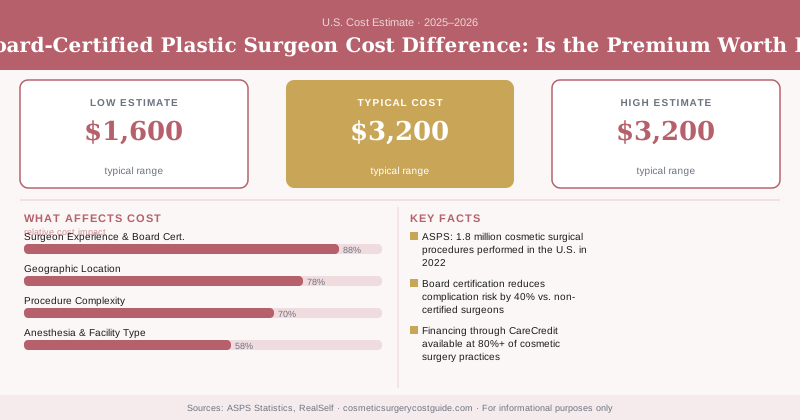
Board-certified plastic surgeons typically charge 20-40% more than non-board-certified providers performing similar procedures, reflecting additional years of accredited surgical training, rigorous examination requirements, and ongoing certification maintenance. For a $8,000 procedure, this can mean a $1,600-$3,200 price difference.
Board certification from the American Board of Plastic Surgery (ABPS) requires completing an accredited plastic surgery residency (typically 6+ years total training), passing rigorous written and oral examinations, and meeting ongoing continuing education requirements to maintain certification. Many providers advertise themselves as 'cosmetic surgeons' or claim board certification from non-recognized boards without meeting these specific ABPS standards.
Generally no for surgical procedures — complication rates and revision surgery needs are measurably higher among non-board-certified providers performing surgical procedures, and the cost of fixing a botched result from an undertrained provider often exceeds the original savings many times over. For minor non-surgical treatments like Botox or basic filler, a well-trained nurse injector under physician supervision may be an acceptable lower-cost option, but for actual surgery, certification should not be a place to cut costs.