The quote came back at $11,400, and that didn’t even include the lift. If you’ve been told your fatigue, brain fog, and joint pain might be tied to your implants, you’ve probably already learned that “just take them out” is anything but simple — and rarely cheap.
Breast implant illness, or BII, isn’t a formal medical diagnosis, but it’s a real reason thousands of women seek explant surgery every year. The FDA acknowledged systemic symptom reports tied to implants in its 2019 and 2021 safety communications, and removal demand has climbed since. Let’s break down the money.
Why Explant Costs More Than You’d Think
Taking implants out sounds easier than putting them in. It isn’t. Most BII patients want the scar capsule removed too — often intact, in one piece, which surgeons call en bloc. That’s a meticulous dissection that can run two to four hours per side.
Breast Implant Illness Explant Cost
| Procedure | Cost Range | Notes |
|---|---|---|
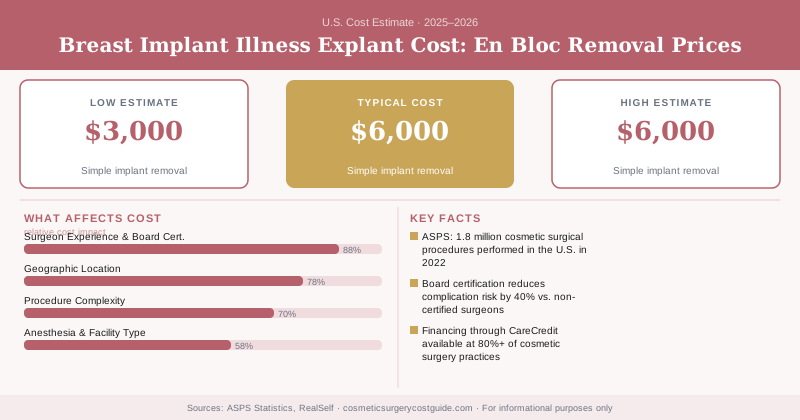
| Simple implant removal | $3,000–$6,000 | Implants out, capsule left in place |
| Removal + partial capsulectomy | $5,000–$9,000 | Some scar tissue removed |
| Total capsulectomy | $7,000–$12,000 | Entire capsule removed |
| En bloc capsulectomy | $9,000–$15,000 | Capsule and implant removed as one unit |
| Explant + breast lift (mastopexy) | $11,000–$18,000 | Adds skin tightening |
| Explant + fat transfer | $12,000–$20,000 | Restores volume naturally |
These numbers usually fold in the surgeon’s fee, anesthesia, and the facility. Pathology testing of the removed capsule is sometimes an extra $200–$600.
En Bloc vs. Total Capsulectomy
People use these terms loosely, but they’re not the same. En bloc means the implant never gets exposed — the surgeon lifts everything out together. It’s the priciest option because it demands a larger incision and far more careful work. Total capsulectomy removes the full capsule but may open the implant during the process. For ruptured silicone, en bloc is often preferred.
Be skeptical of any surgeon advertising “en bloc” as a marketing buzzword at a bargain price. True en bloc on a thin or adherent capsule is technically demanding. If the quote seems too low for the technique promised, ask exactly what’s being removed and get it in writing.
What About Insurance?
Most carriers won’t touch BII explant, treating it as cosmetic. The exception: documented rupture, infection, or capsular contracture with pain. If you have a confirmed silicone rupture, push for coverage — that’s a recognized medical complication. Our guide on whether insurance covers plastic surgery walks through the appeal language that works.
The Hidden Add-Ons
After explant, many women feel deflated — literally. The breast tissue stretched around the implant doesn’t snap back. That’s why a breast implant removal with a lift or fat transfer costs thousands more. Budget for it upfront rather than facing a second surgery and a second cosmetic surgery revision bill later.
Plan on $6,000–$15,000 for BII explant, with en bloc removal at the top of that range. If you want a lift or fat transfer to restore shape, you’re looking at $11,000–$20,000. Insurance usually only helps when there’s a documented rupture or infection — not for symptom-driven removal alone.
Paying For It
Since most of this lands out of pocket, plenty of patients spread it out. Medical financing through CareCredit or Alphaeon can break a $12,000 explant into monthly payments — see our cosmetic surgery financing breakdown before you sign anything, because deferred-interest plans can bite if you miss the payoff window.
What Recovery Adds to the Bill
The surgery quote isn’t the whole story. Expect one to two weeks off work, a surgical bra you’ll wear for weeks, and a few follow-up visits that may or may not be bundled. If you got fat transfer or a lift, recovery stretches longer and so does the unpaid time off. Some women also pay for lymphatic massage to speed swelling down — another few hundred dollars. When you’re budgeting, add a recovery cushion of $500 to $1,500 on top of the surgical fee so the post-op weeks don’t catch you flat.
Questions to Ask at Consultation
Don’t walk into a BII explant consult without a list. Ask whether the surgeon does en bloc routinely or just on request. Ask what happens if the capsule can’t come out intact. Ask whether pathology is included. Ask how they’ll handle volume loss — lift, fat transfer, or nothing. And ask for before-and-after photos of their own explant patients, not stock images. The answers tell you whether you’re dealing with an explant specialist or someone who does it occasionally.
Bottom Line
Explant for BII is a real surgery with a real price tag, and the capsule work is where the cost lives. Get two consultations, confirm exactly which capsulectomy technique you’re paying for, and budget for the volume-restoration step so you’re not surprised twice.
Frequently Asked Questions
En bloc explant surgery typically costs $10,000–$15,000, making it the most expensive removal technique because the surgeon removes the implant along with the entire capsule of scar tissue in one piece. Basic implant removal without en bloc technique runs $6,000–$10,000, so choosing en bloc adds $3,000–$5,000 to your total surgical bill.
Most health insurance plans do not cover explant surgery for breast implant illness because BII is not a recognized formal medical diagnosis by the FDA, meaning the procedure is typically classified as elective or cosmetic. You can expect to pay the full surgical cost out-of-pocket, though some patients may get partial coverage if they can document a documented complication like capsular contracture or implant rupture.
Recovery from en bloc explant typically takes 4–6 weeks before returning to normal activities, with most patients able to resume light exercise after 2–3 weeks. Full surgical healing can extend to 3–6 months, especially if you're also having a breast lift or reconstruction performed at the same time.