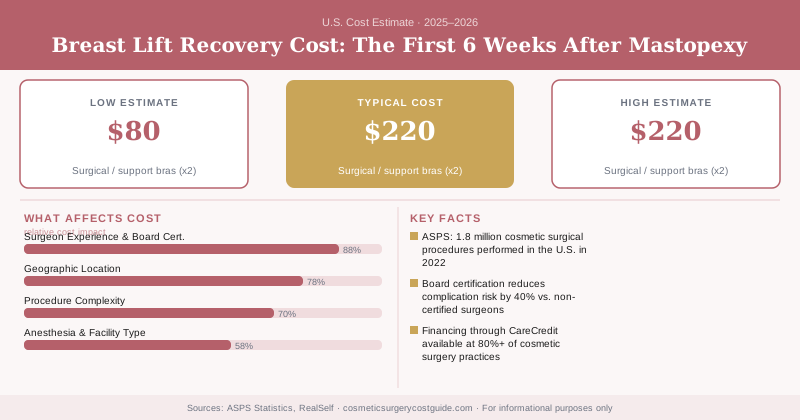
In 2010, a breast lift was a relatively niche procedure. Today it’s one of the fastest-growing cosmetic surgeries in the country, and the recovery costs have grown right along with the demand, even though almost nobody factors them into the quote. The surgery price is what you’ll be told. The recovery is what you’ll actually feel in your wallet over the following six weeks.
A breast lift, or mastopexy, reshapes and raises sagging breasts, and because it involves more incisions than a simple augmentation, the scar care and support needs are real. Here’s what healing actually runs.
The Recovery Cost Breakdown
Breast lift recovery sits in the moderate range, easier than body work, but with notable scar-care and support costs.
| Item | Cost |
|---|---|
| Surgical / support bras (x2) | $80–$220 |
| Prescription pain meds & antibiotics | $25–$90 |
| Scar treatment (silicone, multi-month) | $50–$200 |
| Wedge pillow for upright sleeping | $30–$70 |
| Help at home (first few days) | $150–$600 |
| Lost wages (1–2 weeks off) | $500–$2,400 |
| Total non-surgical recovery | $835–$3,580 |
The American Society of Plastic Surgeons counted more than 130,000 breast lifts in 2023, and the procedure has grown far faster than implant-only augmentation over the past decade. More incisions than an augmentation means scar care is a bigger part of the budget here.
Why Scar Care Matters More Here
A breast lift typically uses an anchor or lollipop incision pattern, more scarring than a simple augmentation. That makes silicone scar treatment less optional and more of an expected expense, often used for three to six months. Budget $50–$200 for a multi-month supply.
The Support Bra Is Non-Negotiable
You’ll live in a surgical support bra around the clock for weeks to hold everything in position while it heals. Underwire is banned during this stretch, so your regular bras don’t count. Buy two, since you need a clean one while the other’s in the wash.
Plan for $500–$2,500 beyond your breast lift surgery quote, with scar treatment and two surgical bras as the predictable costs and time off work as the variable one. The extra incisions mean scar care matters more here than after a plain augmentation.
Sleeping and Lifting Restrictions
For the first week or two you’ll sleep on your back at an incline, so a wedge pillow earns its keep. And like any breast procedure, lifting is off-limits, no carrying kids, no heavy bags, no gym, for several weeks. Parents of young children should plan for help in the early days.
Don’t skip the support bra or return to chest exercise early to save time. Without proper support, healing tissue can stretch and your lift can drop sooner than it should, undoing the result. Re-doing a settled lift is far costlier than wearing the bra as directed.
If You Added Implants
Many patients combine a lift with implants. If that’s you, see our breakdown of breast augmentation recovery costs too, since you’ll be managing both the lift’s scar care and the implant’s lifting restrictions. Combining pushes you toward the higher end of the recovery range.
Keeping the Total Down
Ask what’s in your post-op kit; the first surgical bra is often included. Buy your second bra, wedge pillow, and scar products at retail rather than through the office. And confirm your real time-off needs with your surgeon so you can plan leave accurately.
If you’re folding a lift into a larger plan like a mommy makeover, expect recovery costs to stack. And if the surgery price is the squeeze, financing it keeps recovery cash free. For the full week-by-week timeline, our recovery guide walks it through. The lift is the headline; the scar care and support are what protect it.
Frequently Asked Questions
Surgical bras and compression garments typically cost $150–$400 for the first 6 weeks of recovery. Most patients need 2–3 high-quality surgical bras designed to minimize movement and support healing, with prices ranging from $60–$150 each depending on brand and compression level.
Breast lift is considered cosmetic surgery and is not covered by insurance in most cases, meaning you'll pay 100% of both the surgical fee and recovery expenses out-of-pocket. However, if the procedure is medically necessary due to severe ptosis causing back or neck pain, some insurers may cover part of the surgery—though you should verify with your specific plan before proceeding.
Most patients need 1–2 weeks completely off work, with a gradual return to light duties over weeks 3–6, meaning potential lost income of $500–$2,000 depending on your salary and job demands. If your job involves heavy lifting or strenuous activity, plan for 4–6 weeks of reduced work capacity, which could significantly impact hourly workers or commission-based income.