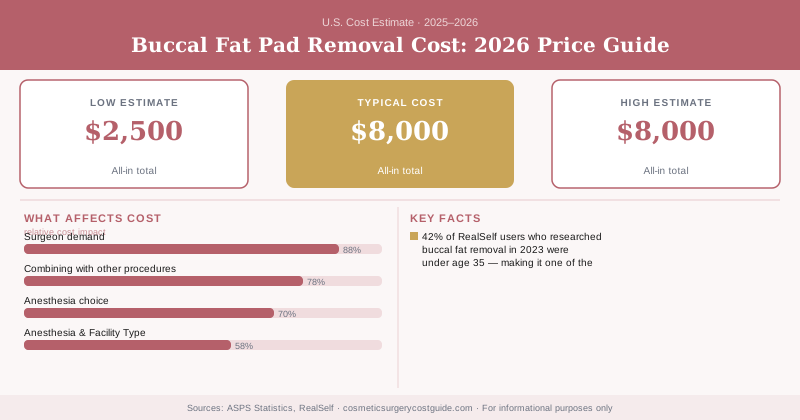
42% of RealSelf users who researched buccal fat removal in 2023 were under age 35 — making it one of the most youth-skewed cosmetic procedures in the country. That tells you something important: this isn’t a procedure driven by aging. It’s driven by a desire for a more sculpted, defined facial structure — the high-cheekbone look that photos well and reads as “model-adjacent.” But it also comes with caveats that not enough consultations cover properly, and the cost picture is more nuanced than it appears online.
What Does Buccal Fat Pad Removal Cost?
| Component | Typical Cost |
|---|---|
| Surgeon’s fee | $1,800–$5,500 |
| Anesthesia (local or IV sedation) | $400–$1,200 |
| Surgical facility fee | $500–$1,500 |
| Pre-op consultation and labs | $150–$350 |
| All-in total | $2,500–$8,000 |
The national average all-in sits around $3,500–$5,000 for most markets. Beverly Hills, Manhattan, and Miami practices run higher — sometimes $6,000–$8,000+ — largely driven by surgeon reputation and overhead, not procedure complexity.
One thing working in your favor: this is a relatively short procedure (45–90 minutes under local anesthesia or IV sedation), which keeps anesthesia and facility fees lower than more involved facial surgeries.
Why the Price Varies So Much
Surgeon demand: Certain surgeons who’ve built a following for this specific technique — particularly those with strong social media presence — charge significantly more because their waitlists are long. That’s a market dynamic, not purely a quality indicator. A board-certified plastic surgeon who performs this regularly but doesn’t have 500K Instagram followers may deliver equally precise results for less.
Combining with other procedures: Many patients pair buccal fat removal with chin augmentation, jawline filler, or rhinoplasty. Combining surgical procedures in one session saves on facility and anesthesia costs, typically 15–25% off what you’d pay scheduling each separately.
Anesthesia choice: Some surgeons perform this under local anesthesia only (numbing injections inside the mouth); others use IV sedation for patient comfort. Local-only keeps costs lower. IV sedation adds $600–$1,200. If your surgeon insists on general anesthesia for buccal fat removal specifically, that’s worth asking about — it’s generally not necessary.
Buccal fat naturally decreases with age. Surgeons who are thoughtful about patient selection are cautious recommending this procedure for patients in their 20s or early 30s with naturally slim faces — because natural fat loss over the following decades can lead to a gaunt or hollow appearance later on. The ASPS recommends this procedure primarily for patients with genuinely full lower cheeks and good facial fat distribution overall. Ask your surgeon directly: “What will this look like on my face at 50?” If they don’t address natural aging in the consultation, find someone who will.
Who’s a Good Candidate (and Who Isn’t)
You’re likely a solid candidate if you have naturally full, rounded lower cheeks that don’t respond to diet or exercise, good facial fat distribution elsewhere, and realistic expectations about the degree of definition this creates. Results are subtle to moderate — not dramatic. If you’re expecting cheekbones that appear out of nowhere, buccal fat removal alone won’t deliver that.
You’re likely NOT a good candidate if you have a naturally lean face, are already in your late 30s or beyond with noticeable natural fat loss underway, or are pursuing this primarily because of filtered social media images of dramatic results. Those typically involve other procedures — filler, chin work, lighting, angles, and editing.
Recovery Costs to Plan For
Recovery is genuinely low-key compared to most facial surgeries. Most patients return to desk work within 3–5 days. Swelling peaks in the first week and largely resolves by week three, though the final result takes 3–6 months to fully reveal itself as all swelling resolves.
Additional costs:
- Prescription mouth rinse: $20–$50
- Soft food diet for 1–2 weeks (budget for meal planning adjustments)
- Time off work: 3–7 days typically
Is It Worth It?
The ASPS notes that patient satisfaction for facial contouring procedures remains high when expectations are properly calibrated at consultation. The key phrase there is “properly calibrated.” Patients who understand they’re creating subtle, natural-looking definition — not a dramatic transformation — tend to be very satisfied. Patients who expected something more dramatic rarely are.
Buccal fat removal is permanent. The fat doesn’t grow back. That’s worth sitting with before scheduling. If you’re under 30 with a naturally lean face, most board-certified plastic surgeons will recommend waiting or declining the procedure entirely. Don’t pressure a surgeon who expresses caution — that caution is protecting your long-term result.
Bottom Line
Expect to pay $3,500–$5,500 all-in at a reputable practice in most US markets. The procedure itself is low-risk and recovery is manageable, but patient selection is everything. Get at least two consultations with board-certified plastic or facial plastic surgeons, bring photos of your face across different ages if you have them, and ask specifically about long-term aging outcomes. The right surgeon will spend more time talking you through candidacy than talking you into the procedure.
Frequently Asked Questions
Buccal fat pad removal typically costs between $2,500 and $8,000, with the final price depending on surgeon experience, geographic location, and whether it's combined with other facial procedures. Most patients in major metro areas pay $4,000–$6,000 for the procedure alone, though board-certified plastic surgeons in high-demand markets may charge at the upper end of the range.
No—buccal fat pad removal is considered a cosmetic procedure and is not covered by any major US health insurance plans, including Medicare and Medicaid. You should expect to pay the full cost out-of-pocket, though some surgeons offer payment plans or financing through third-party lenders to spread costs over 12–36 months.
Popular surgeons often have wait lists of 3–12 months due to high demand, especially among patients under 35. Recovery is relatively quick—most patients return to normal activities within 1–2 weeks, though swelling can take 4–6 weeks to fully resolve, and final results aren't visible for 2–3 months.