42% of buttock augmentation patients in 2023 had less than 10% body fat — making them poor candidates for the Brazilian Butt Lift. There’s simply not enough fat to transfer. For these patients, silicone buttock implants aren’t a second choice. They’re the only option. Yet implants remain far less talked-about than BBL, despite being the older and more established procedure. The ASPS reported 4,200+ buttock implant procedures in 2023, a fraction of BBL volume but a growing number as safety concerns about fat transfer have pushed some patients toward implants.
Buttock Implant Cost Breakdown
| Cost Component | Typical Range |
|---|---|
| Surgeon’s fee | $4,500–$9,000 |
| Anesthesia (general required) | $1,200–$2,000 |
| Surgical facility fee | $1,500–$3,000 |
| Implants (pair) | $1,500–$3,000 |
| Pre-op testing and labs | $200–$500 |
| Post-op compression garment | $100–$250 |
| Follow-up visits | Often included |
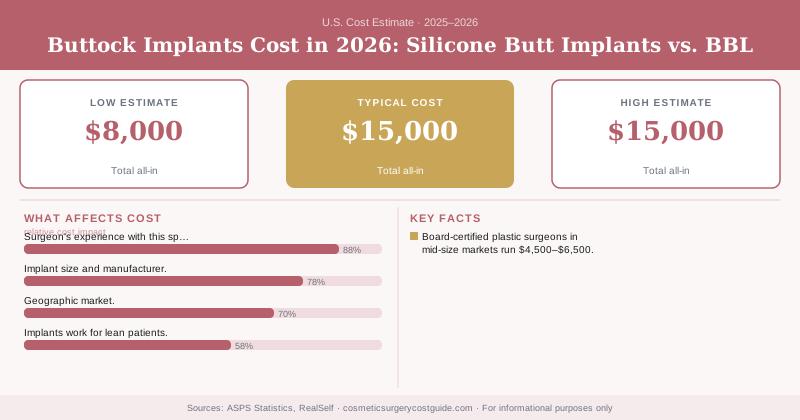
| Total all-in | $8,000–$15,000 |
Surgeon fee is typically the largest variable. High-volume implant specialists in Miami, Atlanta, or Beverly Hills charge at the upper end. Board-certified plastic surgeons in mid-size markets run $4,500–$6,500.
Buttock Implants vs. BBL: The Real Cost and Safety Comparison
BBL costs $6,000–$12,000 all-in — slightly less than implants in most markets. But cost isn’t the main decision driver. Here’s the honest comparison:
Implants work for lean patients. You need at least 30–40 lbs of accessible donor fat for a meaningful BBL result. If you don’t have it, BBL isn’t an option at all.
BBL carries more serious mortality risk. Fat embolism from BBL — where fat is inadvertently injected into the deep gluteal vessels — has historically made it among the highest-mortality cosmetic procedures. Technique improvements have substantially reduced this risk, but the death rate per procedure remains higher than for implants.
Implant-specific risks include implant displacement, capsular contracture (scar tissue hardening around the implant), seroma (fluid collection), and higher infection risk due to the implant location near the anal region.
Recovery differs significantly. BBL patients typically can’t sit directly on the buttocks for 6–8 weeks. Implant patients have 2–3 weeks of restricted activity but can sit in modified positions earlier.
Who’s a Good Candidate?
You’re a strong candidate for buttock implants if you:
- Have less than 15–20% body fat with minimal donor sites
- Want projection and fullness specifically in the upper or central buttock
- Have tried BBL and didn’t get adequate volume from fat transfer
- Want a permanent, predictable change in shape
You’re not a good candidate if you have active skin infections in the area, unrealistic expectations about size, or a lifestyle that involves extensive sitting in the immediate post-op period (airline pilots, long-haul drivers, desk workers without flexibility).
Intramuscular placement (inside the gluteus maximus): Lower complication rate, more natural appearance, preferred by most board-certified specialists. Requires skilled technique.
Subfascial placement (above the muscle, under the fascia): Slightly less invasive but higher rates of implant displacement and visibility.
Subcutaneous placement (above the fascia): Least common; highest complication rate and most visible implant edges. Most experienced surgeons avoid this approach.
Ask your surgeon specifically which placement they use and why — their answer tells you about their training and philosophy.
What Drives the Price Up or Down
Surgeon’s experience with this specific procedure. Buttock implant surgery is technically demanding — the intramuscular pocket must be precisely created to avoid nerve damage and ensure symmetrical placement. Surgeons who perform high volumes of buttock implants (50+ annually) charge more, and their complication rates tend to be lower.
Implant size and manufacturer. Standard implant pairs run $1,500–$2,000. Custom or oversized implants from premium manufacturers add $500–$1,500. Don’t let a surgeon upsell you on implant size beyond what’s appropriate for your anatomy — oversized implants have dramatically higher complication rates.
Geographic market. Miami is the dominant hub for butt augmentation of all types — high volume, competitive pricing, but also highly variable quality. Board certification and surgical volume matter more in this space than in many others.
Recovery Timeline and Costs
Plan for 2 weeks completely off work for most desk jobs. Physically demanding work requires 4–6 weeks. Post-op garments are worn 24/7 for the first 4–6 weeks ($100–$250). Most surgeons include follow-up visits in the all-in quote, but confirm this before signing.
Sitting restrictions are less extreme than BBL but you’ll sleep on your stomach for 2–4 weeks and need a modified seated position (leaning forward on thighs) for the first few weeks.
Avoid any provider offering buttock implants without general anesthesia, implants placed subcutaneously (above the fascia), or total pricing under $5,000 all-in. These are markers of inexperienced providers. Buttock implant surgery near the ischiorectal region carries a meaningful infection risk — only board-certified surgeons with documented buttock implant volume should perform this procedure. Always verify credentials at the ABPS lookup tool before booking a consultation.
Financing and Planning
Most practices offer financing through CareCredit or Alphaeon Credit. A $10,000 procedure on a 24-month 0% promotional plan runs about $417/month. Budget an additional $300–$500 for recovery supplies, post-op medications, and time off work.
Revisions — adjusting implant position or replacing a displaced implant — cost $4,000–$8,000 and are unfortunately not rare even with skilled surgeons. Choose your surgeon primarily based on experience and volume, not price.
Frequently Asked Questions
Silicone buttock implants typically cost between $6,000 and $15,000 all-in, including surgeon fees, facility costs, anesthesia, and post-operative care. The final price varies based on surgeon experience, geographic location, and whether revision work is needed. Most patients can expect to pay closer to $8,000–$12,000 for a primary procedure with a board-certified plastic surgeon.
Buttock implants are considered cosmetic surgery and are not covered by any major US health insurance plans, including Medicare and Medicaid. You will pay the full cost out-of-pocket, though some surgeons offer financing plans through medical credit companies like CareCredit to spread payments over 12–24 months with or without interest depending on the plan.
Patients with less than 10% body fat are ideal candidates for implants since they lack sufficient donor fat for a Brazilian Butt Lift. Additionally, those with limited donor sites, previous liposuction, or medical conditions that make fat transfer risky may benefit from implants as a safer, more predictable option. Implants also work well for patients seeking a specific size increase without the need for liposuction elsewhere on the body.