The cheekbone structure is one of the most disproportionately influential features in facial aesthetics. Flat or recessed malar areas can make a face look tired, aged, or undefined — regardless of how well-maintained everything else is. Cheek implants correct this at the skeletal level, not the skin level. That’s a fundamentally different approach than filler. And it’s permanent. The ASPS reported 7,400+ cheek implant procedures in 2023, with growth tracking alongside broader increases in facial implant surgery — procedures that offer permanent structural change rather than temporary volume.
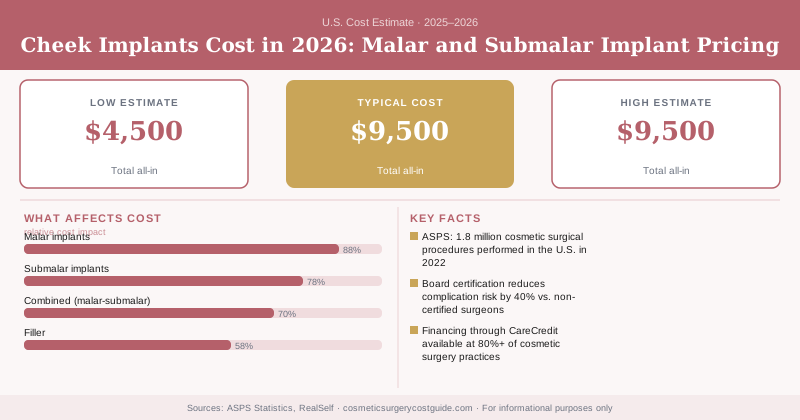
Cheek Implant Cost Breakdown
| Cost Component | Typical Range |
|---|---|
| Surgeon’s fee | $2,800–$6,000 |
| Anesthesia (general or IV sedation) | $1,000–$1,800 |
| Surgical facility fee | $900–$2,200 |
| Implants (pair, silicone) | $600–$1,500 |
| Pre-op testing and labs | $200–$500 |
| Post-op care | Often included |
| Total all-in | $4,500–$9,500 |
Compare that to cheek filler ($600–$900 per syringe, 12–18 month duration) or fat grafting ($2,500–$5,000, semi-permanent). The math on implants versus repeated filler sessions shifts in implants’ favor within 4–6 years for most patients.
The Three Types of Cheek Implants
Malar implants sit directly on the cheekbone (malar eminence). They project the cheekbone forward and upward, creating sharper definition and a more prominent high cheek structure. Best for patients who lack cheekbone projection or have flat midface architecture.
Submalar implants target the soft tissue area below the cheekbone, filling in the hollow region that develops with aging or naturally thin faces. They add volume to the midface without dramatically changing the cheekbone silhouette — more about restoring fullness than creating projection. Better for patients who’ve lost midface volume with age.
Combined (malar-submalar): Addresses both projection and volume. Most common for patients who want comprehensive midface enhancement. The implant shell covers the cheekbone and extends into the soft tissue below.
Implants vs. Filler vs. Fat Grafting: The Honest Tradeoffs
Filler is cheaper per session ($600–$900), immediately adjustable, reversible with hyaluronidase. Excellent for temporary augmentation or for patients who aren’t sure what they want. Long-term, annual or biannual touch-ups become expensive — $1,200–$1,800/year compounds over a decade.
Fat grafting uses your own tissue, so there’s no implant. Harvest via liposuction, inject into the cheeks. Results vary — significant reabsorption (40–60%) is common, and multiple sessions may be needed. Semi-permanent when successful. Adds $2,500–$5,000 to cost vs. implants alone but appeals to patients who prefer avoiding foreign material.
Implants are permanent, predictable in shape, and don’t require touch-ups. The tradeoffs: general anesthesia required, real surgical risks (nerve injury, infection, implant displacement), and no non-invasive removal if you change your mind. Implants suit patients who’ve thought carefully about the change they want and want a permanent solution.
Intraoral incision (inside the mouth, above the upper teeth): No visible scar. Most surgeons prefer this approach. Small increased risk of infection given the oral environment — good dental hygiene before surgery and antibiotics after are standard protocol.
Lower eyelid incision (subciliary): Sometimes used when combining with lower blepharoplasty. Allows direct visualization of the implant pocket. Very small scar below the lash line.
Temporal incision (within the hairline): Used when combining with brow lift or facelift. No visible scar in isolation; the approach adds complexity.
Ask your surgeon which approach they use and why — their answer reflects both their training and the specifics of your anatomy.
Combining With Other Procedures
Cheek implants are frequently combined with:
- Rhinoplasty: Balancing midface projection with nasal shape is a common aesthetic objective. Combined procedures save on anesthesia and facility fees.
- Facelift or lower facelift: Cheek implants restore midface volume that lifting alone can’t address.
- Fat grafting to the face: Implants provide structure; fat fills peripheral areas. Combined approach is popular for comprehensive facial volumization.
- Chin implant: Addressing both the chin and cheekbones together balances the overall facial proportions — a common combination for structural facial enhancement.
When combining procedures, the add-on cost for cheek implants (during a procedure that already has anesthesia and a facility) is typically $2,500–$4,000 in surgeon’s fee plus implant cost — substantially less than a standalone procedure.
Recovery
General anesthesia or IV sedation is required. Surgery takes 45–90 minutes. Most patients have significant swelling for 2–3 weeks, with cheeks looking fuller and less defined than the final result. Final implant position and appearance typically settle at 3–4 months. Intraoral sutures dissolve in 7–10 days; a soft food diet is recommended for 2 weeks.
Return to desk work is typically 10–14 days. Exercise restriction for 4 weeks. Contact sports restriction for 6–8 weeks.
Cheek implant displacement (migration from the intended position) occurs in 1–5% of cases even with experienced surgeons, and requires surgical repositioning. Choose a surgeon with documented high-volume cheek implant experience — this is a relatively low-volume procedure compared to rhinoplasty or breast augmentation, so actual case numbers matter. Ask: “How many cheek implant procedures do you perform annually?” The answer should be 20+ for an experienced specialist. Verify board certification and confirm the surgical facility is accredited before booking.
Financing
Most practices offer CareCredit, Alphaeon, or in-house financing. A $7,000 cheek implant procedure on a 12-month 0% plan runs about $583/month. Combined procedures financed over 24 months can bring the monthly payment to a more manageable range — ask for a full all-in quote before comparing financing options.
Frequently Asked Questions
Cheek implants typically cost between $4,500 and $9,000 all-in, including the surgeon's fee, facility costs, anesthesia, and implant materials. Malar (upper cheek) implants generally fall in the lower-to-mid range, while submalar (lower cheek) placements or combined procedures may approach the higher end. Costs vary by surgeon experience, geographic location, and whether additional facial procedures are performed simultaneously.
Cheek implants are considered elective cosmetic surgery and are not covered by health insurance plans, including Medicare and Medicaid. You will pay the full cost out-of-pocket, though some surgeons offer financing plans or payment arrangements to make the procedure more affordable. Health Savings Accounts (HSAs) cannot be used for purely cosmetic procedures, but they may cover implants if deemed medically necessary (such as correction of facial deformity from injury or disease).
Cheek implants are permanent and typically last a lifetime with proper placement by an experienced surgeon, making them a one-time investment. In contrast, dermal fillers last 6–18 months depending on the product and require ongoing maintenance appointments and costs that can exceed implant pricing over 5–10 years. If you choose implants, you avoid the recurring expense and time commitment of filler touch-ups, though revision surgery may be needed if you desire a different size or shape in the future.