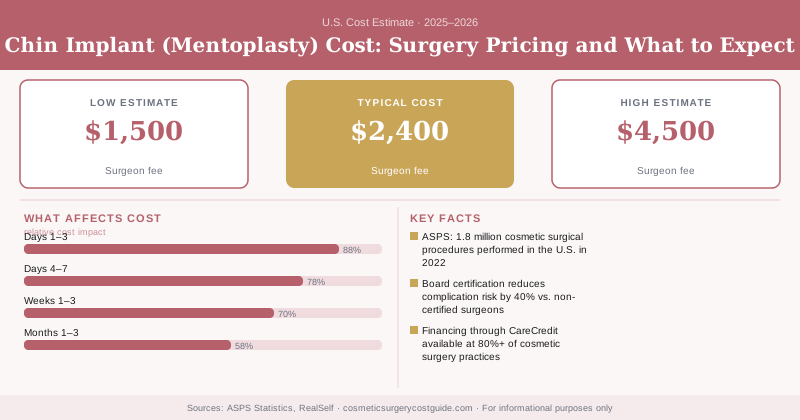
In 2010, chin augmentation surgery cost patients an average of $1,900. Today that number is closer to $3,600 — an 89% increase that outpaces inflation in virtually every other surgical category. What’s driving it? A combination of increased demand (selfie culture and video calls made chin projection a top concern), longer procedure complexity, and the shift toward higher-quality silicone implants. Understanding what you’re paying for makes the investment easier to evaluate.
Chin implant cost breakdown
The total cost of chin implant surgery has three components: surgeon fee, facility/anesthesia fee, and the implant itself. Many quotes bundle these — always ask for an itemized breakdown.
| Cost Component | Average | Typical Range |
|---|---|---|
| Surgeon fee | $2,400 | $1,500–$4,500 |
| Facility and anesthesia fees | $900 | $600–$1,800 |
| Implant cost | $300 | $150–$600 |
| Total — chin implant alone | $3,600 | $2,500–$5,500 |
| Chin implant + rhinoplasty (combined) | $9,500 | $6,500–$14,000 |
| Chin implant + neck liposuction (combined) | $6,200 | $4,500–$8,500 |
According to ASPS data, chin augmentation surgeries numbered approximately 24,000 in 2023, making it one of the most consistently performed facial implant procedures in the US. Demand peaks among women in their 20s–40s and men in their 30s–50s, with facial harmony — particularly the chin-to-jawline ratio — being the primary motivation.
What the surgery involves
Chin implant surgery (mentoplasty) is typically performed under general or IV sedation anesthesia and takes 45–90 minutes. The surgeon makes a small incision either inside the mouth (intraoral approach — no external scar) or just below the chin in a natural skin fold (submental approach — scar virtually invisible at 6–12 months).
A pocket is created over the chin bone and beneath the muscle, the implant is placed and often secured with small titanium screws, and the incision is closed. You go home the same day.
Implants come in dozens of sizes and styles — extended anatomical implants add projection along the entire jawline, not just the central chin button. Your surgeon should show you digital imaging or overlay photos of your specific face at the consult to help select the implant that achieves your goals without looking operated-on.
Recovery timeline
- Days 1–3: Swelling, bruising, difficulty chewing — a soft diet is mandatory
- Days 4–7: Most patients return to desk work; swelling peaks and begins to resolve
- Weeks 1–3: Firmness, some numbness in chin and lower lip (normal — resolves over weeks to months)
- Months 1–3: Implant settles into final position; swelling fully resolved
- Final result: Visible at 3–4 months
Board certification in plastic surgery or facial plastic surgery (ABPS or ABFPRS) is the minimum credential to verify. Beyond certification, look for:
- Before/after photos of actual patients — specifically before-and-afters on faces with similar proportions to yours
- Implant brand and style selection: Does the practice offer extended anatomical implants, not just standard button implants?
- Approach preference: Ask whether the surgeon prefers intraoral or submental incisions and why — the answer tells you about their training and experience
- Revision experience: Chin implant revisions happen; a surgeon who has done them is more transparent about real-world outcomes
Chin implant vs. chin filler: the real cost comparison
Chin filler (typically hyaluronic acid like Juvederm or Radiesse) costs $600–$1,500 per session and lasts 12–18 months. It’s dissolvable, reversible, and great for subtle projection or testing out a chin change before committing to surgery.
The math over time: if you maintain chin filler every 12 months for 5 years, you’ve spent $3,000–$7,500 — potentially more than a one-time implant that lasts indefinitely. For patients in their 30s+ who want a permanent change, surgery often becomes more cost-efficient at the 4–5 year mark.
The clinical trade-off isn’t just cost — implants provide structural projection and definition that filler can’t fully replicate in patients with significant chin retrusion. A board-certified surgeon can tell you in a consult which approach is actually appropriate for your anatomy.
Chin implants placed by inexperienced providers — or via poorly performed surgery — can shift, cause bone erosion at the implant interface, or create visible implant edges. These complications require revision surgery. This is not a procedure to optimize for the lowest price. Verify board certification at abms.org and ask about the surgeon’s complication and revision rate at the consult.
Does insurance cover chin implants?
No — chin augmentation is cosmetic surgery and is not covered by insurance. The one exception: if a receding chin (retrognathia) is associated with a correctable jaw structural issue (orthognathic surgery), jaw repositioning may have partial coverage. That’s a different procedure from a cosmetic implant.
Most plastic surgery practices offer financing through CareCredit, Alphaeon, or in-house payment plans. Combining a chin implant with rhinoplasty at the same surgical session often reduces total facility and anesthesia fees by 30–40% compared to two separate procedures.
Frequently Asked Questions
Chin implant surgery (mentoplasty) costs between $2,500 and $5,500 on average in the US, with the national average around $3,600. This price includes the surgeon's fee, facility costs, anesthesia, and the implant itself, though some facilities may charge separately for premium silicone implants or revision procedures.
Most insurance plans do not cover chin implant surgery because it is considered cosmetic rather than medically necessary, meaning you will pay the full cost out of pocket. However, if mentoplasty is performed as part of reconstructive surgery following an injury or to correct a functional breathing problem, some insurance may cover a portion of the procedure.
Most patients can return to light activities within 1–2 weeks and resume normal exercise within 4–6 weeks after chin implant surgery. Swelling and bruising typically subside within 2–3 weeks, though final results may not be fully visible for 3–6 months as the implant settles into place.