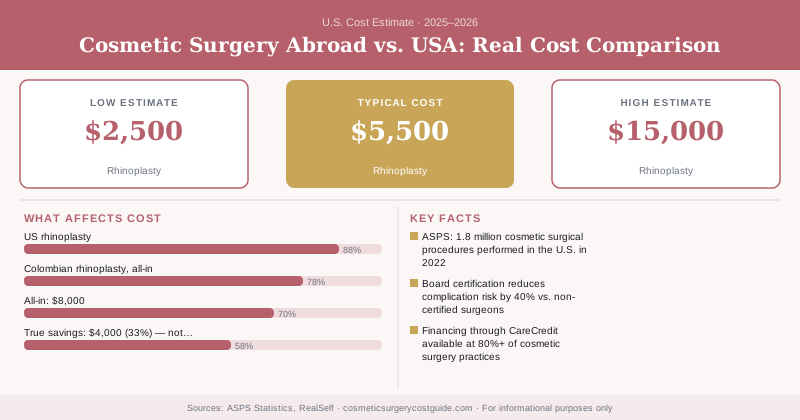
Rhinoplasty in Colombia: $3,500. The same procedure with a comparable surgeon in New York: $13,000. That 74% discount is real, it reflects genuine cost-of-living differences, and tens of thousands of Americans take advantage of it every year without complications. It’s also true that when things go wrong abroad, fixing them here can cost more than the original procedure would have.
Neither framing is the whole picture. Here’s the full breakdown.
What Procedures Cost: USA vs. Top Destinations
| Procedure | USA Average | Mexico | Colombia | Thailand | Savings |
|---|---|---|---|---|---|
| Rhinoplasty | $10,000–$15,000 | $3,500–$6,000 | $3,000–$5,500 | $2,500–$5,000 | 50–70% |
| Breast augmentation | $7,000–$12,000 | $3,000–$5,500 | $3,000–$5,000 | $3,500–$6,000 | 40–65% |
| Facelift | $12,000–$22,000 | $5,000–$9,000 | $5,000–$8,500 | $5,000–$9,000 | 50–60% |
| Tummy tuck | $9,000–$16,000 | $4,000–$7,000 | $4,000–$7,500 | $4,000–$7,000 | 45–60% |
| Mommy makeover | $15,000–$30,000 | $7,000–$13,000 | $7,000–$12,000 | $7,000–$13,000 | 45–60% |
| Liposuction (full) | $5,000–$10,000 | $2,500–$5,000 | $2,500–$4,500 | $2,500–$4,500 | 45–55% |
These aren’t discounts driven by lower quality — they’re driven by lower surgeon wages, facility overhead, and cost of living. A top board-certified plastic surgeon in Bogotá earns a fraction of what a comparable US surgeon earns, not because they’re less trained but because Colombia’s cost of living is a fraction of the US.
The Total Cost of Going Abroad
The quoted procedure price isn’t your all-in number.
| Additional Cost | Typical Range |
|---|---|
| Round-trip flight | $400–$1,800 |
| Recovery accommodation (1–2 weeks) | $800–$2,500 |
| Companion travel (recommended) | +$600–$1,500 |
| Follow-up appointments | $200–$600 |
| Lymphatic massage (often required) | $400–$1,000 |
| Emergency travel insurance | $150–$400 |
| Total travel add-on | $2,550–$7,800 |
Adding $3,000–$7,000 in travel costs to a Colombian rhinoplasty at $4,000 gives you an all-in of $7,000–$11,000 — still substantially less than $13,000 in the US, but not the 70% discount it appeared at first glance.
US rhinoplasty: $12,000 (surgeon, anesthesia, facility — all-in)
Colombian rhinoplasty, all-in:
- Procedure: $4,500
- Flights: $900
- Accommodation (12 days): $1,200
- Companion: $900
- Misc/follow-up: $500
- All-in: $8,000
True savings: $4,000 (33%) — not 63%
Still meaningful. But factor in that your follow-up care back in the US will be with a surgeon who didn’t do the operation, which has its own complications.
The Complication Risk: What the Data Shows
The ASPS has documented concerns about medical tourism complications consistently. The core issue isn’t that foreign surgeons are inferior — many are excellent. It’s a systems problem:
- No continuity of care: If you develop capsular contracture, a hematoma, or an infection 2 weeks after you’re home, your US doctor is managing a surgery they didn’t perform with records that may be incomplete
- Rushed timelines: Many medical tourism packages compress consultation, surgery, and initial recovery into 7–10 days. That’s often too fast for adequate pre-op evaluation and early follow-up
- Revision responsibility: A complication requiring correction in the US will be priced at full US rates — with no credit for what you paid abroad
- Legal recourse: US medical malpractice law doesn’t apply internationally; recourse for negligence is extremely limited
That said: complications in cosmetic surgery are relatively rare when performed by qualified surgeons. The question is what “rare” means at scale and what you do when you’re the rare case.
The Revision Cost Scenario
| Complication Scenario | US Revision Cost | All-In Abroad + Revision |
|---|---|---|
| Capsular contracture after augmentation | $6,000–$12,000 | $8,000–$18,000 total |
| Rhinoplasty requiring revision | $8,000–$15,000 | $12,000–$20,000 total |
| Infection/wound care post-tummy tuck | $3,000–$8,000 | $7,000–$16,000 total |
| Poor scarring requiring revision | $2,000–$6,000 | $5,000–$12,000 total |
In a complication scenario, the financial case for medical tourism often reverses. The emotional and physical cost of managing a complication from abroad — while also managing the logistical difficulty of inadequate records and a surgeon unreachable for follow-up — is harder to quantify.
Which Destinations Are Most Reputable?
Not all medical tourism is equal. These markets have established reputations and regulatory frameworks:
Mexico (Tijuana, Monterrey, Mexico City): Most popular with US patients for geographic convenience. Tijuana is particularly high-volume, with surgeons who operate on Americans regularly. Quality is highly variable — research specific surgeons, not just the country.
Colombia (Bogotá, Medellín): Strong medical education infrastructure, high surgical volume, and growing international reputation. Medellín has become a recognized cosmetic surgery hub. Several surgeons trained in the US or Europe.
Thailand (Bangkok): Well-established international hospital system (Bumrungrad International is internationally accredited). Longer travel, but high quality at accredited facilities.
If you’re considering surgery abroad, verify that your surgeon is board-certified in their country’s equivalent certification body (not just licensed). In Mexico, look for AMCPER (Association of Certified Plastic, Aesthetic and Reconstructive Surgeons) certification. In Colombia, look for SCCP certification. These certifications indicate training standards that are roughly analogous to ASPS membership in the US.
Who Should Consider Abroad vs. Who Shouldn’t
Reasonable candidates for abroad:
- Straightforward procedures (augmentation, liposuction, tummy tuck)
- Patients with significant cost constraints who’ve researched specific surgeons thoroughly
- People with international connections (family/friends) who can facilitate follow-up
- Procedures without high revision rates
Better served domestically:
- Rhinoplasty (high revision rate makes local continuity of care critical)
- Complex reconstructive or secondary cases
- Patients with significant health conditions requiring close monitoring
- Anyone who can’t take 2+ weeks for travel recovery
Bottom Line
Medical tourism saves real money — 30–60% after travel costs, not the 70% headline figure. The savings are legitimate and accessible when you research thoroughly, choose certified surgeons at reputable facilities, and budget realistic travel costs. The risk is manageable for straightforward procedures; it’s harder to manage for technically demanding ones like rhinoplasty, where the revision probability is higher and the penalty for needing a US correction is most significant.
Frequently Asked Questions
Rhinoplasty in Colombia typically costs $3,500 compared to $13,000 with a comparable surgeon in New York, representing a 74% savings. However, if complications arise requiring revision surgery in the US, correction costs can range from $5,000 to $15,000, potentially offsetting or exceeding your initial savings.
Most US health insurance plans exclude coverage for elective cosmetic procedures regardless of location, leaving you responsible for the full cost abroad. If you experience complications requiring corrective surgery in the US, insurance typically still won't cover the initial procedure costs, though emergency care may be covered.
Most surgeons recommend waiting 1 to 2 weeks before air travel, depending on the procedure and your healing progress. However, if complications develop during this window or shortly after returning home, finding a US-based surgeon willing to revise another doctor's work may take additional time and cost $5,000 to $20,000 or more.