A single CoolSculpting session can cost eight times what a Cryo T-Shock session costs at the medspa down the street. Same goal — freezing stubborn fat — wildly different price tag. So what’s actually different, and is the cheaper option worth it?
The short answer: you’re not comparing two versions of the same treatment. You’re comparing an FDA-cleared medical device with a large body of clinical research behind it to a lower-intensity cooling treatment that’s closer to a spa service than a medical procedure.
Price comparison at a glance
| Treatment | Cost Per Session | Typical Full Course |
|---|---|---|
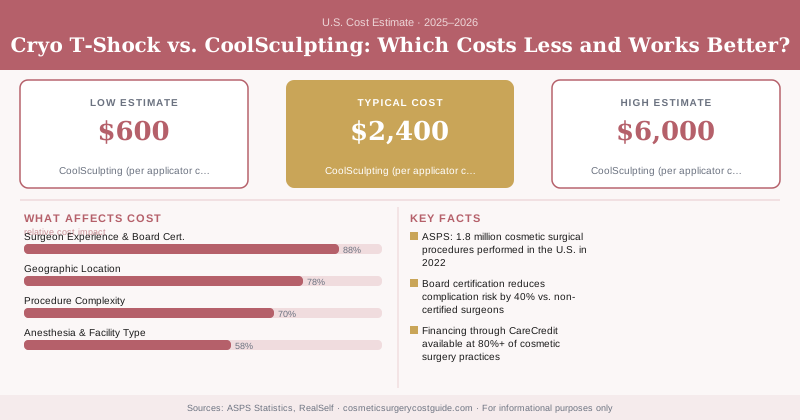
| CoolSculpting (per applicator cycle) | $600–$1,500 | $2,400–$6,000 |
| Cryo T-Shock (per session) | $75–$200 | $600–$1,800 |
| CoolSculpting Mini (chin/small areas) | $700–$1,200 | $1,400–$2,400 |
| Cryo T-Shock body wrap add-on | $50–$100 | — |
Why CoolSculpting costs so much more
CoolSculpting uses patented cryolipolysis technology that’s FDA-cleared specifically for fat reduction. Allergan (now AbbVie) spent years and multiple clinical trials proving the device destroys fat cells at a precise temperature without harming surrounding skin. That R&D and regulatory approval gets baked into the price — plus the machines themselves cost providers tens of thousands of dollars, and each single-use applicator adds per-treatment cost.
Cryo T-Shock, by contrast, is an unregulated cooling and heating device marketed mostly through medspas and wellness studios. It’s not FDA-cleared for fat reduction — most providers market it as a “sculpting and skin tightening” service, which keeps it in a regulatory gray zone. Equipment costs are lower, training requirements are lighter, and the price reflects that.
What the actual results look like
CoolSculpting’s clinical data shows roughly 20–25% fat layer reduction in the treated area after a single cycle, with results appearing over 8–12 weeks. Most patients need 2–3 cycles per area for a noticeable change.
Cryo T-Shock is better understood as a temporary contouring and circulation treatment than a fat-destruction procedure. Providers commonly report temporary inch-loss and skin tightening effects that last days to a few weeks — closer to how a spa body wrap works than how liposuction or CoolSculpting work. If you want measurable, lasting fat reduction, the clinical evidence favors CoolSculpting. If you want a low-cost confidence boost before an event, Cryo T-Shock may serve that narrower purpose.
Where each one makes financial sense
If your goal is a real reduction in a stubborn fat pocket — flanks, lower belly, inner thighs — and you have a $2,000–$6,000 budget, CoolSculpting is the evidence-backed choice. It won’t replace liposuction for larger volumes, but for smaller localized fat it has real data behind it.
If you’re working with a smaller budget and mainly want a temporary, low-commitment confidence boost — say, before a wedding or vacation — Cryo T-Shock’s lower price might make sense as long as you go in with realistic expectations about how long results last.
The bigger picture on cost-per-result
Run the math on cost-per-percentage-of-fat-reduction and CoolSculpting, despite the higher sticker price, often ends up the better value per unit of actual, lasting change. A $3,000 CoolSculpting course that removes 20-25% of fat in a treated area permanently is arguably cheaper long-term than repeatedly paying for Cryo T-Shock sessions that need to be maintained indefinitely because the effect fades.
Be skeptical of any provider claiming Cryo T-Shock delivers “CoolSculpting-level” permanent fat loss. The FDA has not cleared Cryo T-Shock devices for fat reduction, and no peer-reviewed clinical trials support permanent fat-cell destruction claims for this specific technology. Ask providers directly whether their device has FDA clearance for the claim they’re making — a straight answer (or lack of one) tells you a lot.
Bottom line
Cryo T-Shock costs a fraction of CoolSculpting because it’s a different category of treatment — lightly regulated, lower-intensity, and without the clinical backing that justifies CoolSculpting’s price. If you want documented, lasting fat reduction, budget for CoolSculpting at $2,400–$6,000 for a full course. If you want an occasional low-cost tightening treatment and understand the results are temporary, Cryo T-Shock at $75–$200 a session fills that different, smaller role.
Frequently Asked Questions
Neither — Cryo T-Shock is cheaper mainly because it isn't FDA-cleared for fat reduction and lacks the clinical trial data CoolSculpting has. CoolSculpting (cryolipolysis) is FDA-cleared and backed by peer-reviewed studies showing 20–25% fat layer reduction per treated area, while Cryo T-Shock's fat-loss claims rely mostly on anecdotal and manufacturer-provided results.
A full CoolSculpting course (2–4 cycles per area) typically runs $2,400–$6,000 total. A comparable Cryo T-Shock package of 6–10 sessions runs $600–$1,800 — roughly a third of the price, which reflects the difference in technology, regulatory clearance, and typically shorter-lasting results.
No. Both are elective cosmetic treatments and are never covered by health insurance, regardless of which one you choose. You'll pay entirely out of pocket, though many medspas offering Cryo T-Shock bundle it into membership packages that lower the per-session price further.