Here’s the thing most people don’t realize: dermabrasion and microdermabrasion are not the same procedure. They share a name and that’s about it. Microdermabrasion is a light exfoliation treatment at med spas — gentle, no downtime, $100–$200 a session. Dermabrasion is a surgical resurfacing procedure performed by a physician under local or general anesthesia, with a week or more of real recovery. The results aren’t comparable either. If you’ve been quoted $1,000–$4,000 for dermabrasion and wondering why it costs so much more, that price difference tells the whole story.
What dermabrasion actually costs
| Treatment Area / Type | Cost Range | Notes |
|---|---|---|
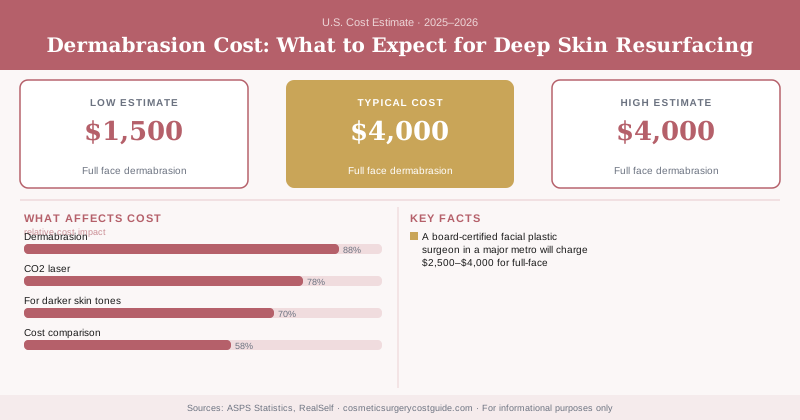
| Full face dermabrasion | $1,500–$4,000 | Most common; physician-performed under anesthesia |
| Partial face (spot treatment) | $1,000–$2,000 | Upper lip lines, chin, cheeks — targeted areas only |
| Dermabrasion for acne scarring | $1,200–$3,500 | Depth varies by scar severity |
| Anesthesia fee (if separate) | $300–$800 | Twilight sedation typical for full-face |
| Facility / surgical center fee | $400–$900 | If performed outside physician’s in-office suite |
These figures reflect out-of-pocket costs for elective cosmetic procedures. Insurance won’t cover dermabrasion performed for aesthetic reasons. If you’re treating scarring from an accident or burn injury, check with your insurer — that’s a different conversation.
Who performs dermabrasion — and why it matters for pricing
Dermabrasion uses a high-speed rotating instrument (a diamond fraise wheel or wire brush) to physically abrade the skin down to a precise dermal depth. Because it reaches the dermis — not just the epidermis — it’s classified as a surgical procedure and must be performed by a licensed physician: typically a dermatologist, facial plastic surgeon, or plastic surgeon.
The provider’s credentials directly affect price. A board-certified facial plastic surgeon in a major metro will charge $2,500–$4,000 for full-face dermabrasion. A dermatologist in a smaller market might charge $1,200–$2,000. You’re paying for surgical precision, and the stakes here are real — dermabrasion to the wrong depth causes scarring and permanent pigmentation changes.
Both dermabrasion and ablative laser resurfacing (CO2, Erbium) treat deep wrinkles, acne scarring, and sun damage. Key differences:
- Dermabrasion is mechanical; it’s been used for decades and has a long safety record. It can treat isolated scars with impressive precision.
- CO2 laser is more controllable in depth per pass; better for treating the entire face uniformly; higher upfront cost ($2,000–$5,000).
- For darker skin tones: both carry pigmentation risk, but some evidence suggests Erbium laser may be safer than dermabrasion for Fitzpatrick IV skin — discuss with your physician.
- Cost comparison: Dermabrasion often runs $500–$1,500 less than a comparable CO2 laser session, making it worth considering if a skilled provider is available.
What dermabrasion treats (and what it doesn’t)
The American Society of Plastic Surgeons has consistently listed dermabrasion among the effective treatments for acne scarring, with the 2023 ASPS statistics showing over 56,000 dermabrasion procedures performed in the U.S. that year — steady demand from patients who specifically need mechanical resurfacing’s precision advantages.
Strong candidates for dermabrasion:
- Rolling and boxcar acne scars (the “crater” types, not ice pick)
- Deep perioral (around-the-mouth) wrinkles
- Rhinophyma (enlarged pores and textural irregularity on the nose)
- Surgical scars and trauma scars at the right maturity stage
- Diffuse sun damage with significant texture irregularity
Not the right tool for:
- Ice pick acne scars (these require punch excision or TCA CROSS first)
- Keloid or hypertrophic scars (dermabrasion can worsen these)
- Active acne (the procedure is contraindicated with active breakouts)
- Fitzpatrick V–VI skin tones without a physician with specific expertise in this population
Recovery: the real cost of your time
Plan for 7–10 days of significant downtime. The treated skin will be raw, oozing, and then crusting — this is expected and doesn’t mean something went wrong. New skin typically forms within 7–10 days, but pinkness lasts 6–12 weeks. Sun avoidance during healing is non-negotiable; post-inflammatory hyperpigmentation risk is highest in the first several weeks.
The hidden cost of dermabrasion is your schedule. Factor in time off work, childcare if you have kids, and at least 6 weeks of strict sun protection before you’re fully through the healing window.
Do not book dermabrasion at any facility that can’t answer these questions clearly: What specific instrument is used? What depth do you target for my concern? What’s your protocol for treating my skin tone? Who manages complications? A vague or dismissive response to any of these is a reason to look elsewhere. This is a surgical procedure with permanent consequences if done wrong.
ASDS context and what patients report
A 2022 survey by the American Society for Dermatologic Surgery found that patients treated for acne scarring with dermabrasion reported high satisfaction rates — particularly for rolling scars where the procedure can significantly smooth skin contour. The caveat: results depend heavily on provider skill. The same survey noted that acne scar treatment satisfaction scores varied more by provider technique than by any other variable. That’s your signal to prioritize credentials and portfolio over price.
Bottom line
Dermabrasion at $1,000–$4,000 per session is a legitimate investment in meaningful skin change — provided you’re treating the right concerns (acne scarring, perioral wrinkles, rhinophyma) with a skilled physician who has a real track record. It’s not a spa treatment. It’s not interchangeable with microdermabrasion at $100 a session. And when performed correctly on the right patient, it can deliver results that laser treatments struggle to match for isolated scarring precision. Consult with at least two board-certified physicians before booking.
Frequently Asked Questions
Dermabrasion typically costs $1,000 to $4,000 per session, with the final price depending on the size of the treatment area and the depth of resurfacing needed. Larger areas like the full face fall toward the higher end, while smaller zones like around the eyes may cost $1,000–$1,500. Most patients require only one session, though some may need touch-ups after 6–12 months.
Dermabrasion is almost always considered a cosmetic procedure and is not covered by health insurance plans. However, if dermabrasion is medically necessary—such as treating severe acne scars, burn scars, or pre-cancerous lesions—some insurance may provide partial or full coverage; you should verify with your insurer and have your surgeon document the medical necessity. Expect to pay the full $1,000–$4,000 out-of-pocket in most cosmetic cases.
Dermabrasion is a surgical procedure performed by a physician under anesthesia that deeply resurfaces the skin and requires a week or more of recovery, while microdermabrasion is a gentle exfoliation treatment at med spas with no downtime and costs only $100–$200 per session. Dermabrasion is far more effective for deep scars, severe sun damage, and significant skin irregularities, whereas microdermabrasion works best for mild texture issues and requires multiple sessions to see results. Choose dermabrasion if you have severe scarring and can handle downtime; choose microdermabrasion if you want minimal recovery and have mild skin concerns.