42% of women seeking facial rejuvenation in 2024 said they’d actively avoid injectables if there were an effective needle-free alternative, according to a RealSelf consumer survey. Emface launched directly at that audience — and it’s become one of the fastest-adopted non-surgical facial devices in history. It’s also one of the pricier ones.
Emface uses synchronized radiofrequency (RF) energy and high-intensity facial electromagnetic stimulation (HIFES) simultaneously. The RF heats skin for collagen and elastin production. The HIFES stimulates facial muscles — particularly the forehead and cheek muscles — to reduce drooping and restore the structural support that diminishes with age. No needles. No downtime. Four sessions. That’s the pitch.
Here’s what it actually costs — and whether the results justify it.
Emface Cost Breakdown
| Package / Session | Typical Price Range |
|---|---|
| Single session (not recommended) | $800–$1,500 |
| Standard 4-session package | $3,000–$5,500 |
| 4-session package (major metro markets) | $4,500–$6,500 |
| Maintenance session (every 6–12 months) | $800–$1,200 |
| Emface Submentum (neck/chin add-on) | $500–$900 extra per session |
Sessions run 20 minutes each. The full treatment protocol is four sessions spaced one week apart. Results become visible at 4–8 weeks post-treatment, as collagen remodeling takes time. Most clinical data shows results lasting 12–18 months before a maintenance session is recommended.
Why Does Emface Cost So Much?
The device itself costs providers $150,000–$200,000 to purchase. Add financing costs, applicator replacements, and staff training, and each session carries real overhead. Unlike injectables — where the cost is largely consumable product — Emface’s cost is driven by equipment investment.
This is actually good news for consumers in one respect: the procedure doesn’t cut corners on product (there’s no “cheap product” version). But it does mean there’s less room for dramatic discounting.
What Drives Price Variation
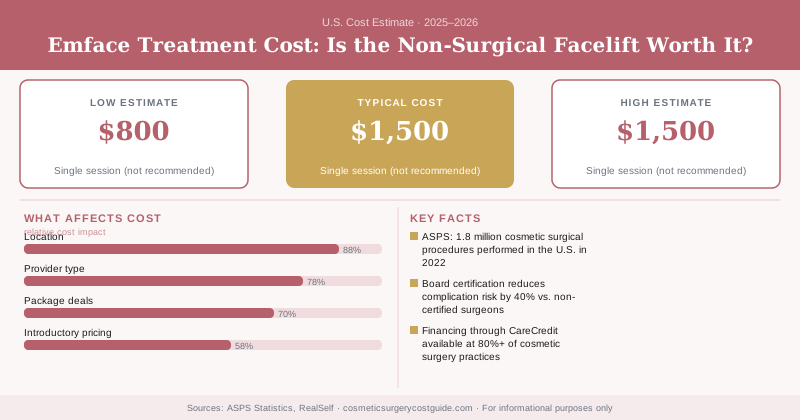
- Location: New York and Los Angeles providers charge 30–50% more than equivalent providers in secondary markets
- Provider type: Plastic surgery practices price higher than medical spas; outcomes training may justify the premium
- Package deals: Bundling Emface with Botox maintenance or filler touch-ups often yields 10–20% savings
- Introductory pricing: New practices frequently offer below-market rates on first-adopter packages — these can be legitimate deals
The pivotal clinical trial published in the Journal of Cosmetic Dermatology (2023) showed Emface delivered a 23% reduction in wrinkles, 26% increase in muscle tone, and 37% lift effect in the mid-face region at 3-month follow-up. The ASPS noted in its 2024 emerging technology report that RF/HIFES combination devices represented the fastest-growing category of non-surgical facial devices, with adoption rates exceeding any single device class in the prior decade.
Emface vs. Competing Treatments
You have options at this price point:
| Treatment | Cost (Full Protocol) | Downtime | Duration of Results |
|---|---|---|---|
| Emface (4 sessions) | $3,000–$5,500 | None | 12–18 months |
| Ultherapy (single full face) | $3,000–$5,000 | Minimal | 12–24 months |
| Thermage FLX (full face) | $2,500–$4,500 | None | 12–18 months |
| Sofwave (full face) | $2,000–$4,000 | None | 12–18 months |
| Filler + Botox combo | $1,500–$3,500/year | 1–2 days | 6–12 months |
Emface’s differentiation is the muscle stimulation component — it’s the only FDA-cleared facial device that simultaneously addresses skin laxity AND muscle atrophy. For patients whose primary concern is facial “deflation” or drooping rather than just skin texture, this distinction matters.
Who’s an Ideal Candidate?
Emface works best for patients in their mid-30s to mid-50s with early to moderate skin laxity and muscle weakening. It’s not a replacement for surgical facelift in patients with significant jowling or excess skin. Think of it as the treatment that adds years before a facelift is needed — or the maintenance tool afterward.
Contraindications include: metal implants in the face, active botulinum toxin injections within 2 weeks (schedule Botox after, not before), pacemakers, and active skin infections.
What’s Not Included in Package Prices
- Initial consultation: $0–$200 (often credited)
- Numbing cream if requested: $20–$50 (usually not needed — Emface is well-tolerated)
- Post-treatment skincare products recommended by provider: $50–$150
- Maintenance sessions at 12 months: $800–$1,200 each
Getting the Best Value
Time your purchase: Practices frequently run promotions in January (new year resolution season) and September (back to routine after summer). Black Friday medical spa deals are increasingly common.
Ask about combination packages: Pairing Emface with a single Botox session or hyaluronic acid filler maintenance visit often unlocks package pricing.
Verify provider training: Emface results vary significantly by technique. Ask how many full treatment protocols your provider has completed. Ideally 50+.
Be cautious of Emface packages priced below $2,500 for four sessions. At that price point, either the provider is using a competing (unproven) device they’re marketing as “similar to Emface,” they’ve purchased a used device with worn applicators, or they’re making up the difference in upsells during treatment. BTL Aesthetics, the manufacturer, maintains a provider finder at btlaesthetics.com — always verify the practice is a licensed Emface provider.
Financing Emface
Most practices accept CareCredit and Alphaeon Credit for Emface packages. A $4,000 package on 12-month promotional 0% APR comes out to $333/month — comparable to many monthly filler maintenance budgets.
HSA and FSA funds cannot be used for cosmetic Emface treatments.
The Verdict on Value
Is Emface worth $3,500–$5,500? For the right patient — someone with early facial drooping who wants a genuinely needle-free protocol with no downtime — yes. The clinical evidence is solid, the results are real, and the procedure is comfortable. The 12–18 month longevity means you’re looking at $2,500–$4,000 annually to maintain results, which is comparable to a comprehensive Botox and filler maintenance schedule.
If you have more significant laxity, Ultherapy’s deeper ultrasound penetration may serve you better. If budget is a constraint, Sofwave delivers similar RF-based results at lower price points.
Start with a consultation at a board-certified plastic surgery practice or dermatology clinic — not a discount medical spa — to determine if Emface is actually the right tool for your specific concerns.
Frequently Asked Questions
A single Emface session costs $800–$1,500, and most patients require 4 sessions for optimal results, bringing the total treatment cost to approximately $3,200–$6,000. Some practices offer package discounts when you commit to all 4 sessions upfront, which can reduce the per-session price.
No, Emface is considered a cosmetic procedure and is not covered by any major US health insurance plans, including Medicare and Medicaid. You will pay the full cost out-of-pocket, though some medical spas and dermatology offices offer financing plans or payment splits to help manage the $3,200–$6,000 total expense.
Each Emface session lasts 20–30 minutes with no downtime, allowing you to return to normal activities immediately after. Most patients need 4 sessions spaced 2 weeks apart, and noticeable results typically appear after 2–3 sessions, with full results visible 3–6 months after completing the treatment course.