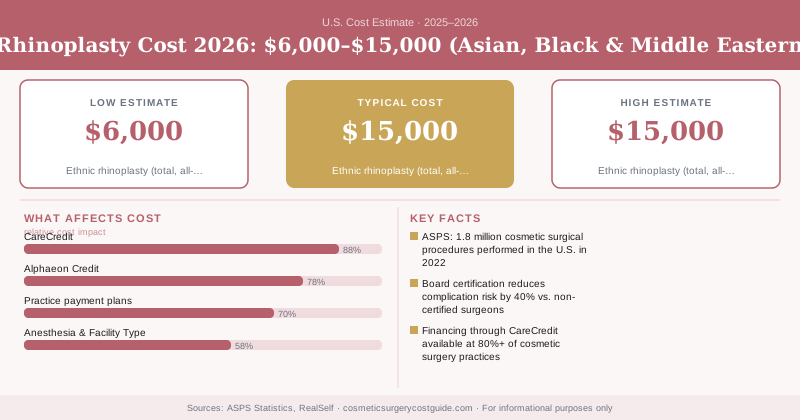
In 2023, rhinoplasty was the most performed cosmetic surgical procedure in the United States, with the American Society of Plastic Surgeons recording 780,661 procedures — a 6% increase from the prior year. A significant and growing share of those procedures were ethnic rhinoplasty, performed on patients who specifically want to reshape their nose while maintaining features characteristic of their heritage.
That distinction matters. And it matters for cost, too.
What Ethnic Rhinoplasty Actually Means
The term “ethnic rhinoplasty” covers a wide range of procedures, but the unifying principle is this: the surgery is planned around preserving ethnic identity, not erasing it. A patient of Korean descent who wants a more projected bridge doesn’t want a button nose from a Hollywood rhinoplasty template. A Black woman refining her nasal tip wants results that look natural on her face, not grafted from a different anatomy.
This philosophy demands surgeons with deep familiarity with non-Caucasian nasal anatomy — cartilage thickness, skin thickness, soft tissue characteristics, and structural support patterns that differ significantly by ancestry group. Standard rhinoplasty training doesn’t necessarily provide this. Ethnic rhinoplasty specialists do.
Cost Breakdown by Approach
| Component | Cost Range |
|---|---|
| Ethnic rhinoplasty (total, all-in) | $6,000–$15,000 |
| Surgeon fee (specialist) | $5,000–$10,000 |
| Anesthesia | $1,200–$2,500 |
| Facility fee | $1,000–$2,000 |
| Cartilage graft (ear cartilage) | $500–$1,200 |
| Rib cartilage graft (when needed) | $1,000–$2,500 |
| Revision rhinoplasty (if needed) | $4,000–$12,000 |
| Pre-op imaging / consultation | $150–$400 |
By Ethnicity: What the Surgery Actually Involves
Asian Rhinoplasty ($7,000–$14,000)
Asian rhinoplasty — most commonly performed on patients of East or Southeast Asian descent — typically involves building structure rather than reducing it. Common goals include dorsal augmentation (adding height to the bridge), tip projection and definition, and alar base refinement.
The challenge with Asian anatomy is cartilage. The nasal septum and tip cartilage in many Asian patients is thinner and more pliable than in Caucasian or African-American anatomy, providing less structural support for augmentation. Surgeons typically use ear cartilage for tip work and, in cases requiring significant dorsal height, may use a silicone implant or rib cartilage graft.
Silicone implants for dorsal augmentation are common in Asian rhinoplasty — they’re efficient and produce consistent results but carry a small long-term risk of implant visibility or infection. Many experienced surgeons now prefer diced cartilage wrapped in fascia (DCF) for dorsal augmentation due to its more natural feel and lower complication profile.
African-American Rhinoplasty ($7,000–$13,000)
African-American rhinoplasty involves a different set of common goals: nasal tip refinement (the tip is often wider and less projected due to softer cartilage structure), narrowing of the alar base if desired, and occasional dorsal reduction for patients with a dorsal hump.
The critical technical challenge here is tip refinement. The nasal tip in many Black patients has softer, less resilient cartilage paired with thicker skin — a combination that makes subtle tip definition harder to achieve and maintain. Aggressive techniques can lead to collapse over time. A skilled surgeon uses cartilage grafting (ear cartilage struts and tip grafts) to create lasting structural support beneath the thicker skin.
The “preservation of ethnic identity” principle is particularly important in this segment. Overcorrected results — tips that look pinched, bridges that look artificially narrow — are a leading reason for revision rhinoplasty in this patient group. Ask your surgeon specifically how they approach this balance.
Middle Eastern Rhinoplasty ($6,500–$14,000)
Middle Eastern rhinoplasty typically addresses a different anatomy: a prominent dorsal hump, a drooping nasal tip, and in some cases a wider alar base. This is more reduction-focused than Asian or African-American rhinoplasty, though the goal is always harmony with the face rather than a dramatically changed profile.
The hump reduction component is technically similar to reduction rhinoplasty in any population. What distinguishes ethnic middle eastern rhinoplasty is the tip work that accompanies it. Removing a dorsal hump without addressing the tip can leave the nose looking unbalanced — surgeons typically need to derotate and reproject the tip in coordination with the reduction.
Skin thickness varies across Middle Eastern patients. Those with thicker skin may see less dramatic tip definition changes; those with thinner skin achieve more visible refinement but need precise surgical technique to avoid visible scarring at the open rhinoplasty columellar incision.
Who Should Perform Ethnic Rhinoplasty
Board certification is the floor, not the ceiling.
Look for a surgeon who:
- Is certified by ABPS or ABFPRS
- Performs ethnic rhinoplasty regularly (at minimum 20+ cases per year in your anatomy group)
- Has before/after galleries specifically from patients with your ancestry
- Can discuss the specific techniques they plan to use — and why
- Is transparent about revision rates
Ask every surgeon you consult: “What is your revision rate for patients with similar anatomy and goals to mine?” A credible answer is between 5% and 15%. Anyone claiming 0% revisions is not being truthful — rhinoplasty is the most technically complex facial procedure, and revisions happen in even the best practices. What matters is whether your surgeon is willing to discuss it honestly, and whether their fee structure accommodates revision consults at reduced cost.
Realistic Expectations: What Changes and What Doesn’t
Ethnic rhinoplasty can achieve meaningful, lasting changes to nasal shape. What it can’t guarantee is a specific millimeter-precise result — swelling takes 12–18 months to fully resolve, and the final outcome isn’t visible at 6 weeks or even 6 months.
At 1 week post-op: significant bruising and swelling, splint in place. At 3–4 weeks: presentable but visibly swollen, especially the tip. At 3 months: majority of swelling gone, but tip definition still developing. At 12–18 months: final result.
Thicker skin — common in African-American and some Asian and Middle Eastern patients — extends this timeline. Patients with thick nasal skin should be prepared to wait the full 18 months before evaluating whether a revision is needed.
Be cautious of surgeons offering ethnic rhinoplasty significantly below the $6,000 total price range. Ethnic rhinoplasty requires specialized training and typically involves cartilage grafting — procedures that simply take more time and skill than basic reduction rhinoplasty. A $3,000 total quote almost certainly reflects a less experienced surgeon, inadequate facility, or both. The revision cost of a poorly performed rhinoplasty ($4,000–$12,000) consistently exceeds the cost of choosing the right surgeon the first time.
Financing Ethnic Rhinoplasty
Since rhinoplasty is elective, insurance covers it only when there’s a functional component (septoplasty for a deviated septum causing breathing obstruction). Most patients finance the cosmetic portion.
Common options:
- CareCredit: 0% promotional APR for 12–24 months, widely accepted at plastic surgery practices
- Alphaeon Credit: similar terms, specific to cosmetic procedures
- Practice payment plans: many surgeons offer 3–6 month in-house installment options
Budget for the full procedure cost plus 10–15% reserve for any follow-up costs (compression dressings, prescription arnica, any revision consultation fees).
Ethnic rhinoplasty done well is among the most satisfying cosmetic procedures available — not because it erases identity, but precisely because it doesn’t. The right surgeon sees your face as a whole and helps you achieve balance that’s unmistakably yours.
Frequently Asked Questions
Ethnic rhinoplasty typically costs $1,500–$4,000 more than a standard rhinoplasty for a few concrete reasons: cartilage grafting is almost always required (which adds surgical time), the procedure demands a surgeon with specific experience in non-Caucasian anatomy, and the technical complexity is higher — building up a dorsum, refining a bulbous tip, or reducing a hump while maintaining ethnic harmony all require different skill sets. The ASPS reports the average rhinoplasty surgeon fee at around $5,400 nationally, but ethnic specialists in major metros typically charge $6,000–$10,000 in surgeon fees alone.
It depends on your anatomy and goals. Asian and African-American rhinoplasty often requires cartilage grafting — ear cartilage (from the concha) or rib cartilage — to build structure or project the nasal tip. Middle Eastern rhinoplasty more often involves reduction work plus tip refinement, with grafting needed primarily for support after reduction. Cartilage harvesting adds $500–$2,000 to total cost and extends recovery by a few days. Your surgeon will determine whether grafting is needed during the consultation based on your specific anatomy.
Board certification by the American Board of Plastic Surgery (ABPS) or the American Board of Facial Plastic and Reconstructive Surgery (ABFPRS) is the minimum requirement. Beyond that, ask specifically about the volume of ethnic rhinoplasty cases they perform — a surgeon who does 10 procedures a year in your anatomy category is very different from one who does 5. Ask to see before/after photos of patients with similar ancestry and goals, not just their best general rhinoplasty results. The revision rate in ethnic rhinoplasty averages around 8–15% nationally, so experienced surgeons matter significantly.