Here’s the honest truth about exosomes: they’re one of the most exciting and most overhyped treatments in aesthetics right now — sometimes in the same clinic, sometimes on the same patient’s chart. The science is genuinely promising. The marketing frequently runs ahead of the evidence. And the pricing reflects both.
Exosomes are nano-sized extracellular vesicles released by cells, containing growth factors, proteins, and genetic material that signal other cells to regenerate. In aesthetics, they’re applied topically (to skin after microneedling or laser), injected into the scalp (for hair loss), or infused via IV. The idea: deliver concentrated regenerative signals to trigger skin and hair follicle repair.
If you’re considering exosome therapy, here’s what it costs and what you should actually expect.
Exosome Therapy Cost by Application
| Treatment Type | Cost Per Session | Sessions Typically Needed |
|---|---|---|
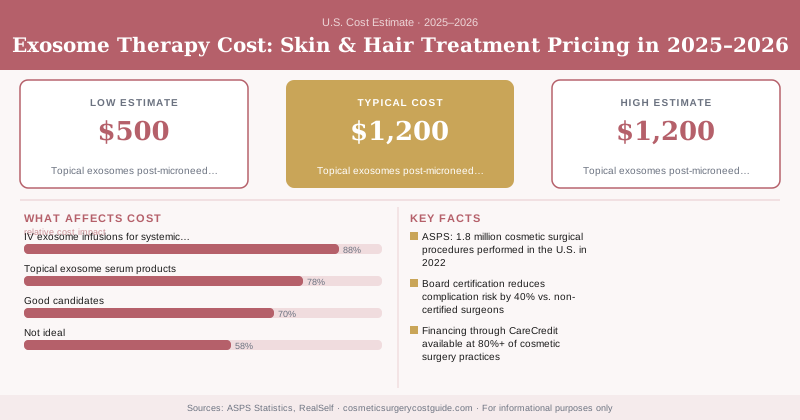
| Topical exosomes post-microneedling (face) | $500–$1,200 | 1–3 |
| Topical exosomes post-laser resurfacing | $400–$900 | 1–2 |
| Scalp injections for hair loss | $1,200–$3,500 | 1–3 |
| Full-face injection protocol | $1,500–$3,500 | 1–2 |
| IV exosome infusion (systemic) | $2,000–$5,000 | 1–3 |
| Exosome eye area treatment | $300–$800 add-on | 1–2 |
Prices vary dramatically because “exosome therapy” isn’t one standardized product. Different brands, different cell sources (placental, adipose, Wharton’s jelly MSC-derived), different concentrations, and dramatically different provider skill levels all affect both cost and outcome.
What’s in an Exosome Product?
The quality spectrum matters here. FDA-registered exosome products in legitimate clinical use include products like ExoFlo, Benev, and Kimera Exo-SkinBio. Concentrations are measured in “exosome counts” (typically 1–3 billion exosomes per mL in clinical products). Products with lower exosome counts or unclear sourcing are less expensive for providers — and less effective for patients.
Ask your provider: What product are you using? What’s the concentration? Where are the exosomes sourced? A provider who can’t answer these questions confidently is a red flag.
A 2024 systematic review in Aesthetic Surgery Journal analyzed 18 clinical studies on exosome application in aesthetics and found statistically significant improvement in skin texture, collagen density, and wound healing versus control groups in 14 of 18 studies. For hair loss, a 2023 study in the Journal of Cosmetic Dermatology showed a 28% increase in hair density at 6 months after two scalp exosome injection sessions versus a 19% increase for PRP — a meaningful but not dramatic difference. The FDA issued a safety alert in 2019 regarding unapproved exosome products and has continued scrutiny, though several manufacturers have pursued 361 HCT/P exemption pathways for lawful marketing.
Exosomes vs. PRP: What’s the Difference?
Most patients encounter exosomes as an alternative to or upgrade from PRP (platelet-rich plasma). Here’s how they compare:
| Factor | PRP | Exosomes |
|---|---|---|
| Source | Patient’s own blood | External (donor MSCs) |
| Mechanism | Growth factors from platelets | Growth factors + signaling proteins from exosomes |
| Cost per session | $600–$1,200 | $800–$3,500 |
| Evidence base | 20+ years, extensive | 5–7 years, rapidly growing |
| Consistency | Variable (depends on patient’s platelet count) | Standardized commercial product |
| FDA status | 510(k) cleared devices for PRP preparation | Most exosome products marketed as HCT/Ps or cosmetics |
For hair loss specifically, early head-to-head data suggests exosomes may outperform PRP. For skin rejuvenation, PRP remains well-evidenced and PRP combined with microneedling is a lower-cost protocol with a strong track record.
Scalp Exosome Therapy for Hair Loss
This is where exosomes are generating the most clinical interest and the most patient demand. Hair follicle stem cells respond to the growth factors and signaling proteins exosomes deliver — the theory is that exosomes “wake up” dormant follicles more effectively than PRP.
Typical scalp protocol:
- 1–3 sessions spaced 4–6 weeks apart
- Local anesthetic applied 30 minutes before
- Injections across the treatment zone (similar to PRP)
- Results visible at 3–6 months (hair growth is slow)
Total cost for a 3-session protocol: $3,600–$10,500. High cost relative to certainty of results. Most providers recommend combining with minoxidil or finasteride for sustained outcomes.
What’s Not Worth Paying For
IV exosome infusions for systemic anti-aging: $2,000–$5,000 per infusion. The evidence for systemic aesthetic benefits is essentially non-existent. This is the furthest exosome application from validated clinical use. Skip it.
Topical exosome serum products (over-the-counter): $50–$300. Exosomes are too large to penetrate intact skin. These are marketing-driven products that do not deliver exosomes into the dermis. Their “exosome content” is meaningless without a channel created by microneedling or laser.
The FDA has taken enforcement action against several exosome product manufacturers selling unapproved biologic products. Before any exosome treatment, ask your provider for the product’s regulatory status and whether it’s registered with the FDA. Legitimate providers use products with documented safety profiles and clear sourcing. “Exosome therapy” from unvetted providers carries real biological risks including infection and immune reactions, since the products contain biological material from donor cells.
Who Should Consider Exosome Therapy
Good candidates:
- Patients seeking enhanced recovery after laser or microneedling treatments
- Early to moderate hair thinning (androgenetic alopecia) not responding adequately to PRP
- Skin rejuvenation patients who want to maximize collagen stimulation from a procedure
Not ideal:
- Patients looking for standalone anti-aging without a base procedure (topical application alone has limited penetration)
- Patients with autoimmune conditions or on immunosuppressive medications (discuss with your physician)
- Anyone seeking the “latest thing” without clear treatment goals
The Bottom Line
Exosome therapy is a legitimate emerging treatment — not snake oil, but not a fully mature, fully evidenced modality either. For post-procedure wound healing and skin recovery enhancement, the evidence is solid. For hair loss, it’s a credible alternative to PRP with some advantages in standardization and early efficacy signals. Budget $800–$2,500 per session for legitimate clinical applications. Avoid IV infusions and over-the-counter “exosome” products.
Work with a board-certified dermatologist or plastic surgeon who can contextualize exosome therapy within a comprehensive treatment plan — not a standalone pitch.
Frequently Asked Questions
Exosome therapy typically costs between $500 and $3,500 per session in 2025–2026, depending on the treatment area, clinic location, and provider expertise. Skin rejuvenation treatments generally fall in the $800–$2,000 range, while hair loss treatments often run $1,500–$3,500 per session. Most patients require 2–4 sessions spaced 4–6 weeks apart for optimal results.
No—exosome therapy is considered cosmetic or experimental by major US insurers and is not covered by Medicare, Medicaid, or private plans. You should expect to pay 100% out-of-pocket, typically $1,600–$10,000+ for a full treatment series. Some clinics offer financing plans or package discounts for multiple sessions.
Most treatment protocols call for 2–4 sessions spaced 4–6 weeks apart, with results often visible 2–3 weeks after the first treatment and improving progressively with each session. Hair loss and skin rejuvenation may require different schedules; your provider will recommend maintenance sessions every 6–12 months to sustain results.