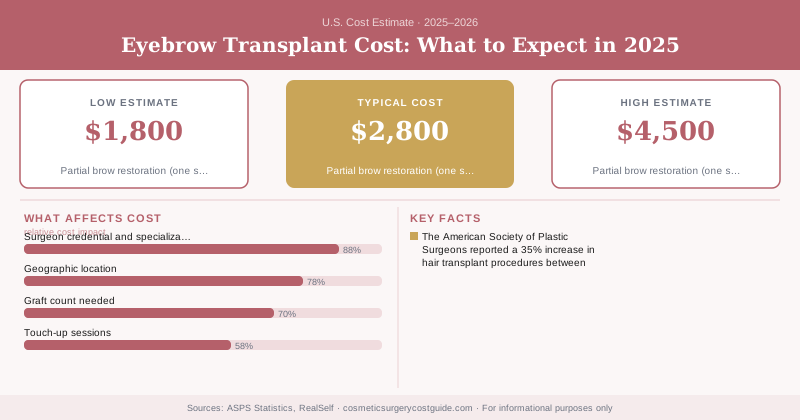
After years of over-tweezing in the early 2000s — a beauty regret that runs deep for millions of women who grew up in that era — eyebrow transplantation has quietly become one of the fastest-growing hair restoration procedures in the US. The American Society of Plastic Surgeons reported a 35% increase in hair transplant procedures between 2019 and 2023, and eyebrow transplants are a growing slice of that trend.
The cost isn’t cheap. But for patients who’ve spent years drawing on brows daily and have little to no natural hair left, it can be life-changing.
How eyebrow transplants work
The procedure is similar in technique to scalp hair transplantation. A surgeon harvests individual hair follicles — usually from behind the ear or the nape of the neck, where the hair texture most closely resembles natural brow hair — and implants them one by one into the brow area.
The most common technique is FUE (Follicular Unit Extraction), where follicles are extracted individually without a linear scar. FUT (strip) harvesting is rarely used for eyebrows because the donor-site scar would be visible in such a small harvest area.
Because eyebrow hairs are implanted at a very specific angle and direction to mimic natural growth, this procedure requires meticulous surgical skill. It takes 3–6 hours for a full bilateral eyebrow transplant.
Eyebrow transplant cost breakdown
| Procedure Type | Low | Typical | High |
|---|---|---|---|
| Partial brow restoration (one side) | $1,800 | $2,800 | $4,500 |
| Full eyebrow transplant (both brows) | $3,000 | $5,500 | $8,000 |
| Brow + hairline combo procedure | $6,000 | $9,500 | $14,000 |
| Touch-up/density session | $1,000 | $2,000 | $3,500 |
What’s included in that price
Reputable practices typically include the following in an all-in quote:
- Surgeon’s consultation and pre-op planning
- FUE extraction and graft preparation
- Implantation session (3–6 hours)
- Anesthesia (local with or without oral sedation)
- Post-op follow-up visits (usually 2–3)
- Hair growth assessment at 9–12 months
What’s often NOT included: touch-up sessions if density needs improvement after the initial grow-in period. Ask about this before booking.
A full eyebrow typically requires 200–350 grafts per brow, or 400–700 total for both. Each graft contains 1–2 hair follicles, implanted at precise angles (usually 10–15 degrees) to mimic the natural flat growth pattern of brow hairs.
Pricing is sometimes quoted per graft ($8–$15/graft) rather than as a flat fee — if a clinic quotes per graft, multiply by expected graft count to compare apples-to-apples with all-in quotes.
Eyebrow transplant vs. microblading: cost comparison
This is the central question most patients wrestle with. Here’s the honest breakdown:
Microblading: $400–$900 initially, $200–$400 per touch-up every 12–18 months. Over 10 years: roughly $2,000–$5,000 total, plus ongoing time.
Eyebrow transplant: $3,000–$8,000 once. Results are permanent. The transplanted hairs grow and behave like real hair — because they are real hair.
The key trade-off: microblading doesn’t require surgery and has zero downtime. Transplants require a recovery period, an initial shedding phase (normal — transplanted hairs fall out before regrowing), and patience while waiting for full results at 9–12 months.
For patients with very sparse or absent brows who want a truly natural, permanent result, the long-term value of a transplant often wins.
Transplanted eyebrow hairs continue to grow like the hair from wherever they were harvested — meaning they’ll grow faster and longer than normal brow hairs. Patients must trim their brows regularly (every 2–3 weeks) after a successful transplant. This isn’t a complication; it’s just a permanent reality of the procedure that surgeons don’t always emphasize upfront.
Who performs eyebrow transplants?
This matters more than most patients realize. Eyebrow transplants are offered by:
- Board-certified plastic surgeons with hair restoration fellowship training
- Dermatologists specializing in hair restoration
- Hair transplant specialists (some have specific surgical training; others don’t)
The American Board of Hair Restoration Surgery (ABHRS) certifies physicians in hair restoration specifically. For eyebrow work — which requires extremely precise follicle placement — look for surgeons who perform eyebrow transplants regularly (at least 50+ cases), not just as an occasional add-on to scalp work.
What affects pricing most
Surgeon credential and specialization: Surgeons with ABHRS certification or oculoplastic training who focus on eyebrow-specific work charge more — and deliver better aesthetic results for this highly visible area.
Geographic location: Practices in New York, Miami, Los Angeles, and Chicago price 30–60% higher than national averages. Practices in the Southeast and Midwest tend to be more accessible.
Graft count needed: Denser, more defined brows require more grafts. A patient with completely absent brows will need more grafts — and pay more — than someone looking to add subtle fullness.
Touch-up sessions: Some patients achieve their desired density in one session. Others need a second touch-up 12–18 months later for additional density. Ask whether this is included or priced separately.
Does insurance cover it?
Almost never for cosmetic reasons. However, patients who’ve lost brow hair due to alopecia areata, chemotherapy, thyroid disease, or trichotillomania may have documentation that supports a reconstructive designation — though insurers still typically deny it. It’s worth a prior authorization attempt with the right diagnosis codes if you have a medical cause.
Recovery timeline
- Day 1–3: Mild swelling around brows and forehead, small scabs at graft sites
- Week 2–3: Transplanted hairs shed (this is normal — don’t panic)
- Month 3–4: New hair begins to emerge from dormant follicles
- Month 6–9: Significant new growth visible
- Month 9–12: Full results assessable
The year-long wait for results is the hardest part. Most patients find the permanent outcome worth it.
Bottom line: Eyebrow transplants cost $3,000–$8,000 for full bilateral restoration. That’s a one-time investment compared to years of microblading touch-ups — and the results look and feel like real hair because they are real hair. Choose a surgeon with documented eyebrow-specific experience, not just general hair transplant volume.
Frequently Asked Questions
Eyebrow transplants typically cost between $3,000 and $8,000 in the United States, with the final price depending on the number of grafts needed and the surgeon's experience. Most procedures require 150–800 grafts, and costs are often calculated per graft at $4–$15 each. Additional fees for facility use and anesthesia may apply on top of the base surgical cost.
Eyebrow transplants are considered cosmetic procedures and are not covered by health insurance plans, meaning you'll pay the full cost out-of-pocket. However, if the procedure is performed to address hair loss from a medical condition like alopecia or burn trauma, some insurers may offer partial coverage—you should verify with your specific plan beforehand. Many surgical centers offer financing options or payment plans to help manage the upfront expense.
Most patients can return to normal daily activities within 7–10 days, though the transplanted hairs will shed temporarily over the first few weeks before regrowing. Full results typically appear after 9–12 months as the transplanted follicles establish blood supply and enter their growth cycle. You'll need to avoid strenuous exercise, heavy sweating, and direct sun exposure for at least 2–3 weeks post-surgery to protect the grafts.