Forty-two percent of RealSelf reviewers who looked into facelifts said cost was the number-one barrier — and that makes sense when quotes range from $7,500 to $35,000 for what’s technically the same procedure. That spread isn’t random. It reflects entirely different operations.
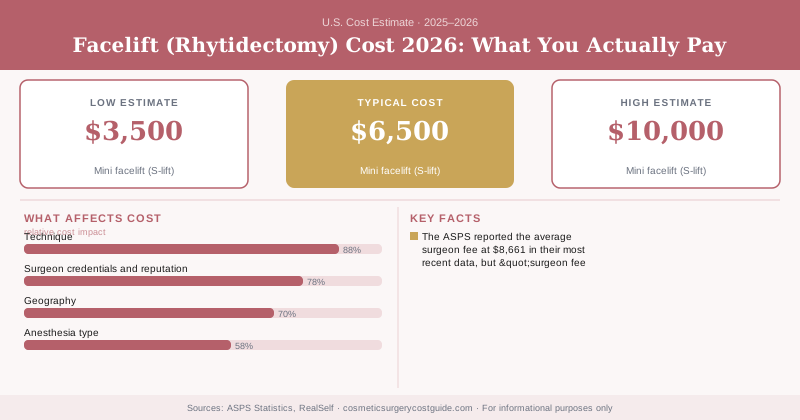
A rhytidectomy — the clinical term for a facelift — can mean anything from a 90-minute mini-lift done under local anesthesia to a 5-hour deep plane procedure that repositions facial fat compartments, tightens the underlying SMAS muscle layer, and addresses the neck simultaneously. The ASPS reported the average surgeon fee at $8,661 in their most recent data, but “surgeon fee only” is a fraction of what you’ll actually write a check for.
Facelift Cost by Technique
| Technique | Surgeon Fee | All-In Cost |
|---|---|---|
| Mini facelift (S-lift) | $3,500–$6,500 | $6,000–$10,000 |
| Mid-face lift | $4,500–$7,500 | $7,500–$12,000 |
| SMAS facelift (full) | $8,000–$15,000 | $12,000–$22,000 |
| SMAS facelift + neck lift | $10,000–$18,000 | $15,000–$26,000 |
| Deep plane facelift | $12,000–$22,000 | $18,000–$32,000 |
| Deep plane + neck lift combo | $15,000–$25,000 | $22,000–$38,000 |
What “All-In” Actually Means
The surgeon fee is just one line item. Here’s what rounds out the total:
- Anesthesia: $1,200–$3,500 depending on duration and type
- Surgical facility fee: $800–$3,000 (hospital ORs cost more than accredited outpatient centers)
- Pre-op labs and medical clearance: $200–$600
- Post-op compression garments: $100–$300
- Prescription medications: $100–$250
- Follow-up visits: Usually included in the surgeon’s fee, but ask explicitly
So a surgeon quoting $9,000 may actually land at $13,000–$15,000 by the time anesthesia and the OR are added. Always ask for an itemized all-in estimate, not just the surgeon’s fee.
What Drives Price Differences
Technique: Deep plane facelifts take longer, require more surgical skill, and typically deliver more natural, longer-lasting results. They cost more. SMAS facelifts are the middle ground — addressing the muscular layer without the extensive dissection of deep plane. Mini facelifts are shorter-duration procedures with more limited correction.
Surgeon credentials and reputation: Board-certified plastic surgeons (ABPS) with subspecialty training in facial plastic surgery — and particularly those with a documented track record in complex facelifts — charge a premium. That premium is not arbitrary. Revision facelift surgery is far more expensive and far more difficult than getting it right the first time.
Geography: Manhattan, Beverly Hills, Miami, and Chicago commands significantly higher fees than mid-size metros. The ASAPS reports that geographic variation alone can shift prices by 30–50%.
Anesthesia type: General anesthesia (more common for full facelifts) costs more than IV sedation (sometimes used for mini lifts). A board-certified anesthesiologist or CRNA is non-negotiable — don’t let this be where cost-cutting happens.
Both techniques address the SMAS — the fibromuscular layer beneath the skin. In a standard SMAS facelift, the surgeon plicates (folds) or implicates (trims) the SMAS and then re-drapes the skin separately. In a deep plane facelift, the skin and SMAS are elevated together as a single composite flap, releasing key ligaments that tether the face. Deep plane surgery addresses midface descent and nasolabial folds more completely, but requires significantly more technical expertise and adds 1–2 hours to surgery time. Many experienced surgeons believe it produces more natural, longer-lasting results — but not every patient needs it.
Does Insurance Ever Cover a Facelift?
Almost never. Rhytidectomy is cosmetic in the vast majority of cases and not covered by insurance. The exception is facial reconstruction after trauma, burns, or paralysis — which falls under reconstructive surgery and may have coverage depending on your policy.
Some surgeons offer financing through CareCredit or Alphaeon Credit. Monthly payments on a $15,000 facelift over 24 months (at promotional rates) run approximately $625/month. Factor this into your planning alongside the 2–4 weeks of recovery time and the income you may not be earning during that period.
Recovery and Hidden Costs
Recovery from a full facelift runs 2–4 weeks before you’re comfortable being seen in public. Bruising and swelling typically resolve by weeks 3–4, with final results visible at 3–6 months. Plan for:
- Time off work: 10–14 days minimum for desk jobs, longer for physical roles
- Help at home: At least 72 hours post-op, ideally a full week
- Arnica, ice packs, and head elevation supplies
- Scar care (silicone sheets, SPF): $50–$150 ongoing
Beware dramatically low quotes. A facelift advertised at $4,000–$5,000 all-in is almost certainly a very limited mini-lift, a less experienced surgeon, or a facility with lower accreditation standards. The stakes with facial surgery are high — results are visible, revision is expensive, and complications (nerve injury, hematoma, skin necrosis) are real. Verify your surgeon’s board certification at abplasticsurgery.org and ask to see before/after photos of real patients, not stock images.
Getting an Honest Quote
The consultation is where pricing crystallizes. Most reputable surgeons charge $100–$300 for a consultation, often applied toward the procedure cost. Bring photos of results you like. Ask the surgeon which technique they recommend and why — not just what you want to hear. If a surgeon immediately tells you a mini-lift will fix everything without a thorough examination, that’s a red flag.
A rhytidectomy is one of the highest-satisfaction procedures in plastic surgery when done well. Getting there means choosing the right surgeon before worrying about which city is cheapest.
Frequently Asked Questions
A full facelift typically costs between $12,000 and $30,000, though quotes can range from $7,500 for a mini-lift to $35,000 for advanced techniques. The final price depends on surgeon experience, geographic location, facility type, and the extent of work needed—a 90-minute local anesthesia procedure costs significantly less than a 5-hour deep plane facelift under general anesthesia.
No—facelifts are considered cosmetic procedures and are not covered by Medicare, Medicaid, or standard health insurance plans since they are elective. You will pay 100% out-of-pocket, though some surgeons offer financing plans through medical credit companies like CareCredit to spread payments over 12–24 months.
A mini-lift (also called a limited or short-scar facelift) takes 90 minutes under local anesthesia and addresses mild sagging in the lower face and jawline, with recovery in 1–2 weeks. A full facelift takes 3–5 hours under general anesthesia, lifts deeper facial tissues, requires 2–3 weeks off work, and produces longer-lasting results (10+ years versus 5–7 years for a mini-lift).