In 2010, dermal fillers were the go-to for facial volume. Today, a growing segment of plastic surgeons and their patients are choosing fat grafting instead — and the ASPS reported over 30,000 fat grafting procedures performed in the US in 2022 alone, a number that has climbed steadily each year since. The appeal makes sense: your own fat doesn’t cause allergic reactions, it can provide longer-lasting results than synthetic fillers, and it addresses volume loss with a natural material. But the cost picture is more involved than a filler appointment, and understanding it matters before you book a consultation.
Facial Fat Grafting Cost by Area
| Treatment Area / Scope | All-In Cost Range |
|---|---|
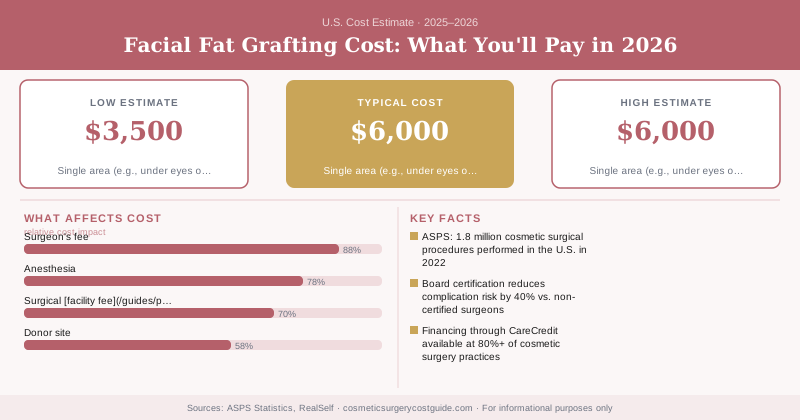
| Single area (e.g., under eyes or temples) | $3,500–$6,000 |
| Two areas (e.g., cheeks + lips) | $5,000–$9,000 |
| Full-face fat grafting | $6,500–$14,000 |
| Fat grafting added to facelift | $2,000–$4,500 (add-on) |
| Fat grafting added to rhinoplasty | $1,500–$3,500 (add-on) |
The wide range reflects both geographic variation and the scope of treatment. Full-face grafting in a major metro with a high-demand surgeon can push past $14,000. The same procedure in a mid-tier market with a less famous but equally qualified surgeon often runs $6,500–$9,000.
What Drives the Cost
Fat grafting is more involved than filler — it requires two sites (harvest and injection) and a surgical setting. Here’s what goes into the all-in cost:
Surgeon’s fee: The largest component. Fat grafting requires precision at every step — harvesting the fat without damaging cells, processing it, and placing it at the correct tissue depth. Surgeons who produce consistent, natural results with high fat survival rates tend to charge more. That expertise gap is real.
Anesthesia: Fat grafting is almost always done under IV sedation or general anesthesia (except when it’s a minor add-on to an in-office procedure). Anesthesia fees typically run $800–$2,000 depending on procedure length.
Surgical facility fee: $600–$2,000 depending on facility type and your location.
Donor site: The fat has to come from somewhere — usually abdomen, inner thighs, or flanks. The harvesting step adds time to the procedure. No separate liposuction fee is typically charged when it’s a small harvest for facial grafting, but a surgeon will confirm this.
Not all transferred fat cells survive. Depending on technique, patient health, and tissue conditions, anywhere from 40–70% of transferred fat may be retained long-term. Surgeons who use careful, low-trauma harvesting and processing techniques — including techniques like PRP enhancement or centrifugation — tend to achieve higher survival rates. Ask your surgeon what their typical retention rate is and whether they over-correct to account for expected reabsorption.
Fat Grafting vs. Fillers: The Real Cost Comparison
Dermal fillers cost $700–$1,500 per syringe. A full-face restoration with filler might use 6–10 syringes, totaling $4,500–$15,000 — and needs to be repeated every 12–24 months. Fat grafting, by contrast, is a one-time surgical cost with results that typically last 5–10 years or longer, sometimes permanently.
For patients who’ve been maintaining facial volume with fillers for years and spending $3,000–$6,000 annually, fat grafting often becomes the more economical option over a 5–7 year horizon.
Is Insurance Involved?
Almost never for cosmetic fat grafting. The exception is reconstructive cases — fat grafting following mastectomy, traumatic injury, or correcting surgical deformities — where insurance coverage may apply. Purely cosmetic volume restoration is an out-of-pocket expense.
Who’s the Best Candidate
You’re a strong candidate for facial fat grafting if you:
- Have volume loss in multiple facial areas due to aging
- Have experienced thin results or migration with fillers
- Want a longer-term solution with natural material
- Have adequate donor fat available (very lean patients may not have enough)
- Are a non-smoker, or willing to quit — smoking significantly reduces fat survival
Fat grafting results depend heavily on the surgeon’s technique and your individual physiology. Some patients retain fat beautifully; others reabsorb more than expected. A well-qualified surgeon will discuss this honestly, may recommend a touch-up session at 3–6 months, and won’t promise permanent results categorically. Be skeptical of anyone who guarantees a specific outcome or doesn’t acknowledge variability.
Recovery and Hidden Costs
Recovery from facial fat grafting is more involved than filler. Swelling and bruising can be significant for 1–2 weeks, with residual swelling lasting up to 3 months. You’ll sleep elevated for 2 weeks and avoid pressure on treated areas.
Budget for:
- Prescription arnica or bromelain supplements: $30–$80
- Bruising recovery makeup: $40–$100
- Time off work: 10–14 days
- Touch-up session (if needed, 6–12 months later): $2,000–$5,000
Bottom Line
Budget $5,000–$10,000 for quality facial fat grafting in most US markets. It’s more expensive upfront than filler but cheaper over 5+ years for patients committed to ongoing volume maintenance. Choose a board-certified plastic surgeon with extensive facial fat grafting experience and strong before/after documentation — survival rates and final results vary enormously between surgeons, and this is not the place to optimize for the lowest price.
Frequently Asked Questions
Facial fat grafting costs between $3,500 and $12,000 all-in, depending on the volume of fat needed and the number of facial areas being treated. This price typically includes the liposuction to harvest fat, processing, grafting into target areas, and facility fees, though some surgeons may charge separately for anesthesia ($500–$1,500).
No, facial fat grafting is considered a cosmetic procedure and is not covered by health insurance plans, meaning you'll pay the full cost out-of-pocket. However, if fat grafting is performed as part of reconstructive surgery after injury or medical treatment (such as post-cancer reconstruction), some insurance plans may cover a portion of the procedure.
Results from facial fat grafting can last 5–10 years or longer, making it a more durable option than dermal fillers which typically last 6–18 months. However, some of the grafted fat is naturally reabsorbed by your body in the first 6–12 months, so your surgeon typically overgrafts by 20–40% to account for this loss.