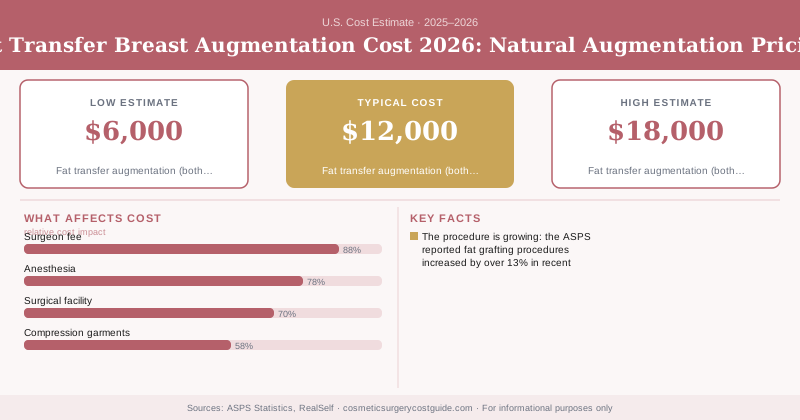
What if you could get a breast augmentation using your own body fat — no implants, no foreign material, no capsular contracture risk? That’s the appeal of fat transfer breast augmentation, and it’s real. The procedure is growing: the ASPS reported fat grafting procedures increased by over 13% in recent years as patients seek more natural alternatives to traditional implants. But there are real limitations you need to understand before comparing price tags.
Here’s what it costs, what you get, and how it compares to implant-based augmentation.
Fat Transfer Breast Augmentation Cost Breakdown
| Procedure | Surgeon Fee | All-In Cost |
|---|---|---|
| Fat transfer augmentation (both breasts) | $6,000–$12,000 | $9,000–$18,000 |
| Fat transfer + breast lift combo | $9,000–$16,000 | $13,000–$22,000 |
| Silicone implant augmentation (comparison) | $4,000–$8,000 | $7,000–$13,000 |
| Saline implant augmentation (comparison) | $3,500–$7,000 | $6,000–$11,000 |
| Fat transfer revision (touch-up round) | $3,500–$7,000 | $5,500–$10,000 |
Fat transfer augmentation typically costs more than implant-based surgery. That’s primarily because it involves two procedures in one: liposuction to harvest fat from donor sites (abdomen, flanks, thighs), fat processing, and then injection into the breasts. You’re paying for more surgical time and more technical complexity.
What’s Included in the All-In Cost
- Surgeon fee: Covers both the liposuction harvest and the breast fat grafting
- Anesthesia: $1,500–$3,000 (general anesthesia is standard given surgery duration)
- Surgical facility: $1,000–$3,000
- Compression garments: $150–$300 for both donor sites and breasts
- Pre-op labs and clearance: $200–$600
- Post-op fat transfer massages: Some protocols include these; $50–$100 each if not
The two-stage nature of the surgery — harvesting and grafting — means you’re typically under anesthesia for 3–4 hours, which drives facility and anesthesia fees higher than a straightforward implant procedure.
What Size Increase Is Realistic?
This is the most important expectation to set before you consult. Fat transfer breast augmentation is not a path to a dramatic size increase. In a single session, realistic outcomes are:
- One cup size increase: Achievable for most patients with adequate donor fat
- One to one-and-a-half cup sizes: Achievable for patients with more donor fat and good tissue compliance
- Two or more cup sizes: Generally not achievable in a single session; some patients choose two staged rounds
A portion of transferred fat is reabsorbed — typically 20–50% — as the body metabolizes cells that don’t establish a blood supply. What remains at 6 months is considered permanent. The final result depends on your tissue characteristics, the surgeon’s injection technique, and how carefully the fat is processed and handled.
Some patients choose to undergo a second fat transfer round 6–12 months after the first to achieve greater volume. This adds $5,000–$9,000 to your total cost. For patients who want more than one cup size of increase, two rounds may be the only way to approach that goal safely. Your surgeon should be direct about whether your anatomy and goals are achievable in one session — or whether you’re looking at a staged approach.
Fat Transfer vs. Implants: The Honest Comparison
Fat transfer advantages:
- No implants, no capsular contracture risk, no implant rupture
- Natural feel (it’s your own tissue)
- Simultaneous body contouring from liposuction donor sites
- Results that age with your body
Fat transfer limitations:
- Limited volume gain per session (typically one cup size)
- Requires enough donor fat — very thin patients aren’t candidates
- Fat reabsorption means results vary and may require touch-up
- Higher cost than implants for the same or less volume gain
- Longer surgery, longer recovery than standalone implants
Implant advantages:
- Predictable, specific volume gain
- Lower cost for significant size increases
- Works for thin patients without sufficient donor fat
- Shorter surgery time
The ASPS data shows traditional implant augmentation remains far more common — over 300,000 procedures annually versus a fraction of that for fat transfer. But for patients who want modest enhancement, don’t want foreign material, and have adequate donor sites, fat transfer is a legitimate alternative worth discussing.
Who Is — and Isn’t — a Candidate
Good candidates:
- Women wanting one cup size of natural-feeling enhancement
- Patients with accessible donor fat (abdomen, flanks, thighs)
- Patients who’ve had implants removed and want to restore some volume
- Women who want simultaneous body contouring
Not ideal candidates:
- Very slender patients without sufficient donor fat
- Patients wanting 2+ cup size increases in one procedure
- Patients with significant breast ptosis (sagging) — fat transfer doesn’t lift
- Patients with certain histories of breast cancer (discuss thoroughly with your surgeon)
Fat transfer to the breasts should only be performed by a board-certified plastic surgeon experienced in the technique. Fat necrosis (areas of calcification from non-viable fat cells) is a known complication that can create lumps detectable on mammography, potentially complicating future cancer screening. Most radiologists can distinguish fat necrosis from suspicious lesions, but inform your mammography provider that you’ve had fat grafting. A thorough pre-operative breast evaluation is essential.
Getting a Realistic Consultation
A good consultation for fat transfer augmentation includes a candid assessment of: your available donor fat, your breast tissue characteristics, what volume is achievable in one session, and whether a lift would be needed alongside fat transfer. If a surgeon promises you a dramatic transformation without discussing any limitations, look elsewhere. The honest conversation is the one worth having.
Frequently Asked Questions
Fat transfer breast augmentation typically costs between $8,000 and $18,000, depending on the surgeon's experience, geographic location, and the amount of fat harvesting and grafting required. This price generally includes liposuction to harvest fat, processing, and the transfer procedure itself, though anesthesia and facility fees may add $1,000–$3,000 to the total.
No, fat transfer breast augmentation is considered a cosmetic procedure and is not covered by health insurance plans, making it an entirely out-of-pocket expense for most patients. Some surgeons offer financing options or payment plans to help manage the $8,000–$18,000 cost.
Most patients gain 0.5 to 1.5 cup sizes with fat transfer, as the body reabsorbs 30–50% of the transferred fat in the first year; however, the remaining fat that survives typically provides permanent results. If you want more than 1.5 cup sizes of increase, implants may be a more predictable option, though fat transfer can be repeated after 6–12 months for additional volume.