Your face gets the Botox, the filler, the facelift consultation. Your hands — which are visible just as often, in every handshake and every photo — usually get ignored until the day someone notices how prominent your veins and tendons have become. That’s the gap fat transfer to the hands exists to close.
What hand fat transfer costs
| Component | Typical Cost |
|---|---|
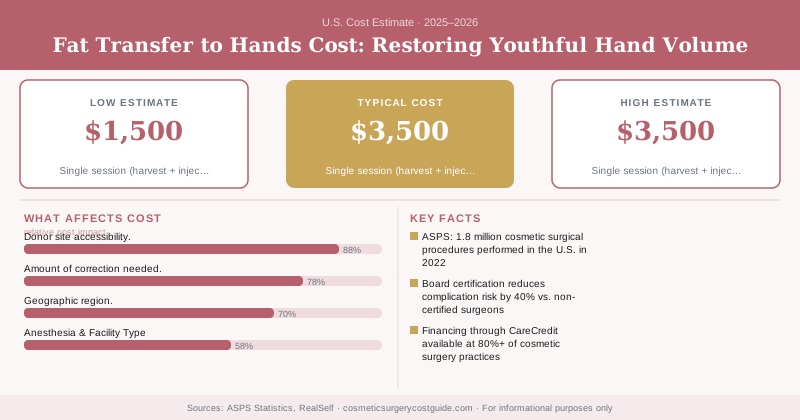
| Single session (harvest + injection) | $1,500–$3,500 |
| Touch-up session (6–12 months later) | $800–$1,800 |
| Combined with facial fat transfer | +$500–$1,000 |
Why hands age so visibly
The backs of the hands lose subcutaneous fat as part of natural aging, a process that reveals underlying veins, tendons, and bony structure much more prominently than in youth. Because hands are almost never covered by makeup and are visible in nearly every social interaction, many patients find this specific change more aging in daily life than facial changes, even though it receives far less cosmetic attention overall.
How the procedure actually works
Fat transfer to the hands starts with liposuction from a donor site — commonly the abdomen, flanks, or thighs — followed by processing the harvested fat to isolate viable fat cells and remove excess fluid and damaged cells. The processed fat is then injected in small aliquots throughout the back of the hand using a blunt cannula, layering it to create smooth, even volume restoration rather than lumpy or uneven results.
Because the procedure requires both a harvest site and an injection site, and the fat processing step takes real time and care to maximize which cells survive the transfer, total procedure time typically runs 60–90 minutes, usually performed under local anesthesia with oral sedation.
Once transferred fat cells establish a new blood supply in their new location — a process that takes several weeks — a portion of them survive indefinitely, unlike hyaluronic acid filler, which the body gradually breaks down over 12–18 months regardless of technique. This is why many patients view fat transfer’s higher upfront cost as a better long-term value despite hyaluronic acid filler’s lower per-session price.
Fat transfer versus filler: making the actual choice
Hyaluronic acid filler for the hands, at $600–$1,200 per session, offers a lower upfront cost and a straightforward in-office injection with no separate harvest site required — appealing for patients wanting to try hand rejuvenation without the added recovery of a liposuction donor site. But it requires repeat sessions every 12–18 months to maintain volume, and those costs add up over several years.
Fat transfer costs more per session but draws from your own tissue, avoiding any risk of an allergic reaction to injected material, and offers the potential for longer-lasting or permanent results in the portion of fat cells that successfully establish blood supply. Patients who’ve already had liposuction elsewhere and have donor fat readily available sometimes find this the more efficient and cost-effective combined approach.
What changes your specific price
Donor site accessibility. If you’re already having liposuction elsewhere on the body, adding a hand fat transfer in the same session typically costs far less than as a fully standalone procedure.
Amount of correction needed. More pronounced volume loss requires more fat transferred and more careful layering technique, which can extend procedure time and cost.
Geographic region. As with most cosmetic procedures, major metro areas run 20–30% above the national average.
Overfilling the hands can create an unnatural, puffy appearance that looks more aged, not less — hand fat transfer requires a conservative, layered approach rather than maximizing volume in a single pass. Choose a provider with specific experience in hand rejuvenation, not simply general liposuction or facial fat transfer experience, since the technique for even, natural-looking hand volume differs from other treatment areas.
Bottom line
Fat transfer to the hands costs $1,500–$3,500 per session, using your own harvested fat to restore lost volume that reveals aging veins and tendons. It costs more upfront than hyaluronic acid filler but offers the potential for longer-lasting, even permanent results in a portion of the transferred fat — a meaningful consideration for patients who’ve already invested in facial rejuvenation and want their hands to match.
Frequently Asked Questions
Fat transfer to the hands typically costs $1,500–$3,500 per session, including the liposuction harvest from a donor area, fat processing, and injection into the hands. Most patients need only one session for a noticeable result, though some choose a touch-up session 6–12 months later.
Hyaluronic acid filler for the hands costs $600–$1,200 per session and typically needs repeating every 12–18 months, while fat transfer costs more upfront at $1,500–$3,500 but uses your own tissue for potentially longer-lasting, sometimes permanent results, since some of the transferred fat cells develop a permanent blood supply and survive indefinitely.
As we age, the hands lose subcutaneous fat, making veins, tendons, and bones more visibly prominent — a change many people find more visibly aging than facial changes since hands are rarely covered by makeup or concealed easily. Fat transfer restores that lost volume, creating a smoother, more youthful hand appearance that better matches a rejuvenated face.