Most patients assume a high hairline is just genetics — something to style around forever. What they don’t know is that hairline lowering surgery can reduce the forehead by 1–3 centimeters in a single procedure, with permanent results and a well-concealed scar. The ASPS doesn’t break out forehead reduction as a standalone category in its annual statistics, but searches for hairline lowering procedures have grown over 200% in the past five years on RealSelf, tracking a surge in patient awareness that the option even exists.
If you’ve spent years with your hair pulled forward to reduce a high or large forehead, here’s what you should know about the cost and procedure.
Forehead Reduction / Hairline Lowering Surgery Cost
| Component | Typical Cost |
|---|---|
| Surgeon’s fee | $4,000–$8,500 |
| Anesthesia (IV sedation) | $800–$1,500 |
| Surgical facility fee | $800–$1,800 |
| Pre-op consultation and labs | $150–$400 |
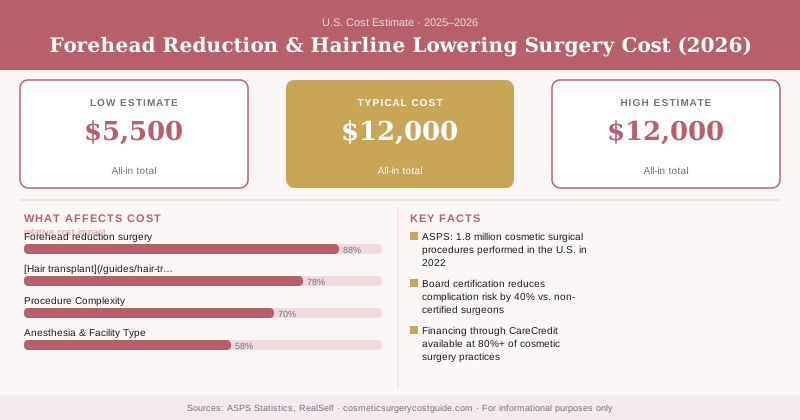
| All-in total | $5,500–$12,000 |
Most patients in major US markets pay $7,000–$10,000 all-in for standalone hairline lowering with a specialist surgeon. Beverly Hills and NYC practices that specialize in this procedure can run higher. Mid-market cities — Nashville, Dallas, Denver — tend to sit in the $6,000–$8,500 range.
How the Procedure Actually Works
Forehead reduction (also called hairline advancement) removes a strip of forehead skin just below the hairline and then advances the scalp down. The incision is made precisely at the hairline border so the resulting scar is hidden within the natural hair. Recovery takes 2–3 weeks for the visible healing phase, with complete scar maturation over 6–12 months.
What separates skilled surgeons in this procedure is the trichophytic incision technique — a small bevel that allows hair follicles to grow directly through the scar, making it nearly invisible even with hair pulled back. Ask any surgeon you consult with specifically whether they use this technique.
Hairline Lowering Surgery vs. Hair Transplant
Many patients compare these two options. They’re not interchangeable:
Forehead reduction surgery: Physically moves the hairline forward. Works regardless of hair density. Results are immediate. Best for patients with a high forehead and good scalp laxity, who don’t have a history of hair loss or a family history strongly suggesting future loss.
Hair transplant: Adds hair follicles at a new position using donor hair from the back of the scalp. Doesn’t change forehead skin — only adds density at a chosen hairline location. Better for patients who have or may develop hair loss, or for patients who want hairline reshaping without surgical advancement. Costs $5,000–$12,000+ depending on graft count.
Some patients combine both: forehead reduction to quickly establish the new hairline position, followed by hair transplants to add density and soften the hairline’s natural shape.
Hairline lowering is only possible if your scalp has sufficient laxity — flexibility that allows the scalp to be advanced forward without excessive tension. A surgeon will assess this by pressing down on your scalp and evaluating movement. If your scalp is very tight, a surgeon may recommend a scalp expansion procedure first (which adds significant time and cost), or may recommend hair transplants as a better fit for your anatomy.
Who’s the Best Candidate
You’re a strong candidate if you:
- Have a high forehead (typically 6+ cm from brow to hairline) that’s out of proportion with your facial features
- Have a stable hairline with no current hair loss or thinning
- Don’t have a strong family history of significant female pattern hair loss
- Have sufficient scalp laxity for advancement
- Are a non-smoker or willing to quit before surgery
Women are the majority of patients for this procedure, though men with naturally high hairlines (absent significant androgenic hair loss) are also candidates.
Forehead reduction is not appropriate for patients experiencing active hair loss or thinning, or for those at high risk of future significant hair loss. Advancing the hairline with surgical tissue in this situation can result in a strange outcome as natural hair loss continues behind the surgical hairline. Always discuss your family hair history candidly with your surgeon, and consider a dermatologist evaluation for hair loss risk before proceeding.
Recovery Costs and Timeline
Expect 2–3 weeks before you’re comfortable in public. The scar is initially pink and slightly visible, fading over 6–12 months. Many patients wear headbands or partial updos during the healing period.
Additional recovery costs:
- Prescription medications and wound care: $80–$150
- Silicone scar gel (used for 3–6 months): $40–$90
- Time off work: 10–14 days typically
- Avoiding vigorous exercise for 3–4 weeks
Is It Worth the Investment?
For the right candidate, it absolutely can be. Unlike hair transplants that require 12–18 months to see full results, hairline lowering delivers immediate, visible change. Patients who’ve struggled with styling choices and self-consciousness around a high forehead for years often describe the result as transformative — and at $7,000–$10,000, it’s within the same range as many other facial procedures with similar or less impactful results.
Bottom Line
Budget $7,000–$10,000 all-in in most US markets with a qualified surgeon. Seek out surgeons who specialize in hairline and scalp procedures specifically — not every plastic surgeon performs this regularly. Consult with at least two specialists, confirm they use the trichophytic incision technique, and ask to see patients 1–2 years post-op with hair both down and pulled back.
Frequently Asked Questions
Forehead reduction surgery typically costs $5,500–$12,000 all-in, depending on the surgeon's experience, geographic location, and whether additional procedures are combined. This price usually includes the surgeon's fee, facility costs, anesthesia, and post-operative care, but you should confirm what is covered before scheduling.
No—forehead reduction and hairline lowering surgery are considered cosmetic procedures and are not covered by health insurance, meaning you will pay the full cost out-of-pocket. Some surgeons offer financing plans or payment options to help distribute the cost over several months.
Hairline lowering surgery typically reduces the forehead by 1–3 centimeters in a single procedure with permanent results, and the incision scar is concealed along the hairline. Most patients can return to light activities within 1–2 weeks and resume full exercise within 4–6 weeks, with final results visible once swelling subsides.