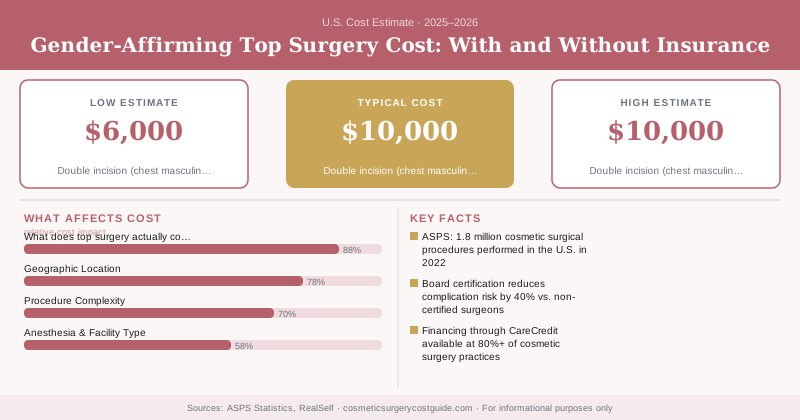
What does top surgery actually cost if my insurance says no? That’s the question that matters most, because the answer varies by tens of thousands of dollars depending on one letter from an insurance company.
Top surgery cost without insurance
| Procedure | Typical Cost |
|---|---|
| Double incision (chest masculinization) | $6,000–$10,000 |
| Keyhole/periareolar (chest masculinization) | $6,000–$9,000 |
| Breast augmentation (chest feminization) | $6,000–$10,000 |
| Nipple graft revision | $1,500–$3,000 |
| Anesthesia (if billed separately) | $800–$1,500 |
| Facility/OR fee (if billed separately) | $1,500–$3,000 |
Why the price range is so wide
Double incision surgery, the more common technique for patients with larger chest tissue, involves removing breast tissue through a horizontal incision and often includes nipple grafting to reposition and resize the areola. It’s the more involved of the two main techniques and generally sits at the higher end of the range.
Keyhole and periareolar techniques, appropriate for patients with smaller chest tissue and good skin elasticity, use smaller incisions hidden around the areola border and preserve nipple sensation and blood supply better since no graft is needed — but they’re not an option for everyone, and the surgeon determines candidacy based on anatomy, not cost preference.
The insurance coverage picture has changed significantly
A decade ago, gender-affirming top surgery was almost never covered. That’s changed substantially. Under WPATH Standards of Care Version 8, published in 2022, top surgery is recognized as medically necessary treatment for gender dysphoria in many cases, and this recognition has driven a growing number of major insurers and state Medicaid programs to cover it — typically requiring one letter from a qualified mental health provider confirming a gender dysphoria diagnosis, though requirements vary by insurer.
When covered, your out-of-pocket cost drops to whatever your deductible and coinsurance are — often $500–$3,000 depending on your plan, versus the full $6,000–$10,000 cash price.
Insurance denials for top surgery are frequently about paperwork, not medical necessity disputes. Common reasons for denial: missing or improperly formatted letters from mental health providers, surgeon’s office coding the procedure incorrectly (using cosmetic breast surgery codes instead of gender-affirming procedure codes), or missing documentation of the WPATH-recommended duration of gender dysphoria diagnosis. Work with a surgeon’s office experienced specifically in gender-affirming insurance billing — it significantly improves approval odds.
If insurance denies you
An initial denial isn’t necessarily final. Many top surgery patients successfully appeal denials, particularly when the denial letter cites documentation gaps rather than a blanket exclusion of gender-affirming care — which is illegal in many states under nondiscrimination laws. A formal appeal with updated letters and, if needed, a peer-to-peer review between your surgeon and the insurer’s medical director resolves many initial denials.
If your plan has a blanket exclusion for gender-affirming surgery, check whether your state has passed nondiscrimination protections requiring coverage regardless of the plan’s stated exclusions — a growing number of states have.
Verify in writing, before surgery, exactly what your insurer covers — surgeon fee, anesthesia, and facility fee are sometimes billed by three separate parties, and a prior authorization covering the surgeon doesn’t automatically cover the anesthesiologist or facility if they’re out-of-network. Ask your surgeon’s office to confirm all three are in-network or covered before your surgery date.
Bottom line
Top surgery costs $6,000–$10,000 out-of-pocket regardless of technique, but a growing share of patients pay only their deductible and coinsurance — often $500–$3,000 — because insurance coverage has expanded significantly under updated WPATH standards. Get prior authorization in writing, confirm all three billing parties (surgeon, anesthesia, facility) are covered, and don’t assume an initial denial is the final word.
Frequently Asked Questions
Without insurance, double incision top surgery (chest masculinization) typically costs $6,000–$10,000, and breast augmentation for chest feminization runs $6,000–$10,000, both including surgeon, anesthesia, and facility fees. Costs vary based on geographic region and whether additional procedures like nipple grafts are needed.
Most major insurers, including many state Medicaid programs, now cover gender-affirming top surgery when it's documented as medically necessary for gender dysphoria under WPATH Standards of Care, following letters from a mental health provider and sometimes a second referral letter. Coverage depends heavily on your specific plan, so get prior authorization in writing before scheduling.
Double incision surgery, used for patients with larger chest tissue, involves full removal of breast tissue with a horizontal scar and typically costs $6,000–$10,000. Keyhole or periareolar surgery, an option for patients with smaller chest tissue and good skin elasticity, uses smaller incisions around the areola and costs a similar $6,000–$9,000, with the technique determined by anatomy rather than cost preference.