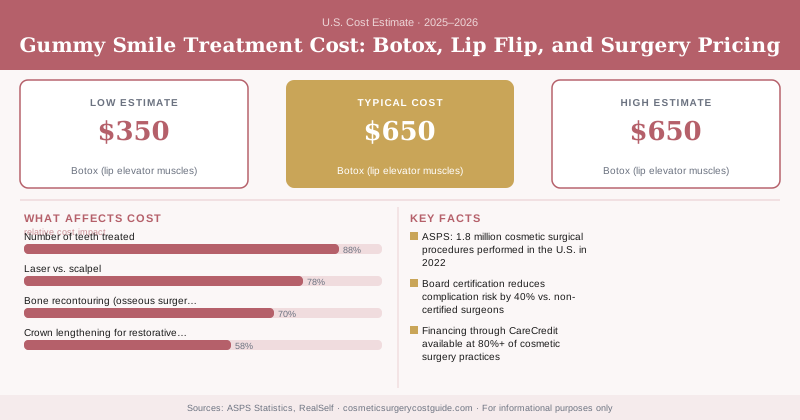
“Gummy smile” describes a smile that exposes more than 3–4mm of gum tissue. It affects roughly 10% of adults aged 20–30, with women more frequently seeking treatment than men. The surprising part? The fix can cost $350 or $35,000 — depending entirely on what’s causing it. Those aren’t different price tiers for the same thing. They’re completely different procedures for completely different anatomy.
This is a case where your diagnosis determines your options. And getting the diagnosis right first saves you money, time, and disappointment.
What Causes a Gummy Smile?
There are four distinct causes — and each has its own treatment:
- Hyperactive upper lip elevator muscles: The lip rises too high when smiling. Botox is highly effective.
- Short upper lip or lip hypermobility: Structural lip anatomy exposes more gum. Lip lowering surgery or orthognathic options.
- Excessive gingival display: The gums themselves extend too far down over the teeth. Gum contouring (crown lengthening).
- Vertical maxillary excess: The upper jaw is too long. Orthognathic (jaw) surgery — the most complex and expensive option.
Most gummy smiles are caused by #1 or #2, which means most are treatable with Botox, minor lip surgery, or gum recontouring — not jaw surgery.
Gummy Smile Treatment Costs by Method
| Treatment | Cause Addressed | Cost Range | Longevity |
|---|---|---|---|
| Botox (lip elevator muscles) | Hyperactive lip muscles | $350–$650 | 3–4 months |
| Lip flip (Botox, upper lip) | Mild overactive elevators | $200–$400 | 2–3 months |
| Hyaluronic acid filler (upper lip) | Thin or short upper lip | $600–$1,200 | 9–12 months |
| Gum contouring / crown lengthening | Excess gingival tissue | $1,000–$4,000 | Permanent |
| Lip repositioning surgery | Lip hypermobility | $2,500–$5,500 | Permanent |
| Orthognathic surgery (jaw surgery) | Vertical maxillary excess | $20,000–$50,000+ | Permanent |
Botox for Gummy Smile: The First-Line Option
For hyperactive lip elevator muscles — the most common cause — Botox injections into the levator labii superioris and/or zygomaticus minor muscles limit how high the lip rises when smiling. The treatment takes 5 minutes. Results appear within 3–7 days and last 3–4 months.
Units needed: 2–6 units per side, total of 4–12 units per session. At $15–$25/unit, total cost runs $60–$300 for the units themselves. Most injectors charge a session fee of $350–$650 regardless of units for a standalone gummy smile treatment.
Risks are real but manageable: too many units can cause temporary asymmetric smile, lip heaviness, or difficulty pronouncing certain sounds. Experienced injectors — ideally a facial plastic surgeon, oculoplastic surgeon, or specialized injector with anatomy training — deliver significantly better results than general medical spas.
Gummy smile affects an estimated 10.5–14% of adults between 20 and 30 years old, according to a 2024 epidemiological review in the International Journal of Periodontics and Restorative Dentistry. The American Society of Plastic Surgeons reports that onabotulinumtoxinA (Botox) remains the most-performed cosmetic procedure in the U.S. for the 13th consecutive year, with over 9 million treatments in 2023 — with smile-related aesthetic applications among the fastest-growing subcategories.
Gum Contouring for Gummy Smile
When excess gum tissue is the primary issue — not lip or jaw anatomy — gum contouring (also called crown lengthening or gingivectomy) is the solution. A periodontist or oral surgeon removes excess gum tissue using a laser or scalpel to expose more of the tooth crown and reduce gum visibility.
Costs vary by:
- Number of teeth treated: Most gummy smile cases involve 6–10 upper front teeth. Cost per tooth: $150–$450.
- Laser vs. scalpel: Laser contouring is faster and heals with less bleeding. Usually $100–$200 more per session.
- Bone recontouring (osseous surgery): If bone underlies the excess gum tissue, bone removal is required alongside gum reduction — adding $500–$1,500 to the total.
Typical all-in range: $1,000–$4,000 for a full front-tooth gum recontouring procedure. Results are permanent — teeth don’t “re-gum.”
Lip Repositioning Surgery
For patients whose lip itself is the issue (rather than muscles or gum tissue), lip repositioning surgery reduces the range of lip elevation by removing a strip of mucous membrane from inside the upper lip and suturing the lip to the gingiva at a lower position.
It’s a more involved procedure than Botox or gum contouring, done under local anesthesia with optional sedation, usually by an oral and maxillofacial surgeon or plastic surgeon. Recovery involves swelling for 1–2 weeks and soft-food restrictions.
Cost range: $2,500–$5,500. The procedure is permanent, which makes it cost-effective long-term compared to quarterly Botox maintenance ($1,400–$2,600/year ongoing).
Combination Approaches
Many patients benefit from combining methods:
- Botox to manage lip elevation + gum contouring to address excess tissue
- Gum contouring + veneers or crowns to optimize the final smile aesthetics
- Lip repositioning + gum contouring for comprehensive correction
Combination cases run $3,000–$8,000 depending on the procedures involved.
Avoid committing to any permanent gummy smile procedure (lip repositioning surgery, gum contouring, jaw surgery) without first trialing Botox for 2–3 cycles if your case is muscle-related. Many patients discover Botox alone achieves the result they wanted — at a fraction of the permanent procedure cost. Botox is reversible; surgery isn’t. A cosmetic dentist, periodontist, or plastic surgeon can assess which cause applies to you — ideally with a photograph analysis and smile measurement at consultation.
Insurance Considerations
Cosmetic gummy smile treatment is not covered by insurance. Exceptions:
- Crown lengthening for restorative purposes (to place a dental crown on a short tooth): Often covered under dental insurance
- Orthognathic surgery for significant jaw misalignment: May be partially covered by medical insurance when functional issues (chewing, breathing, bite problems) are documented
If jaw surgery is being considered, a joint consultation between your orthodontist, oral/maxillofacial surgeon, and insurance coordinator is essential to understand coverage before committing.
The Bottom Line
Don’t pay for a permanent fix before trying a temporary one. Start with a Botox trial ($350–$650) to determine if your gummy smile is muscle-driven. If it is, you can maintain with Botox or convert to lip repositioning surgery for a permanent result. If Botox doesn’t help, your case is likely gum tissue or bone-related — consult a periodontist or cosmetic dentist about crown lengthening.
Getting the diagnosis right first is the most cost-effective thing you can do.
Frequently Asked Questions
Botox injections for gummy smile treatment typically cost $300–$800 per session, with most patients paying $400–$600. Results last 3–4 months, so annual costs range from $1,200–$3,200 if you maintain the treatment regularly.
Most insurance plans classify gummy smile treatment as cosmetic and do not cover it, leaving costs entirely out-of-pocket. However, if the condition is caused by a functional jaw problem or bite issue, surgical correction may be partially covered—you should verify with your specific plan before proceeding.
Botox requires no downtime and results appear in 3–7 days, but surgical options like lip repositioning involve 1–2 weeks of swelling and 4–6 weeks before full healing. Jaw surgery for severe cases requires 6–12 weeks of recovery, making it the most invasive but longest-lasting option.