In 2010, the average hair transplant in the US cost around $4,000. Today — with FUE (follicular unit extraction) as the dominant technique and PRP (platelet-rich plasma) added as a standard adjunct — you’re looking at $7,000–$15,000 for the same level of coverage. That’s not just inflation. It reflects genuinely better technology, less scarring, and results that were impossible to achieve with strip harvesting alone.
The ASPS reported that hair restoration procedures increased by 28% between 2019 and 2023 — driven in part by GLP-1 weight-loss medication side effects (temporary hair shedding), telogen effluvium from pandemic-era stress, and a broader shift in who gets transplants. It’s no longer primarily men in their 50s. Women now represent a growing share of hair transplant patients, and the question most patients ask at consultation: do I need PRP too?
Hair Transplant + PRP Combined Cost
| Treatment Component | Typical Cost |
|---|---|
| FUE hair transplant — 1,000–2,000 grafts | $4,000–$8,000 |
| FUE hair transplant — 2,000–3,500 grafts | $7,000–$14,000 |
| FUE hair transplant — 3,500+ grafts (large session) | $12,000–$18,000 |
| PRP therapy (single session, standalone) | $1,000–$2,000 |
| PRP added at time of transplant | $500–$1,500 (add-on) |
| PRP maintenance series (3 sessions, post-transplant) | $2,500–$5,000 |
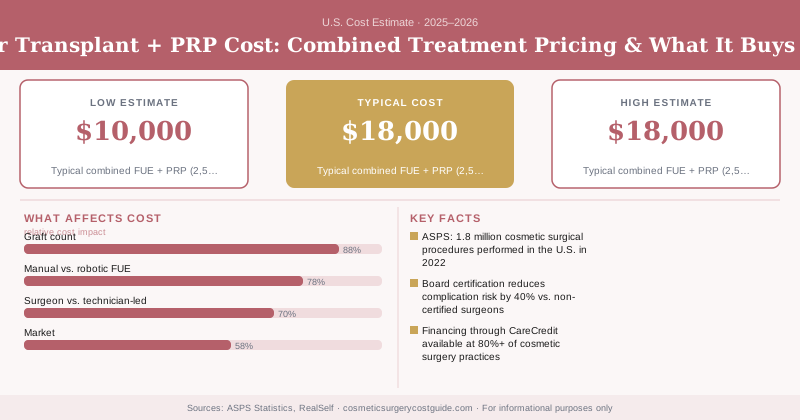
| Typical combined FUE + PRP (2,500 grafts + 3 PRP) | $10,000–$18,000 |
How PRP actually works in hair restoration
PRP involves drawing your own blood, spinning it in a centrifuge to concentrate platelets and growth factors, then injecting that concentrate into the scalp. Platelets release growth factors including PDGF, VEGF, and IGF-1 — all of which play roles in hair follicle cycling and angiogenesis (blood vessel formation around follicles).
When added at the time of transplantation, PRP is injected into the recipient sites before graft placement. The theory — supported by several peer-reviewed studies — is that it improves graft survival by creating a better vascular environment for newly transplanted follicles. A 2020 randomized controlled trial in Dermatologic Surgery found that PRP-treated recipient areas showed statistically significant improvement in graft survival rates at 6 months compared to control areas in the same patient.
For standalone use (no transplant), PRP works as a maintenance therapy for patients with diffuse thinning or androgenetic alopecia — it doesn’t restore lost follicles, but it can slow shedding and thicken existing miniaturized hairs.
Is PRP worth adding to a transplant?
Honest answer: probably yes, if you’re investing in a large transplant session. The incremental cost of PRP at the time of surgery ($500–$1,500 added to the transplant fee) is modest relative to the total procedure cost. If it meaningfully improves graft survival — even by 10–15% — that’s dozens to hundreds of grafts that thrive rather than shed. You can’t put a price on grafts that survived versus those that didn’t take.
For standalone PRP without a transplant, the evidence is more modest. It’s appropriate for early-to-moderate hair thinning, works best in patients who still have functioning (but miniaturized) follicles, and requires maintenance sessions every 4–6 months to sustain results. It won’t regrow hair in areas where follicles are entirely gone.
FUT (follicular unit transplantation, or “strip harvesting”) is still performed and still produces excellent results, but it leaves a linear scar across the back of the scalp. FUE harvests individual follicular units with a 0.8–1.2mm punch, leaving tiny circular scars that are invisible when hair is grown out. FUE costs more per graft ($3–$5 vs. $2–$3 for FUT) but allows shorter hairstyles post-transplant and eliminates the strip scar. Most patients under 45 choose FUE. FUT makes sense for patients needing very large graft counts in a single session or those who will always keep longer hair in the donor area.
What drives price variation
- Graft count: This is the biggest driver. Most practices price by the graft ($3–$6/graft for FUE). Larger sessions cost more in absolute terms but often less per graft due to volume pricing.
- Manual vs. robotic FUE: ARTAS robotic FUE systems charge a premium — add $1,500–$3,000 to typical FUE pricing. Evidence for improved outcomes over skilled manual FUE is mixed.
- Surgeon vs. technician-led: Some clinics use surgeons only for the extraction and placement; technicians handle the slitting and handling. Others use surgeons for every step. Surgeon-only clinics charge more and generally produce more consistent results.
- Market: Hair transplant pricing in New York and Los Angeles runs 30–50% higher than comparable practices in Texas, the Midwest, or Southeast.
Timeline and what to expect
- Surgery day: 4–8 hours depending on graft count
- Grafts shed (shock loss): weeks 2–4 post-op (normal — don’t panic)
- New growth begins: months 3–4
- Meaningful density visible: months 6–9
- Final result: 12–18 months
Hair transplant results are permanent only for transplanted grafts — but they don’t stop your natural hair loss from continuing. If you’re in your 20s or 30s with active androgenetic alopecia, transplanting now without a plan to slow further loss means you may need additional sessions in 5–10 years as surrounding native hair continues to thin. The most durable results come from patients who combine transplant with ongoing medical therapy (finasteride, minoxidil) to protect existing hair. Ask your surgeon about their recommended medical protocol for post-transplant maintenance before booking.
Financing hair restoration
Hair transplants aren’t covered by insurance (nor is PRP). Most practices offer CareCredit, Alphaeon, or in-house payment plans. On a 24-month promotional financing plan, a $12,000 combined FUE + PRP package runs roughly $500/month — comparable to many other recurring cosmetic treatments, but paid as a one-time procedure rather than ongoing maintenance.
Bottom Line
Budget $7,000–$15,000 for a combined FUE hair transplant with PRP for moderate hair loss. Adding PRP at the time of surgery is one of the more defensible add-ons in cosmetic surgery — the evidence is reasonable and the incremental cost is modest. Prioritize surgeon-led practices over technician-heavy clinics, get graft count estimates in writing, and confirm the PRP preparation method (double-spin centrifuge with validated platelet concentration counts, not single-spin discount prep). Results take patience — the full picture isn’t visible for 12–18 months.
Frequently Asked Questions
A combined hair transplant and PRP treatment costs $5,000–$18,000 in the US, depending primarily on the number of grafts needed and the number of PRP sessions performed. Standard cases with 1,500–2,500 grafts and 2–3 PRP sessions typically fall in the $7,000–$15,000 range.
Neither hair transplants nor PRP treatments are covered by most US health insurance plans, as they are considered cosmetic procedures. You should expect to pay the full cost out-of-pocket, though some clinics offer financing plans to spread payments over 12–24 months.
Initial hair growth appears around 3–4 months after the procedure, with noticeable density improvements by 6–9 months. Full, final results typically take 12–18 months to become visible, especially when PRP is added to enhance graft survival and regrowth rates.