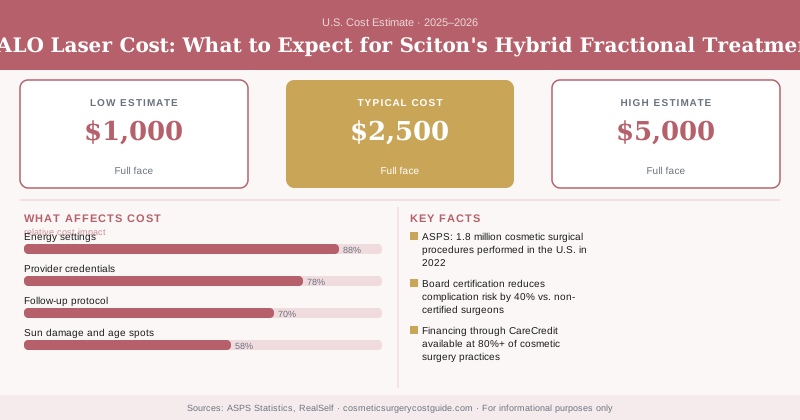
Fraxel cost $1,500 a session in 2015. HALO starts at the same price today — but in one pass it does what used to require separate ablative and non-ablative treatments to accomplish. That’s not marketing copy; it’s the actual engineering difference that makes Sciton’s hybrid fractional laser worth understanding before you book.
HALO uses two wavelengths simultaneously: 2940nm (ablative) and 1470nm (non-ablative). The ablative wavelength removes the outer skin layers, treating surface damage like sun spots and uneven tone. The non-ablative wavelength penetrates deeper without removing tissue, stimulating collagen and addressing wrinkles and texture from below. Previous generations of fractional lasers made you choose: deep result or fast recovery. HALO does both.
The American Society for Dermatologic Surgery reported that laser and light treatments remain among the top five most-requested non-surgical procedures, with fractional resurfacing consistently leading within that category. And clinicians who’ve adopted HALO often see patients who’ve cycled through Clear+Brilliant and Moxi wanting more significant results without the recovery of a full ablative CO2.
HALO Pricing By Treatment Area
| Treatment Area | Cost Per Session | Sessions Typically Needed | Total Estimate |
|---|---|---|---|
| Full face | $1,000–$2,500 | 1–2 | $1,000–$5,000 |
| Face + neck | $1,500–$3,200 | 1–2 | $1,500–$6,400 |
| Face + neck + chest | $2,000–$4,000 | 1–2 | $2,000–$8,000 |
| Neck only | $600–$1,200 | 1–2 | $600–$2,400 |
| Décolletage | $500–$1,000 | 1–2 | $500–$2,000 |
| Hands | $400–$800 | 1–2 | $400–$1,600 |
Major coastal cities — Los Angeles, New York, Miami — run at the upper end of these ranges. Dermatology and plastic surgery practices typically charge 20–40% more than standalone med spas, partly due to physician oversight and more conservative energy settings that result in fewer complications.
How HALO Compares to Competing Lasers
This is where things get practical. Every fractional laser makes similar promises; the real differences are in depth, recovery, and what skin conditions each excels at.
| Laser | Type | Cost/Session | Downtime | Sessions Needed |
|---|---|---|---|---|
| HALO (Sciton) | Hybrid (ablative + non-ablative) | $1,000–$2,500 | 5–7 days | 1–2 |
| Fraxel Dual | Non-ablative fractional | $1,000–$2,500 | 3–5 days | 3–5 |
| Fraxel Repair | Ablative fractional CO2 | $2,500–$5,000 | 7–14 days | 1–2 |
| Clear+Brilliant | Mild non-ablative | $300–$500 | 1–2 days | 4–6 |
| Moxi (Sciton) | Mild non-ablative | $400–$700 | 2–4 days | 3–4 |
| IPL Photofacial | Light-based (not laser) | $300–$600 | 0–2 days | 3–5 |
| CO2 Fractional | Ablative fractional | $1,500–$4,000 | 10–14 days | 1–2 |
Fraxel laser is HALO’s closest competitor in terms of positioning. The practical difference: Fraxel Dual requires 3–5 sessions to match what HALO often achieves in 1–2, and Fraxel Repair delivers more aggressive ablation than most patients want. HALO sits in the middle — more impactful per session than Fraxel Dual, less recovery than Fraxel Repair.
Clear+Brilliant and Moxi are entry-level options in the Sciton ecosystem. They’re excellent for maintenance and younger patients treating early sun damage, but they don’t touch deeper textural concerns or significant pigmentation. Think of them as monthly tune-ups; HALO is the full servicing.
IPL photofacials are not lasers — they use broad-spectrum light that’s good for diffuse redness and brown spots but can’t achieve the collagen remodeling that fractional resurfacing delivers. If your primary concern is rosacea or scattered sun spots without texture problems, IPL at $300–$600/session might serve you better at lower cost.
Clear+Brilliant costs $300–$500 per session and requires 4–6 sessions to see meaningful improvement — a total investment of $1,200–$3,000 with minimal downtime. HALO costs more per session but delivers deeper results in 1–2 treatments with 5–7 days of recovery.
If you have more than mild sun damage or texture concerns, HALO’s per-treatment effectiveness typically makes it the better value. Clear+Brilliant is better suited to younger patients in their 20s doing preventive maintenance, or anyone who genuinely cannot take a week off for recovery.
What HALO Treats Well (and Where It Falls Short)
HALO performs best on:
- Sun damage and age spots — the 2940nm ablative wavelength directly removes pigmented surface cells
- Uneven skin tone and texture — most patients see significant improvement in skin smoothness after one treatment
- Fine lines — especially periorbital and perioral wrinkles
- Mild acne scarring — particularly shallow rolling scars; deeper ice-pick scars need more aggressive treatment
- Melasma — with caution; superficial melasma responds well, but aggressive settings can trigger post-inflammatory hyperpigmentation
HALO is less effective for:
- Deep wrinkles — significant nasolabial folds or jowling require either ablative CO2 laser or surgical correction
- Skin laxity — HALO doesn’t tighten skin; if sagging is the concern, Morpheus8 or Ultherapy address this better
- Active acne — treat the acne first
- Fitzpatrick VI skin tones — ablative wavelengths carry hyperpigmentation risk in darkest skin types; provider consultation required
The Treatment Experience: What Actually Happens
Most HALO treatments are performed with topical numbing cream applied 30–60 minutes before the procedure. The session itself takes 30–45 minutes for the full face. Patients describe the sensation as heat with occasional prickling — generally well-tolerated.
Immediately post-treatment, the face looks red and feels hot, like a moderate-to-severe sunburn. This persists through day 2. Around days 3–5, the skin develops a brown, sandpapery texture as the treated cells shed — this “MENDS” (microscopic epidermal necrotic debris) phase is normal and means the treatment worked. Peeling accelerates around day 4–5, revealing fresh skin underneath. Most people are comfortable being seen in public by day 7, though mild pinkness can persist for 1–2 weeks.
Avoid sun exposure for at least two weeks post-treatment. The new skin that emerges after peeling is extremely vulnerable to UV damage and hyperpigmentation. SPF 30 or higher, every morning, no exceptions — and physically avoid direct sun when possible during the healing window.
Provider Selection and What Drives Price Variation
HALO is a high-powered device, and outcomes are heavily technique-dependent. The same machine produces very different results based on:
Energy settings: More aggressive settings (higher ablative percentage) produce more dramatic results and more downtime. Conservative settings mean easier recovery but less improvement. A skilled provider calibrates this to your skin type and tolerance.
Provider credentials: Board-certified dermatologists and plastic surgeons who own Sciton devices and use them regularly — not exclusively on special event days — tend to produce the most consistent results. Med spas employing nurse practitioners or aestheticians under nominal physician supervision are lower cost but carry higher variability.
Follow-up protocol: Post-procedure skincare matters significantly. The best providers include medical-grade products and a follow-up appointment in the treatment fee. If a provider’s quote doesn’t include this, ask what’s covered.
Getting quotes from at least two providers — ideally one dermatology practice and one med spa — gives you a real feel for what you’re comparing. The $500 price difference between a physician’s office and a med spa often buys you more individualized protocol planning, which matters when you’re treating more complex concerns like melasma or acne scars.
Combining HALO With Other Treatments
Many practices offer HALO in combination with BBL (BroadBand Light) in the same session — Sciton actually markets this as “HALO with BBL” for comprehensive rejuvenation. The BBL treats vascular concerns (redness, broken capillaries) and pigment that the laser then resurfaces. Combined sessions run $2,500–$4,500 but address more skin concerns in a single recovery period.
HALO pairs well with:
- Botox for dynamic wrinkles (do Botox first, HALO 2 weeks after)
- Dermal fillers for volume loss (allow 2 weeks between)
- Microneedling is sometimes used as a lower-intensity maintenance treatment between HALO sessions
The Bottom Line
HALO at $1,000–$2,500 per session costs about the same per-session as Fraxel Dual but delivers substantially more impact per treatment, bringing the total number of sessions — and often the total cost — down. For patients with meaningful sun damage, texture concerns, or early signs of aging who want real results without two weeks of recovery, HALO hits a genuinely useful middle ground in the laser landscape. The key is finding a provider who’s done hundreds of these treatments, not dozens — the calibration decisions that determine your results are made in real time during the procedure.
Frequently Asked Questions
HALO laser treatments typically cost $1,000–$2,500 per full-face session, depending on your provider's location, experience, and whether any add-on areas like the neck or chest are included. Most patients see meaningful results in just one treatment, though two sessions a year is a common maintenance protocol.
Most patients see noticeable improvement after a single HALO treatment — reduced sun spots, more even tone, and smoother texture within 5–7 days of peeling. For more significant concerns like deeper wrinkles or moderate scarring, 2–3 sessions spaced 6–8 weeks apart may be recommended. Unlike non-ablative Fraxel protocols requiring 4–5 sessions, HALO's hybrid approach generally delivers more per session.
Plan for 5–7 days of visible peeling, redness, and bronzing after a standard HALO treatment. The first 24–48 hours feel like a moderate sunburn. By days 3–5 the skin peels and flakes in a predictable pattern — this is normal and part of the process. By day 7 most patients are back to normal activities with fresh, noticeably improved skin showing through.