Most women spend significant time and money on facial aging — and then they extend their hand to shake someone’s and notice the disconnect immediately. Hands reveal age in ways that are easy to overlook until you’re looking directly at them: visible tendons and veins, paper-thin skin, volume loss between the knuckles. According to AAD data, hands are among the top non-facial areas patients seek cosmetic treatment for, and the category has grown substantially as filler techniques have improved. The good news? Treatment is fast, relatively affordable, and the results can be impressive.
Hand Rejuvenation Filler Cost Breakdown
| Treatment | Cost per Session |
|---|---|
| Radiesse (1–2 syringes per hand) | $700–$1,600 |
| Sculptra (for collagen stimulation) | $800–$2,000 |
| Juvederm or Restylane (HA filler) | $600–$1,400 |
| Fat grafting to hands (surgical) | $2,500–$6,000 |
| Combination (filler + IPL for spots) | $900–$2,500 |
Most patients treat both hands in one session, so the per-session cost above reflects treatment of both hands unless otherwise noted. Radiesse and Sculptra are the preferred fillers for hands among most injectors — both are biostimulatory and integrate well with hand tissue.
Why Radiesse Is the Go-To for Hands
Radiesse was the first filler FDA-approved specifically for hand rejuvenation (approved for this indication in 2015). It’s a calcium hydroxylapatite filler that adds immediate volume and stimulates collagen production over time. Results typically last 12–18 months for hands — slightly longer than facial applications because hands have different tissue dynamics.
Sculptra works similarly as a collagen stimulator, often preferred for patients who want a more gradual, subtle improvement over 3–4 months rather than immediate correction. The cost is comparable, but Sculptra usually requires 2–3 sessions spaced 4–6 weeks apart for optimal results.
HA fillers like Juvederm or Restylane are less commonly used for hands because they tend to be less durable in this location — but some injectors prefer them because they’re reversible with hyaluronidase if correction is needed.
Filler addresses volume loss and prominence of tendons and veins — it essentially re-plumps the back of the hand so the underlying structures aren’t as visible. It does not address brown spots, skin texture, or skin laxity. For a comprehensive hand rejuvenation, many patients combine filler with IPL photofacial treatments for pigmentation and chemical peels for texture. Each addresses a different layer of the problem.
What Affects the Cost
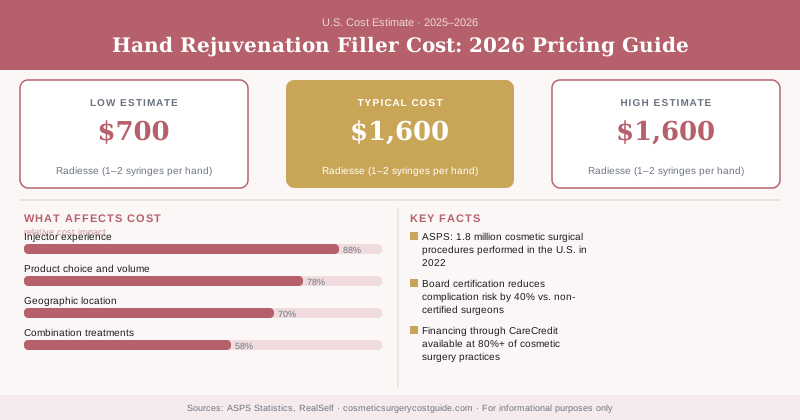
Injector experience: Hand filler is more technique-dependent than it might appear. The dorsum of the hand has superficial veins — overfilling or injecting too superficially risks vascular complications or an unnatural, overly puffy result. An experienced injector (ideally a board-certified dermatologist, plastic surgeon, or a nurse injector under physician supervision with specific hand injection training) charges more for this reason.
Product choice and volume: More volume loss requires more filler. Patients with significantly atrophied hands may need 1.5–2 syringes per hand rather than 1. This directly affects cost.
Geographic location: Like all cosmetic procedures, location matters significantly. A session that costs $900 in Cleveland may run $1,800 at a Manhattan dermatology practice.
Combination treatments: Adding laser treatments for sun damage or chemical peels in the same visit increases total cost but often reduces overall expense compared to scheduling separately.
How Often Do You Need to Repeat Treatment?
Radiesse in hands typically lasts 12–18 months, sometimes longer. Sculptra results build gradually and can last 2+ years with a proper initial series. HA fillers last 6–12 months in the hands. Fat grafting — the surgical option — can last many years, sometimes permanently, with a single session.
For ongoing maintenance, many patients schedule hand filler alongside their annual facial filler appointments, treating it as part of a broader anti-aging maintenance program.
Avoid discount filler deals from med spas that advertise low per-syringe pricing without disclosing the injector’s credentials. Hand filler placed incorrectly can cause lumping, vascular compromise, or uneven results that require dissolving and retreating — at additional cost. The back of the hand is highly visible, and the veins and tendons make precision non-negotiable.
Comparing Filler vs. Fat Grafting for Hands
For patients who want a longer-term solution, fat grafting to the hands is an option. It’s a surgical procedure done under local anesthesia, costs $2,500–$6,000, and typically requires 1–2 weeks of gentle recovery (hands are wrapped and elevated). The upside: results last significantly longer and fat integrates naturally with hand tissue. The tradeoff: it’s a surgical procedure with a harvest site (usually abdomen or inner thigh), more downtime, and more upfront cost.
For most patients, filler is the right starting point. Fat grafting makes more sense for patients with significant volume loss who want to avoid repeated filler sessions.
Bottom Line
Budget $700–$1,600 per session for Radiesse or Sculptra hand rejuvenation at a reputable practice. Treat both hands in one session — it’s almost always more cost-effective than splitting. Look for an injector with documented experience in hand filler specifically, and ask to see before/after photos of their hand patients. Results are genuinely impressive when technique is right, and the boost in confidence from hands that match the face you’ve invested in is very real.
Frequently Asked Questions
Hand rejuvenation filler treatments typically cost $700–$2,500 per session, depending on the filler type and amount needed. Radiesse and Sculptra are common choices, with Radiesse ranging from $700–$1,500 per session and Sculptra from $1,000–$2,500, as these longer-lasting fillers often require higher initial investment for optimal results.
No, hand rejuvenation with filler is considered a cosmetic procedure and is not covered by health insurance plans. Patients should expect to pay the full cost out-of-pocket, though some clinics offer payment plans or financing options to spread the expense over several months.
Results vary by filler type: hyaluronic acid fillers last 6–12 months, while Radiesse lasts 12–18 months and Sculptra can last 2+ years. Most patients achieve optimal results with one initial session, though some may benefit from a touch-up 2 weeks later or maintenance treatments annually to sustain volume and smoothness.