42% of people say their hands give away their age before their face does. Those prominent, ropey veins on the back of the hands become more visible as the fat and collagen padding thins with age — and they’re surprisingly treatable. The catch is figuring out whether you want the veins themselves reduced or the surrounding tissue plumped to camouflage them, because those are two very different procedures at two very different prices.
What hand vein treatment costs
There are two routes here: treat the veins directly so they collapse, or restore volume around them so they’re less visible. Some people do both.
| Treatment | Average Cost | What It Does |
|---|---|---|
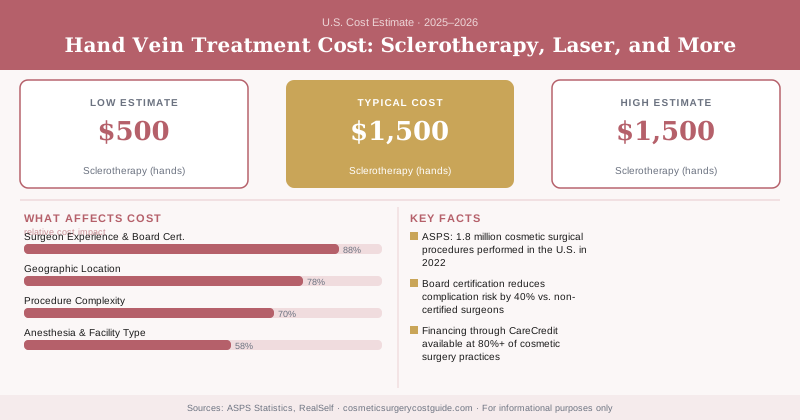
| Sclerotherapy (hands) | $500–$1,500 | Collapses the veins |
| Laser/endovenous ablation | $1,000–$3,000 | Closes larger veins |
| Dermal filler (volume) | $700–$1,800 | Camouflages veins |
| Fat transfer to hands | $2,500–$5,000 | Plumps over veins |
| Combination plan | $1,500–$4,000 | Both approaches |
The Aesthetic Society has tracked rising demand for hand rejuvenation as patients invest in areas beyond the face, and the American Society of Plastic Surgeons reported over 2.5 million minimally-invasive procedures in 2023, with hand treatments among the growing niche categories. The American Academy of Dermatology notes that visible hand veins are a normal part of aging, not a medical problem — so this is purely cosmetic.
Treating the veins directly
If your goal is to reduce the bulging veins themselves, sclerotherapy injects a solution that irritates the vein wall and makes it collapse and fade. It’s the same principle used to treat spider veins elsewhere on the body, just applied to the larger veins on the back of the hand. Bigger, more prominent vessels may instead need laser or endovenous ablation to close them. Expect $500–$3,000 depending on vein size and how many are treated.
Hand vein treatment costs $500–$3,000, and your choice depends on the goal. Sclerotherapy and laser collapse the veins directly; fillers or fat transfer plump the surrounding tissue to hide them instead. Camouflaging with volume often looks more natural and ages better than removing veins one by one. Decide which result you actually want before paying.
Camouflaging with volume
Here’s the approach many dermatologists prefer: instead of removing veins, restore the lost padding on the back of the hands so the veins simply sit deeper and show less. Dermal fillers or a fat transfer plump the area, smoothing the whole hand and softening tendons and bones at the same time, not just veins. It tends to look more natural and addresses the actual cause — volume loss with age. Some clinics also pair this with microneedling to improve the thin, crepey skin texture on the back of aging hands.
Which route is right for you
If you have a few isolated, very prominent veins and otherwise full-looking hands, direct vein treatment makes sense. If your hands look generally thin and bony with veins as part of a bigger “aged hand” picture, volume restoration usually gives a better overall result for the money. Weighing the options is a lot like deciding between non-surgical vs surgical approaches elsewhere on the body, and a consult should clarify which camp you’re in.
Don’t assume removing hand veins is risk-free. The veins on the back of your hands can be used for IVs and blood draws, and some doctors caution against aggressively closing healthy veins for purely cosmetic reasons. Discuss this with a physician — not a medspa — and make sure the provider is medically qualified to treat veins, not just inject filler.
How to keep costs reasonable
Get a clear plan before paying: treating three prominent veins is far cheaper than a full ablation program. If you go the volume route, ask how much filler you genuinely need — a little goes a long way on hands. And weigh the longevity: filler lasts a year or so, fat transfer can be more lasting but costs more upfront. For larger plans, our cosmetic surgery financing guide covers sensible options.
The bottom line
Hand vein treatment runs $500–$3,000 depending on whether you collapse the veins directly or camouflage them with added volume. For most people aiming at an “aged hand” look, restoring volume gives a more natural, longer-aging result. Decide on your goal first, choose a medically qualified provider, and don’t pay to remove veins your body may still need.
Frequently Asked Questions
Laser vein treatment typically costs $800–$2,500 per session, depending on the number and size of veins being treated and your geographic location. Most patients need 2–4 sessions spaced 4–6 weeks apart, bringing total treatment costs to $1,600–$10,000.
Hand vein treatments are considered cosmetic procedures and are not covered by health insurance, including Medicare. You'll pay the full cost out-of-pocket, though some practices offer payment plans or financing options to spread costs over time.
Sclerotherapy directly collapses the veins using injected solution ($500–$1,500 per session) but requires multiple treatments and 1–2 weeks of compression, while dermal fillers plump surrounding tissue to hide veins ($600–$2,000 per treatment) with immediate results and no downtime. Fillers provide instant improvement, but sclerotherapy offers more permanent vein reduction if you're willing to wait for results.