Most patients assume Ultherapy IS HIFU. It’s not — Ultherapy is just one brand of high-intensity focused ultrasound, and it’s one of the priciest ones available. HIFU technology spans dozens of devices at very different price points, and the results can be just as good at a fraction of the brand-name cost. Here’s what you’re actually paying for.
HIFU (High-Intensity Focused Ultrasound) uses focused ultrasound energy to heat tissue layers at precise depths — 1.5mm, 3mm, and 4.5mm — triggering a wound-healing response that produces new collagen over 3–6 months. The technology is the same across most devices. The device brand, cartridge quality, provider training, and number of shots delivered are what separate a $4,000 full-face Ultherapy session from an $800 HIFU treatment at a med spa.
HIFU cost by treatment area and device tier
| Treatment Area | Budget HIFU | Mid-Tier HIFU | Ultherapy / Premium |
|---|---|---|---|
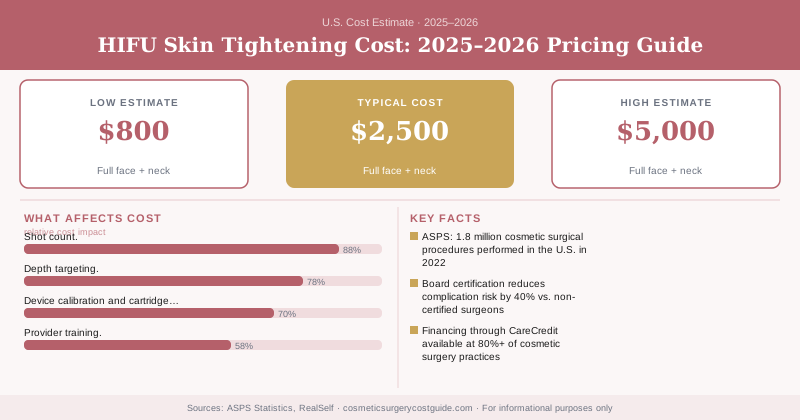
| Full face + neck | $800–$1,200 | $1,500–$2,500 | $3,000–$5,000 |
| Lower face + jawline | $500–$800 | $900–$1,500 | $1,800–$3,000 |
| Neck only | $400–$600 | $700–$1,200 | $1,500–$2,500 |
| Brow lift / forehead | $300–$500 | $600–$1,000 | $1,200–$2,000 |
| Décolletage / chest | $400–$700 | $800–$1,500 | $1,500–$2,500 |
| Abdomen (skin laxity) | $600–$1,000 | $1,200–$2,000 | $2,000–$4,000 |
What separates cheap HIFU from premium treatments?
Shot count. A full-face Ultherapy treatment delivers 600–800+ focused ultrasound shots. Budget HIFU packages sometimes deliver 200–400 shots and call it the same thing. Ask specifically how many lines/shots are included.
Depth targeting. Ultherapy uses real-time ultrasound imaging (DeepSEE) to visualize tissue layers before firing. Most budget HIFU devices fire without imaging — you’re trusting the device settings, not verified anatomy.
Device calibration and cartridge quality. Cartridges degrade with use. Reputable practices replace cartridges regularly; discount clinics sometimes overuse them, reducing energy delivery.
Provider training. HIFU results depend heavily on who maps and delivers treatment. A provider who understands facial anatomy and adjusts depth/energy settings for your tissue produces better outcomes than someone following a script.
Ultherapy’s clinical trial data and FDA clearance for brow lifting are genuinely strong — it’s the most studied device in the category. But several Korean and European HIFU platforms (Doublo-Gold, Ultraformer III) have published comparable outcome data at 40–60% lower cost. The key isn’t the brand — it’s the provider’s skill and the number of shots delivered.
How many treatments do you need?
Most patients need 1 treatment per year to maintain results. HIFU results aren’t permanent — collagen remodeling peaks at 3–6 months and gradually diminishes. Some patients with mild laxity do 1 treatment every 18 months; those with significant skin laxity may see limited results and be better candidates for surgical lifting.
According to a 2021 review in the Journal of Cosmetic and Laser Therapy, HIFU produces measurable improvement in skin laxity in approximately 70–80% of patients, with results lasting 12–18 months on average.
HIFU vs. other non-surgical tightening options
Thermage (radiofrequency): Targets the dermis with RF energy rather than ultrasound. Thermage FLX costs $2,000–$4,000 for full face. Better for skin texture and superficial laxity; HIFU reaches deeper SMAS tissue. Some providers combine both.
Sofwave: A newer ultrasound device at $2,000–$3,500 full face. More comfortable than Ultherapy, but less depth penetration — may not reach SMAS layer.
Morpheus8 (RF microneedling): Delivers RF through microneedles, excellent for skin texture and mild tightening. Often more affordable ($800–$2,000) and pairs well with HIFU.
Thread lift: Mechanical lifting with dissolvable sutures. More immediate but invasive, higher risk; $1,500–$4,500.
Who’s a good candidate?
HIFU works best for:
- Ages 30–60 with mild to moderate skin laxity
- Patients not ready for or wanting to avoid surgery
- Those with visible jowling, neck looseness, or brow drooping
HIFU is unlikely to produce satisfying results for patients with significant excess skin — the energy tightens tissue but can’t remove it. For those patients, a surgical facelift or neck lift is the more appropriate conversation.
A 2022 ISAPS global statistics report noted a 12% increase in non-surgical energy-based treatments globally — demand is high, and so is the number of under-qualified providers offering them. Verify your provider’s training and the specific device being used. Ask to see before/after photos taken at least 3 months post-treatment, when collagen remodeling is complete.
What to ask before booking
- Which specific device is being used?
- How many ultrasound shots/lines are included?
- Does treatment include real-time tissue imaging?
- How many treatments of this type has this provider personally performed?
- What’s the total cost including any numbing cream or add-ons?
Most providers apply a topical numbing cream 30–60 minutes before treatment (often included in the quote). The procedure itself takes 60–90 minutes. Expect redness and mild swelling for 24–48 hours.
Financing
HIFU is not covered by insurance. Most practices accept CareCredit and Alphaeon Credit. Some offer package pricing — purchasing 2 treatments upfront at a 15–20% discount — which makes sense if you’re planning annual maintenance.
Frequently Asked Questions
HIFU skin tightening typically costs $800–$5,000 per treatment, depending on the device brand, treatment area size, and provider location. Ultherapy, the most well-known HIFU brand, falls at the higher end ($3,000–$5,000), while other FDA-cleared HIFU devices like Doublo or Profound may cost $1,500–$3,000 for comparable results.
No, HIFU skin tightening is considered a cosmetic procedure and is not covered by health insurance plans. You will pay the full out-of-pocket cost, though some providers offer payment plans or financing options through CareCredit or similar medical credit cards to spread payments over 6–12 months.
Most patients see optimal results after 1–3 treatments spaced 4–6 weeks apart, with full collagen remodeling taking 2–3 months to appear. Results typically last 1–2 years, after which many patients return for a single maintenance treatment to sustain skin tightness and lift.