A facelift doesn’t stop aging — it resets your clock. Most patients get 7–12 years before they start thinking about a second procedure. But that range hides a lot of variation: someone who maintains their weight, protects their skin, and uses fillers strategically can often push well past the 10-year mark. Someone who gains 30 pounds or neglects sun protection may see the results soften faster.
Here’s the data, the costs, and how to get the most out of the investment.
What “Lasting” Actually Means
A facelift addresses sagging skin and repositions descended facial soft tissue — jowls, neck skin, midface droop. What it doesn’t address: volume loss (fat atrophy), skin texture, and the continued effects of gravity and sun damage.
So when patients say “my facelift lasted 10 years,” they usually mean they looked noticeably refreshed for 10 years before requesting another procedure. They didn’t revert to their pre-op appearance — they aged from the post-op baseline. The net improvement over doing nothing remains.
The ASPS notes in its procedural data that facelift revision rates and re-operation timing are highly variable, but 7–10 years is the most commonly cited interval before patients seek a second procedure.
| Facelift Type | Average Cost | Typical Longevity | Best For |
|---|---|---|---|
| Mini facelift | $6,000–$12,000 | 4–7 years | Early laxity, 40s–early 50s |
| Standard (SMAS) facelift | $10,000–$20,000 | 7–12 years | Moderate–significant laxity |
| Deep plane facelift | $15,000–$30,000 | 10–15 years | Significant descent, 55+ |
| Second facelift | $12,000–$25,000 | 5–10 years | Re-operation is more complex |
| Neck lift (standalone) | $5,000–$12,000 | 5–10 years | Isolated neck concern |
Why Deep Plane Results Last Longer
There’s real surgical reason for the price difference between a mini facelift and a deep plane. A mini facelift tightens superficial skin — it’s quicker, cheaper, and recovers faster, but gravity acts on the repositioned skin relatively quickly. A deep plane facelift releases and repositions the facial ligaments and deeper tissue layers. Those structures hold better over time.
Published research comparing SMAS-based and deep plane techniques consistently shows deeper approaches produce longer-lasting results with more natural appearance — at the cost of longer recovery (3–4 weeks vs. 1–2 weeks for mini) and higher fees.
The Maintenance Cost: Injectables After a Facelift
Most facelift patients don’t stop there. Volume loss — hollowing under the eyes, flattened cheeks, deflated temples — continues after surgery because a facelift repositions tissue but doesn’t replace lost volume.
Typical annual injectable maintenance after a facelift:
| Treatment | Annual Cost | What It Addresses |
|---|---|---|
| Botox (forehead, crow’s feet) | $600–$1,200 | Dynamic wrinkles |
| Cheek/midface filler | $1,200–$2,400 | Volume restoration |
| Jaw/chin filler | $800–$1,600 | Lower face definition |
| Lip filler | $600–$1,200 | Age-related thinning |
| Total annual maintenance | $2,000–$4,500 | Full program |
Some patients prefer Sculptra or fat transfer at the time of their facelift to address volume simultaneously — which reduces ongoing filler costs and often improves overall results.
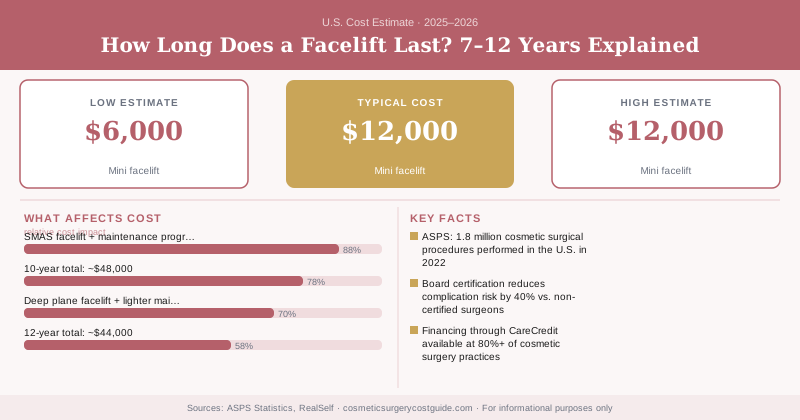
SMAS facelift + maintenance program:
- Primary facelift: $14,000
- Annual injectables ($3,000/year × 10 years): $30,000
- Skin care + laser/resurfacing (every 2–3 years): $4,000
- 10-year total: ~$48,000
Deep plane facelift + lighter maintenance:
- Primary facelift: $22,000
- Annual injectables ($1,500/year × 12 years): $18,000
- Skin care + resurfacing: $4,000
- 12-year total: ~$44,000
The higher upfront deep plane cost often produces similar or lower total spend when longevity and reduced maintenance are factored in.
What Determines How Long Yours Lasts
Genetics matters — patients with good skin elasticity and structural bone support tend to hold results longer. But these controllable factors have real impact:
Weight stability: Significant weight gain after a facelift adds volume and stress to repositioned tissue. Significant weight loss deflates the face and can reveal remnant laxity. Maintaining a stable weight within ±15 pounds of your surgical weight is the single most impactful lifestyle factor.
Sun protection: UV damage accelerates the skin changes (elasticity loss, pigmentation, texture) that make aging visible. Consistent SPF 50 use, especially in sunbelt states, measurably extends results.
Smoking: If you smoke, results are compromised from the start — smoking impairs wound healing, reduces skin quality, and accelerates post-op aging. Most reputable surgeons won’t operate on active smokers.
Skincare foundation: Medical-grade retinoids and vitamin C are the two most evidence-backed topical treatments for maintaining surgical skin quality. Most surgeons have a post-op skincare protocol for this reason.
When Patients Get a Second Facelift
About 15–20% of facelift patients eventually seek a second procedure, typically 8–12 years after the first. A secondary facelift is technically more complex — scar tissue from the first procedure limits dissection planes — which is why it costs more ($12,000–$25,000) and requires a surgeon with secondary facelift experience.
Timing matters for a second facelift. Waiting until significant laxity recurs (rather than pursuing it early) produces better outcomes — there’s adequate tissue to work with, and the results look more natural. Surgeons who operate too early on secondary patients often produce the tight, windswept look that gives facelifts their reputation. If your result still looks good, there’s no benefit to operating earlier.
Facelift vs. Maintaining with Injectables Only
Some patients prefer to defer surgery entirely and use Botox, fillers, Ultherapy, and thread lift procedures indefinitely. This is a legitimate strategy — though the costs stack up.
At $4,000–$6,000/year in comprehensive injectable maintenance, a patient from age 50 to age 65 spends $60,000–$90,000 — significantly more than a facelift at 55 followed by modest maintenance. Neither approach is wrong; it depends on tolerance for surgery, recovery, and the importance of ongoing procedures.
Bottom Line
A well-executed facelift buys you 7–12 years of noticeably younger-appearing results, with the lower end applying to mini lifts and the higher end to deep plane techniques. Maintenance injectables add $2,000–$4,500 annually to the total cost. A second facelift — needed by roughly 1 in 6 patients — runs $12,000–$25,000 and adds another 5–10 years. Plan for the full picture when you’re making the initial investment decision.
Frequently Asked Questions
A facelift typically costs between $7,000 and $15,000, with an average around $12,000 for a full procedure. Costs vary by surgeon experience, geographic location, and whether additional procedures like neck lift or eyelid surgery are included. A second facelift 7–12 years later usually falls in the same range, though some surgeons offer revision discounts.
No, facelifts are considered cosmetic procedures and are not covered by health insurance, including Medicare. You will pay the full cost out-of-pocket, though some surgeons offer financing plans or payment arrangements to spread costs over 12–24 months. If a facelift is performed to correct a functional problem (like severe eyelid drooping affecting vision), a portion may be covered, but this is rare.
Maintaining stable weight, using daily sunscreen, avoiding smoking, and getting strategic maintenance injectables (Botox, fillers) every 6–12 months can help extend results well past 10 years. Many patients combine their facelift with a skincare routine and preventive injectables to delay or avoid a second surgical procedure, potentially adding 2–5 years to their results.