Dark spots, uneven skin tone, melasma patches across the cheeks — hyperpigmentation is one of the most common cosmetic concerns in the U.S. The American Academy of Dermatology (AAD) estimates that melasma alone affects more than 5 million Americans, with the vast majority being women. The treatment market ranges from a $25 over-the-counter serum to a $2,500 laser series — and the right choice depends entirely on what type of hyperpigmentation you have.
Not All Dark Spots Are the Same
This matters because treatment — and cost — varies dramatically by type.
Post-inflammatory hyperpigmentation (PIH) — dark marks left after acne, cuts, or skin trauma. Often responds well to topical treatments over time.
Melasma — hormonally triggered, appears as larger patches typically on the cheeks, upper lip, and forehead. Notoriously stubborn; requires more aggressive treatment and ongoing maintenance.
Solar lentigines (sun spots) — flat brown spots from cumulative UV exposure, common in adults over 40. Laser and IPL work well here.
Freckles/ephelides — genetic, fade with sun avoidance; mild treatments effective.
Cost by Treatment Type
| Treatment | Cost Per Session / Course |
|---|---|
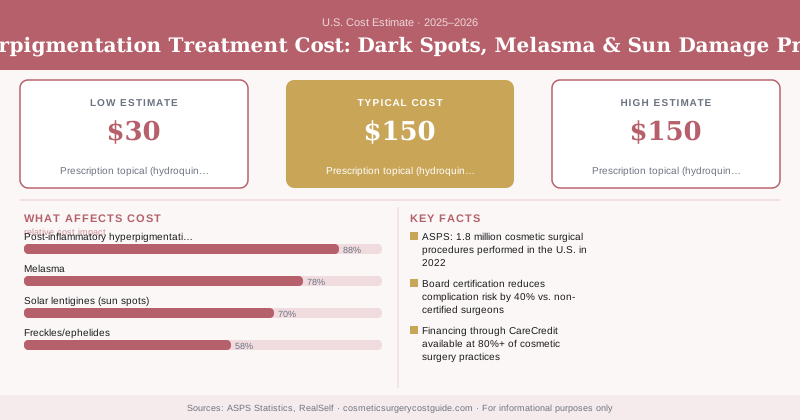
| Prescription topical (hydroquinone, tretinoin) | $30 – $150/month |
| Chemical peel (superficial) | $100 – $300 per peel |
| Chemical peel (medium-depth TCA) | $200 – $600 per peel |
| IPL photofacial | $300 – $600 per session |
| Fraxel / fractional laser (full face) | $800 – $2,000 per session |
| Nd:YAG laser (spot treatment) | $200 – $500 per session |
| Microneedling with brightening serum | $250 – $600 per session |
| Professional hydroquinone peel series (4–6) | $600 – $2,000 total |
What Actually Works — and What It Costs
Topical treatments are the first-line approach for mild to moderate hyperpigmentation. Prescription hydroquinone (4%) is the gold standard bleaching agent in the U.S. — it inhibits melanin production and produces visible results in 8–12 weeks. A monthly prescription runs $30–$100. Combined with tretinoin and a mid-potency corticosteroid (the “Kligman formula”), results are faster but require dermatologist supervision.
Over-the-counter alternatives — vitamin C serums, niacinamide, kojic acid, azelaic acid — cost $20–$80/month and work for mild cases, but are significantly less potent than prescription options.
Chemical peels work by exfoliating the outer skin layers where pigment has accumulated. Superficial glycolic or lactic acid peels ($100–$300 each) require 4–6 sessions. Medium-depth TCA peels penetrate deeper and can address more stubborn pigment in 1–3 sessions at $200–$600 each. Most dermatologists recommend a series.
IPL (Intense Pulsed Light) photofacials target melanin with broad-spectrum light pulses. Excellent for sun spots and facial redness. Most patients need 3–5 sessions at $300–$600 each — total treatment cost typically $900–$3,000. Results are often dramatic for solar lentigines.
Fractional lasers (Fraxel, CO2) deliver the most significant results but at the highest price point. A single full-face Fraxel session costs $800–$2,000. Most providers recommend 2–4 sessions for melasma, though melasma recurrence is high without rigorous sun protection.
Hyperpigmentation — especially melasma — comes back without consistent sun protection. SPF 30–50 broad-spectrum sunscreen applied daily is non-negotiable after any professional treatment. Budget $15–$40/month for quality sunscreen. Skipping it wastes the money you spent on treatment. Some dermatologists now consider daily sunscreen the single most cost-effective hyperpigmentation intervention available.
How Many Sessions Are Realistic?
Skin type significantly affects treatment planning. The Fitzpatrick scale classifies skin from Type I (very fair) to Type VI (very dark). Darker skin tones (Types IV–VI) are at higher risk for post-inflammatory hyperpigmentation from aggressive treatments — paradoxically, overly aggressive laser on darker skin can worsen pigmentation. A dermatologist experienced in treating diverse skin tones is essential.
Realistic expectations by treatment type:
- Topicals alone: 3–6 months for mild improvement
- Chemical peel series: visible improvement in 4–8 weeks
- IPL: significant improvement after 3 sessions, typically 3–4 months apart
- Fraxel: 3–6 months for full results from a 3-session protocol
Insurance and Coverage
Hyperpigmentation treatment is cosmetic. Insurance doesn’t cover it. Exceptions: if melasma or hyperpigmentation is a side effect of a medical treatment (some chemotherapy agents, certain blood pressure medications), document this with your dermatologist — it’s unlikely to be covered but worth asking about.
HSA and FSA funds can be used for medically supervised treatments prescribed by a dermatologist. Verify with your plan administrator.
Be skeptical of “skin brightening” facials at nail salons or unregulated beauty studios. Professional chemical peels and lasers require training and licensing — an improper peel at the wrong concentration or pH can cause chemical burns, severe PIH, and permanent scarring. Always verify your provider’s credentials. The AAD recommends seeking board-certified dermatologists or licensed aestheticians under medical supervision for any chemical exfoliation beyond superficial strength.
Realistic Budget Planning
For mild sun spots or light PIH: $150–$800 total (prescription topicals plus 2–3 superficial peels) with 3–4 months of consistent use.
For moderate melasma or deeper sun damage: $1,000–$3,000 for a proper IPL or fractional laser series with ongoing maintenance.
For severe or recalcitrant hyperpigmentation: $2,000–$5,000+ combining multiple modalities with dermatologist oversight.
The single biggest cost mistake people make: starting with expensive lasers without completing a topical priming protocol first. Most dermatologists recommend topical preparation for 4–8 weeks before any laser — it reduces the risk of PIH reaction and improves outcomes. Doing it in the right order saves money and produces better results.
Frequently Asked Questions
Laser treatments for hyperpigmentation typically range from $500 to $2,500 per session, with most patients requiring 3–6 sessions spaced 4–6 weeks apart for optimal results. Total treatment costs usually fall between $1,500 and $2,500 depending on the laser type, treatment area size, and skin tone.
Most health insurance plans do not cover hyperpigmentation treatments because they are classified as cosmetic procedures rather than medically necessary. However, if melasma or dark spots result from a documented skin condition or medical disorder, some insurance may cover dermatologist consultations; you should contact your insurer directly to confirm coverage limits.
Over-the-counter topical treatments like vitamin C serums and hydroquinone creams ($25–$150) typically show visible results within 4–12 weeks of consistent daily use. Prescription-strength topicals work faster, often showing improvement in 6–8 weeks, but require a dermatologist visit ($100–$300 consultation fee).