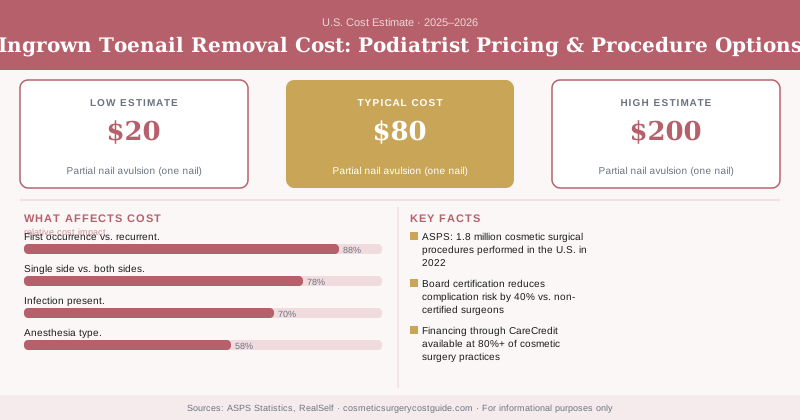
What does it cost to have a podiatrist fix an ingrown toenail? The short answer: $50 to $350 for a standard partial nail avulsion, often mostly covered by insurance. The longer answer depends on whether this is your first rodeo or your third recurrence — because recurrent cases need a different, slightly pricier procedure. Here’s exactly what drives the bill.
Two Very Different Procedures
Not all ingrown toenail treatments are the same, and the cost difference is significant.
Partial nail avulsion (PNA) — the standard fix for an acute ingrown toenail. The podiatrist numbs the toe, removes the offending edge of the nail, and that’s it. Takes about 15–20 minutes. The nail grows back normally. This is the first-line approach for most cases.
Partial matrixectomy (PNA + phenol) — the permanent fix. After removing the nail edge, the podiatrist applies phenol (or uses electrocautery) to destroy the nail matrix in that corner, preventing that portion of the nail from ever growing back. Takes slightly longer and costs more, but recurrence rates drop to under 5% compared to around 30% with simple avulsion.
| Procedure | Without Insurance | With Insurance (typical out-of-pocket) |
|---|---|---|
| Partial nail avulsion (one nail) | $50 – $200 | $20 – $80 copay |
| Partial matrixectomy with phenol (one nail) | $200 – $500 | $40 – $150 copay |
| Matrixectomy, bilateral (both sides) | $300 – $700 | $60 – $200 copay |
| Surgical excision with wedge resection | $400 – $800 | $80 – $250 copay |
| Infected nail with antibiotic treatment | $150 – $600 | Variable |
Does Insurance Cover It?
Yes — usually. Ingrown toenail removal is a medically necessary procedure when there’s pain, infection, or impaired ambulation. Most standard health insurance plans cover it under podiatric or surgical benefits, subject to your deductible and specialist copay.
The American Podiatric Medical Association (APMA) notes that ingrown toenails account for approximately 20% of all foot complaints treated by podiatrists — it’s one of the most commonly billed podiatric procedures. CPT codes 11730 (avulsion, nail plate, partial) and 11750 (excision, nail and matrix, partial) are the ones you’ll see on the claim.
Medicare covers ingrown toenail removal when medically necessary (Part B, 80% after deductible). Medicaid coverage varies by state.
Uninsured or underinsured? Many podiatry offices offer a self-pay discount — typically 10–30% off the standard rate. Ask explicitly when you call. Community health centers (federally qualified health centers) provide podiatric care on a sliding-fee scale based on income. Find one at findahealthcenter.hrsa.gov. A straightforward partial nail avulsion can run as low as $50–$75 at these facilities.
What Affects the Total Cost
First occurrence vs. recurrent. First-time patients often get the simpler avulsion. If you’re back for the third time, most podiatrists recommend matrixectomy — which costs more upfront but saves you future appointments.
Single side vs. both sides. Ingrown nails often affect just one edge, but sometimes both lateral borders are involved. Bilateral matrixectomy costs more but is done in the same visit.
Infection present. An infected ingrown toenail (paronychia) may require oral antibiotics in addition to the procedure, and sometimes the infection needs to resolve partially before definitive treatment. Expect higher total cost and possibly two visits.
Anesthesia type. Ingrown toenail procedures use a digital nerve block — a toe injection with lidocaine — not IV sedation. This is included in the procedure cost. No facility fee, no anesthesiologist.
Geographic location. Podiatrist rates vary considerably: a major metropolitan area like New York or San Francisco runs higher than rural or mid-size markets.
What the Procedure Feels Like
The lidocaine injection is the worst part — a brief intense sting that lasts about 10 seconds. After that, you feel nothing. The actual nail removal is pressure, not pain. Most patients are surprised at how quick and tolerable it is.
After the procedure: the toe is bandaged, you walk out in your own shoe (or a post-op sandal if the bandage is thick), and you’re typically back to normal footwear in 2–5 days. Full healing takes 2–4 weeks for the nail edge to recover.
Don’t let an ingrown toenail escalate to an infection with spreading redness or cellulitis — that can become a serious medical situation, particularly for diabetic patients. The CDC’s 2022 diabetes statistics show nearly 37 million Americans have diabetes, and for those patients, even minor foot wounds warrant prompt professional treatment. What’s a $100 podiatry visit today could become a hospital admission if ignored.
Finding a Podiatrist
Most ingrown toenail removals don’t require a specialist referral — you can self-refer to a podiatrist (DPM) directly. Use your insurer’s provider directory or the APMA’s “Find a Podiatrist” tool at apma.org. Call ahead to confirm they take your insurance and ask if the consultation fee applies toward the treatment on the same day.
The Real Bottom Line
With insurance, most patients pay $20–$150 out of pocket for ingrown toenail removal. Without insurance, plan on $100–$400 for a standard first-time procedure. If you want the permanent fix (matrixectomy), add $100–$300 to those figures. It’s one of the more affordable and reliably effective minor procedures in outpatient medicine.
Frequently Asked Questions
A standard partial nail avulsion (removing just the ingrown edge) costs $50–$350, while permanent nail matrix removal to prevent recurrence costs $200–$800. The final bill depends on whether it's your first occurrence or a recurrent case requiring a more complex procedure.
Most insurance plans cover ingrown toenail removal when performed by a podiatrist, since it's considered a medical procedure rather than cosmetic. Your out-of-pocket cost is typically just your copay ($20–$50) or deductible, though coverage varies by plan and some insurers may require pre-authorization.
The procedure itself takes 15–30 minutes in the office under local anesthesia. Most patients can resume light activity within 2–3 days and return to full activity, including exercise and sports, within 1–2 weeks, though the toe may remain tender during healing.