Jaw contouring surgery is one of the most requested facial procedures among patients seeking a more oval, heart-shaped, or V-line facial profile. The demand has grown substantially — ISAPS 2023 global statistics reported facial bone contouring procedures increasing over 18% year-over-year in the Asia-Pacific region, and US-based practices are seeing growing interest among both patients of Asian descent and the broader American aesthetic market.
But “jaw contouring” covers a range of procedures from minimally invasive Botox injections to full mandibular osteotomy under general anesthesia. The cost difference between these options is dramatic — and so is the outcome.
Jaw contouring cost by procedure type
| Procedure | Technique | Low | Typical | High |
|---|---|---|---|---|
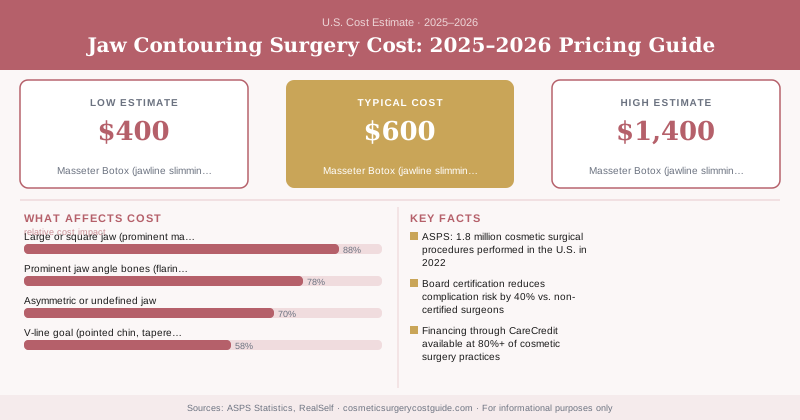
| Masseter Botox (jawline slimming) | Non-surgical | $400 | $600–$900 | $1,400 |
| Jaw filler (angle definition) | Non-surgical | $800 | $1,200–$2,000 | $3,500 |
| Mandibular angle reduction | Bone surgery | $5,000 | $8,000–$12,000 | $18,000 |
| V-line jaw shave (cortical bone) | Bone surgery | $4,500 | $7,000–$10,000 | $15,000 |
| Jaw + chin combined contouring | Bone surgery | $7,000 | $10,000–$14,000 | $20,000 |
| Genioplasty (chin bone repositioning) | Bone surgery | $4,000 | $6,000–$9,000 | $14,000 |
| Jaw implants (angle definition) | Implant | $4,000 | $6,500–$9,000 | $14,000 |
Surgical jaw contouring prices include surgeon fee, general or deep sedation anesthesia, facility fee, and follow-up care. The gap between low and high estimates reflects surgeon specialization, geographic market, and whether you’re in a general plastic surgery practice vs. a craniofacial-focused program.
What procedure do you actually need?
This depends entirely on your anatomical goal:
Large or square jaw (prominent masseter muscles): Start with masseter Botox. It’s non-surgical, reversible, and costs under $1,000 per session. Many patients achieve significant jaw narrowing through muscle reduction alone — no surgery needed.
Prominent jaw angle bones (flaring mandibular angle): This is bony — Botox won’t change it. Mandibular angle reduction surgery removes or reshapes the bone surgically, typically through intraoral incisions.
Asymmetric or undefined jaw: Combination of filler (for definition) or implants (for projection); or surgical genioplasty if the issue is chin position relative to the jaw.
V-line goal (pointed chin, tapered jaw): Often requires a combination of mandibular angle reduction plus genioplasty — the “V-line” full procedure popular in Korean facial contouring practices.
If your jaw width comes primarily from masseter muscle hypertrophy (common in patients who clench or grind), Botox to the masseters can produce dramatic narrowing — 3–8mm reduction over 3–6 months — for $600–$900 per session, repeated every 4–6 months. This is the appropriate first step before any surgical evaluation. Only pursue bony jaw surgery if your muscles are normal-sized and the width is truly skeletal.
Surgical jaw contouring: what the procedure involves
Mandibular angle reduction and V-line surgery are performed under general anesthesia in a hospital or accredited surgical center. Incisions are made inside the mouth along the lower gum line — no external scars. The surgeon accesses the jawbone directly and either shaves/removes the outer cortex, cuts the angle itself (osteotomy), or reshapes the lower mandibular border.
Surgery takes 2–4 hours. Hospital stay: usually same-day or one night. Recovery: liquid/soft food diet for 4–6 weeks, significant swelling for 4–8 weeks, full swelling resolution at 3–6 months.
This is major surgery with real risks.
Where to have this surgery
Jaw contouring surgery requires a highly specialized skill set. In the US, the most experienced providers are:
- Oral and maxillofacial surgeons (OMFS) with craniofacial fellowship training
- Board-certified plastic surgeons with specific craniofacial or facial bone surgery subspecialty experience
Medical tourism for jaw contouring surgery is common — South Korea and Taiwan have highly specialized practices with large case volumes. The cost is significantly lower ($4,000–$8,000 all-inclusive in Seoul vs. $8,000–$18,000 in the US), but the risks of traveling internationally for surgery include complications without local follow-up support.
Jaw bone contouring surgery carries specific serious risks: injury to the inferior alveolar nerve (numbness in lower lip/chin, which can be permanent), asymmetry, infection, non-union, and long-term changes in bite mechanics. According to a 2022 review in the Journal of Cranio-Maxillofacial Surgery, permanent nerve paresthesia occurred in approximately 5–15% of mandibular angle reduction cases depending on technique and surgeon experience. Choose your surgeon carefully and seek multiple opinions.
Non-surgical jaw contouring options
For patients who aren’t ready for or don’t need surgery:
Masseter Botox: Reduces jaw width by atrophying the masseter muscle over 3–6 months. Best for muscle-based width. Requires maintenance every 4–6 months indefinitely ($600–$900/session).
Jaw filler: Adds definition and projection to the jaw angle; creates a sharper, more defined look without changing width. HA fillers; lasts 12–18 months; $1,200–$2,500 per session.
Combination: Masseter Botox to slim + jaw filler to define — many patients achieve their aesthetic goal with this combination at a fraction of surgical cost.
Insurance coverage
Cosmetic jaw contouring is not covered by insurance. If jaw surgery is performed to correct a functional bite problem (Class III malocclusion, TMJ disorder, obstructive sleep apnea), insurance may cover the functional correction while the cosmetic component remains out-of-pocket. This distinction requires careful coordination between your oral surgeon and insurance plan.
Financing through CareCredit and Alphaeon Credit is available at most practices. Given the high cost of surgical jaw contouring, many patients budget 12–24 months in advance.
Frequently Asked Questions
Jaw contouring surgery typically costs between $4,000 and $18,000 in the US, depending on the technique used. Bony jaw reduction procedures average $8,000–$15,000, while less invasive mandibular angle reduction ranges from $4,000–$10,000. Pricing varies by surgeon experience, geographic location, and whether the procedure is combined with other facial surgeries.
Most insurance plans do not cover jaw contouring surgery because it is classified as a cosmetic elective procedure, meaning you will typically pay the full cost out-of-pocket. However, if jaw contouring is performed for functional reasons such as correcting a severe bite problem or sleep apnea, some insurance carriers may cover a portion of the procedure; you should contact your provider to verify coverage before surgery.
Recovery from jaw contouring typically takes 2–3 weeks for swelling to subside enough to return to normal activities, though complete healing of the bone can take 3–6 months. Most patients can return to light desk work within 1–2 weeks, but strenuous exercise and contact sports should be avoided for at least 4–6 weeks to prevent complications.